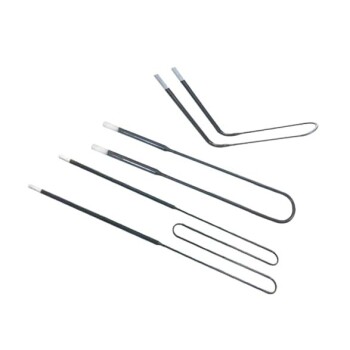
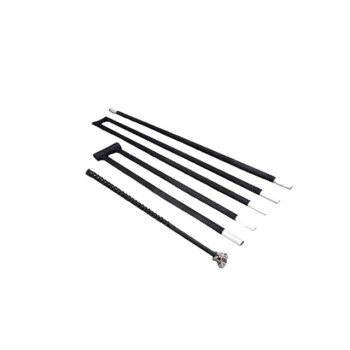
The primary reason for using a precision electric heating reactor is to establish a strictly controlled thermal environment for oxidation. This stability is critical because it allows ozone (O3) molecules to interact predictably with the graphene lattice. By maintaining precise conditions, the reactor ensures the formation of specific chemical "seeding points" necessary for high-quality membrane production.
The reactor's ability to maintain a stable temperature is the fundamental prerequisite for achieving Angstrom-scale precision in pore size distribution. It transforms a chaotic oxidation process into a controlled method for defining future pore locations.
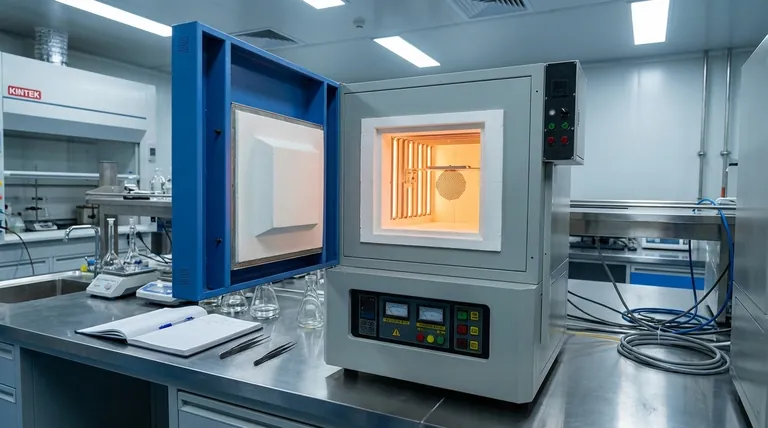
The Mechanics of Controlled Oxidation
Initiating the Reaction
The core function of the reactor is to facilitate a controlled reaction between ozone and the graphene sheet.
Rather than randomly degrading the material, the precise heat allows the ozone to selectively oxidize the graphene lattice. This creates a uniform chemical modification across the surface.
Introducing Functional Groups
During this specific stage, the reactor environment promotes the attachment of oxygen-containing functional groups to the graphene.
The primary reference notes that epoxy groups are introduced during this phase. These groups are not defects, but calculated additions to the material's atomic structure.
Creating Seeding Points
The functional groups serve a specific architectural purpose: they act as seeding points.
These points mark the exact locations where pores will eventually be formed. The accuracy of this seeding process dictates the success of the entire membrane fabrication.
The Necessity of Thermal Stability
Angstrom-Scale Precision
The ultimate goal of this process is to achieve a pore size distribution measured in Angstroms.
Without the stable environment provided by the precision reactor, achieving this level of microscopic accuracy is impossible. The reactor eliminates thermal fluctuations that would otherwise lead to uneven oxidation.
Uniform Distribution
A stable temperature ensures that the seeding points are distributed evenly across the membrane.
If the temperature varies, the reaction rate changes, leading to clusters of pores in some areas and sparse coverage in others. The reactor's precision standardizes this distribution.
Understanding the Trade-offs
Sensitivity to Process Variables
While the reactor provides precision, the process relies heavily on maintaining that stability.
Any deviation in the reactor's performance directly correlates to a loss of pore size control. The system effectively trades process speed for the high fidelity required at the atomic level.
The Complexity of Equipment
Using a precision electric heating reactor adds complexity compared to standard heating methods.
However, this complexity is a necessary trade-off. Simple thermal methods cannot provide the granular control required to manipulate the graphene lattice at the Angstrom scale.
Optimizing Your Graphene Treatment Process
To maximize the effectiveness of ozone treatment for graphene membranes, consider the following specific goals:
- If your primary focus is Pore Uniformity: Prioritize the thermal stability of the reactor above all else to ensure even distribution of epoxy groups.
- If your primary focus is Pore Size: Calibrate the temperature settings to control the rate of oxidation, which directly influences the Angstrom-scale dimensions of the final pores.
The precision of your thermal environment is the single most important factor in transitioning from raw graphene to a high-performance porous membrane.
Summary Table:
| Feature | Role in Ozone Treatment | Benefit for Graphene Membranes |
|---|---|---|
| Thermal Stability | Maintains a constant environment for O3 interaction | Prevents thermal fluctuations & uneven oxidation |
| Controlled Oxidation | Facilitates selective graphene lattice interaction | Creates uniform chemical "seeding points" |
| Functional Grouping | Promotes attachment of epoxy groups | Defines future pore locations with high fidelity |
| Precision Control | Manages reaction rates at the atomic level | Enables Angstrom-scale pore size distribution |
Elevate Your Material Research with KINTEK Precision
Achieving atomic-level precision in graphene membranes requires world-class thermal stability. Backed by expert R&D and manufacturing, KINTEK offers high-performance Muffle, Tube, Rotary, Vacuum, and CVD systems designed to meet the rigorous demands of advanced chemical processing. Whether you need a standard solution or a customizable reactor for your unique research needs, our team is ready to support your innovation.
Ready to achieve Angstrom-scale accuracy? Contact us today to find the perfect heating solution!
References
- Zongyao Zhou, Kumar Varoon Agrawal. Electrochemical-repaired porous graphene membranes for precise ion-ion separation. DOI: 10.1038/s41467-024-48419-6
This article is also based on technical information from Kintek Furnace Knowledge Base .
Related Products
- Custom Made Versatile CVD Tube Furnace Chemical Vapor Deposition CVD Equipment Machine
- MPCVD Machine System Reactor Bell-jar Resonator for Lab and Diamond Growth
- Laboratory Quartz Tube Furnace RTP Heating Tubular Furnace
- Multi Heating Zones CVD Tube Furnace Machine for Chemical Vapor Deposition Equipment
- Molybdenum Disilicide MoSi2 Thermal Heating Elements for Electric Furnace
People Also Ask
- What is a CVD tube furnace and what is its primary function? Discover Precision Thin-Film Deposition
- Why are CVD tube furnace sintering systems indispensable for 2D material research and production? Unlock Atomic-Scale Precision
- How does CVD tube furnace sintering enhance graphene growth? Achieve Superior Crystallinity and High Electron Mobility
- Which industries and research fields benefit from CVD tube furnace sintering systems for 2D materials? Unlock Next-Gen Tech Innovations
- What are the benefits of developing new precursor materials for CVD tube furnaces? Unlock Advanced Thin-Film Synthesis