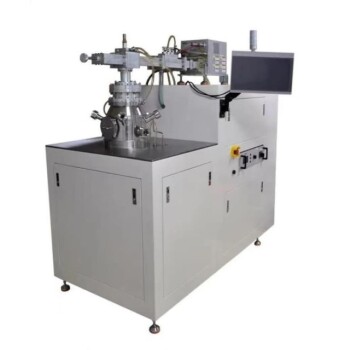
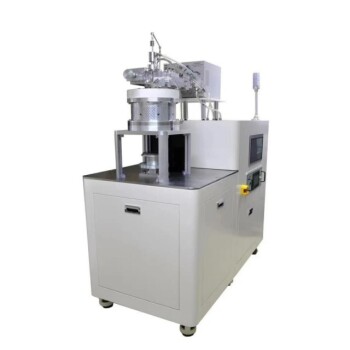
High-precision vacuum tube furnaces serve as the foundational infrastructure for CVD graphene synthesis because they create the extreme yet stable environment necessary for atomic-level organization. These systems are essential for reaching temperatures exceeding 1000°C to trigger the pyrolysis of carbon sources like methane, while simultaneously maintaining a pristine, oxygen-free atmosphere to prevent oxidation.
The Core Reality: High-quality graphene growth is less about reaching a high temperature and more about maintaining absolute stability at that temperature. A high-precision furnace transforms a chaotic chemical reaction into a controlled deposition process, ensuring that the graphene lattice forms consistently across large-area substrates without structural defects.
The Critical Role of Thermal Management
Facilitating Carbon Source Pyrolysis
To grow graphene, you must first break down a gaseous carbon source, typically methane. This process, known as pyrolysis, requires intense energy.
High-precision furnaces are engineered to reliably reach and sustain temperatures exceeding 1000°C. Without this consistent high-heat baseline, the precursor gas will not decompose efficiently, leading to poor coverage or failed growth.
Ensuring Structural Uniformity
Generating heat is simple; maintaining uniformity across a substrate is difficult. The "high precision" of these furnaces refers specifically to their ability to create long, constant temperature zones.
In these zones, thermal gradients are minimized. This ensures that the graphene grown at one end of the substrate is structurally identical to the graphene grown at the other. Thermal fluctuations during growth are a primary cause of lattice defects and inconsistency.
Atmospheric Control and Purity
Eliminating Environmental Interference
Graphene is incredibly sensitive to impurities during formation. The furnace’s integrated sealing system and high-vacuum pumps work in tandem to completely exhaust air and moisture from the chamber.
By reducing background pressure to extremely low levels, the system eliminates oxygen and water vapor. If these elements were present, they would oxidize the substrate or the carbon atoms, ruining the film's purity.
Controlling Layer Thickness
Beyond simple purity, the vacuum system acts as a control lever for the graphene's physical properties.
By working with pressure regulation devices, the system maintains a stable low-pressure environment. This regulation allows you to precisely control the deposition rate of carbon atoms, which is the deciding factor in determining the number of layers in the final graphene film.
Common Pitfalls and Sensitivities
The Danger of Thermal Gradients
A common misconception is that setting a target temperature is sufficient. If the furnace lacks a long constant temperature zone, the edges of the substrate may experience slightly different temperatures than the center.
This gradient leads to variations in growth rate and quality. For high-quality applications, the specific length of the flat thermal zone must match or exceed the dimensions of your substrate.
Vulnerability to Micro-Leaks
The integrity of the sealing system is non-negotiable. Even a high-precision heating element cannot compensate for a compromised vacuum seal.
A microscopic leak introduces continuous oxygen contamination. This results in "etching" effects where the graphene is attacked as it grows, leading to high defect density despite perfect thermal settings.
Making the Right Choice for Your Goal
Selecting the right furnace configuration depends heavily on the specific requirements of your end application.
- If your primary focus is large-scale uniformity: Prioritize a furnace with an extended constant temperature zone. This ensures that the thermal environment is identical across the entire surface area of your large substrate.
- If your primary focus is precise layer control (e.g., single-layer vs. bi-layer): Focus on the quality of the vacuum pump and pressure regulation system. The ability to stabilize low pressures is the key variable in controlling carbon atom deposition rates.
Ultimately, the furnace is not just a heater; it is a stability chamber that dictates the structural destiny of your material.
Summary Table:
| Feature | Critical Role in Graphene CVD | Benefit to Final Material |
|---|---|---|
| High-Precision Heating | Facilitates efficient methane pyrolysis at >1000°C | Ensures complete carbon source breakdown |
| Constant Temp Zone | Minimizes thermal gradients across the substrate | Achieves structural uniformity and consistency |
| Vacuum Sealing | Eliminates oxygen and moisture contamination | Prevents oxidation and reduces lattice defects |
| Pressure Regulation | Manages the deposition rate of carbon atoms | Enables precise control over layer thickness |
Elevate Your Graphene Synthesis with KINTEK
Precision is the difference between a defect-ridden film and high-performance graphene. Backed by expert R&D and manufacturing, KINTEK offers high-precision Tube, Vacuum, and CVD systems designed specifically for the rigorous demands of material science. Whether you need an extended constant temperature zone for large-scale uniformity or advanced pressure regulation for single-layer control, our customizable lab furnaces provide the stability your research deserves.
Ready to optimize your deposition process? Contact our furnace experts today to find the perfect thermal solution for your lab.
References
- Mitigating Silicon Amorphization in Si–Gr Anodes: A Pathway to Stable, High‐Energy Density Anodes for Li‐Ion Batteries. DOI: 10.1002/smll.202504704
This article is also based on technical information from Kintek Furnace Knowledge Base .
Related Products
- Split Chamber CVD Tube Furnace with Vacuum Station CVD Machine
- Custom Made Versatile CVD Tube Furnace Chemical Vapor Deposition CVD Equipment Machine
- Slide PECVD Tube Furnace with Liquid Gasifier PECVD Machine
- Multi Heating Zones CVD Tube Furnace Machine for Chemical Vapor Deposition Equipment
- Inclined Rotary Plasma Enhanced Chemical Deposition PECVD Tube Furnace Machine
People Also Ask
- What role does a Tube Furnace play in the CVD growth of carbon nanotubes? Achieve High-Purity CNT Synthesis
- What are the advantages of using a CVD tube furnace for preparing gate dielectrics? Achieve High-Quality Thin Films for Transistors
- How does a CVD tube furnace achieve high purity in gate media preparation? Master Precision Control for Flawless Films
- What are the operational and maintenance requirements for a CVD tube furnace? Ensure Precision for Thin Film Deposition
- Why are CVD tube furnace sintering systems indispensable for 2D material research and production? Unlock Atomic-Scale Precision