
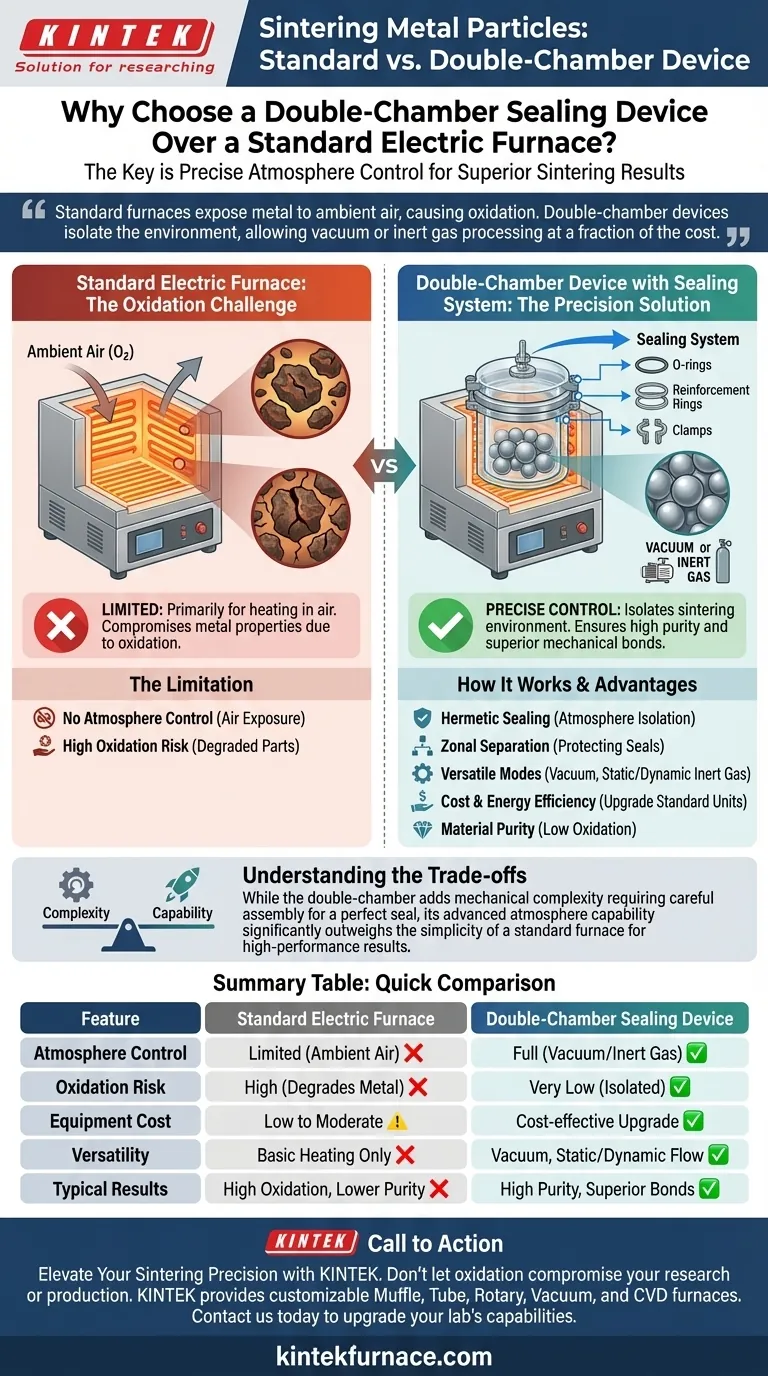
A double-chamber device with a sealing system is preferred because it enables precise atmosphere control, a capability that standard vertical electric furnaces fundamentally lack. While standard furnaces provide heat, they cannot create a vacuum or maintain a flow of inert gas, which is critical for preventing oxidation during metal sintering. By retrofitting a standard furnace with this device, researchers can achieve high-quality sintering results without the prohibitive cost of specialized atmosphere equipment.
Core Takeaway: Standard electric furnaces are limited to heating in ambient air, which compromises metal sintering. A double-chamber device bridges this gap by isolating the sintering environment, allowing for vacuum or inert gas processing at a fraction of the cost of dedicated industrial machinery.
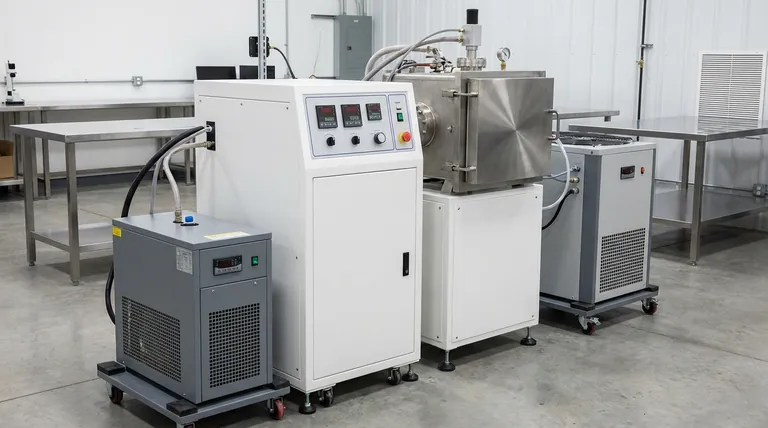
The Limitation of Standard Equipment
Inability to Control Atmosphere
Standard vertical electric furnaces are designed primarily for heating. They generally lack the necessary ports and seals to evacuate air or introduce specific gases.
Consequently, using a standard furnace alone exposes metal particles to oxygen. This leads to oxidation, which degrades the mechanical properties of the final sintered part.
How the Double-Chamber Solution Works
The Sealing Architecture
The core innovation of the double-chamber device is its sealing system. This system utilizes a combination of O-rings, reinforcement rings, and clamps to create a hermetic seal.
This mechanical assembly ensures that the internal environment is completely isolated from the outside air. It transforms an open heating element into a controlled processing chamber.
Zonal Separation
The device is engineered to separate the apparatus into two distinct areas: the atmosphere control zone and the sintering zone.
This separation is crucial for functionality. It allows the sealing components (like O-rings) to remain in a controlled area while the metal particles are subjected to high heat in the sintering zone.
Key Advantages for Production
Versatility of Sintering Modes
Unlike a standard furnace, a double-chamber setup offers flexibility in processing conditions. It allows for vacuum sintering, which removes all gases from the chamber.
It also supports static or dynamic inert atmosphere sintering. This means you can either fill the chamber with inert gas once or maintain a constant flow, depending on the specific requirements of the metal powder.
Cost and Energy Efficiency
Dedicated atmosphere furnaces are expensive and consume significant amounts of energy.
By using a double-chamber device, you can utilize a standard, lower-cost furnace to achieve the same results. This significantly reduces both the initial equipment investment and ongoing energy consumption.
Understanding the Trade-offs
Complexity vs. Capability
While the double-chamber device upgrades a standard furnace, it introduces mechanical complexity.
A standard furnace is simple: you turn it on, and it gets hot. The double-chamber device requires careful assembly of O-rings and clamps to ensure a perfect seal. If the sealing system fails or is assembled incorrectly, the vacuum or inert atmosphere will be compromised, negating the benefits.
Making the Right Choice for Your Goal
To determine if this setup is right for your sintering project, consider your specific constraints:
- If your primary focus is Budget Efficiency: This device is the superior choice, as it allows you to upgrade existing standard furnaces rather than purchasing expensive dedicated atmosphere units.
- If your primary focus is Material Purity: The double-chamber device is essential, as it provides the vacuum or inert gas environment required to prevent oxidation and ensure high-quality metal bonds.
By separating the atmosphere control from the heat source, the double-chamber device democratizes high-performance sintering.
Summary Table:
| Feature | Standard Electric Furnace | Double-Chamber Sealing Device |
|---|---|---|
| Atmosphere Control | Limited (Ambient Air) | Full (Vacuum or Inert Gas) |
| Oxidation Risk | High for metal particles | Very Low (Isolated Environment) |
| Equipment Cost | Low to Moderate | Cost-effective upgrade to existing units |
| Versatility | Basic heating only | Supports vacuum, static, or dynamic flow |
| Typical Results | High oxidation, lower purity | High purity, superior mechanical bonds |
Elevate Your Sintering Precision with KINTEK
Don't let oxidation compromise your research or production. KINTEK provides industry-leading thermal solutions, ranging from Muffle, Tube, Rotary, and Vacuum systems to specialized CVD furnaces. Backed by expert R&D and manufacturing, our equipment is fully customizable to your unique sintering and high-temperature needs.
Ready to upgrade your lab's capabilities? Contact us today to discover how our high-performance furnaces can deliver the atmosphere control and energy efficiency you require.
Visual Guide
References
- María E. Hernández-Rojas, Sandro Báez–Pimiento. A Device with a Controllable Internal Atmosphere, Independent from the Heating Furnace, for Sintering Metal Particles. DOI: 10.1590/1980-5373-mr-2023-0401
This article is also based on technical information from Kintek Furnace Knowledge Base .
Related Products
- Chairside Dental Porcelain Zirconia Sintering Furnace with Transformer for Ceramic Restorations
- Spark Plasma Sintering SPS Furnace
- Vacuum Sealed Continuous Working Rotary Tube Furnace Rotating Tube Furnace
- Vacuum Heat Treat Sintering Furnace with Pressure for Vacuum Sintering
- Dental Porcelain Zirconia Sintering Ceramic Vacuum Press Furnace
People Also Ask
- What factors determine the quality of sintered zirconia restorations? Master Material, Equipment, and Technique
- How do conventional vs rapid sintering in dental furnaces affect zirconia? Optimize Efficiency Without Sacrificing Strength
- What industries use zirconia sintering furnaces? Beyond Dental and Jewelry Applications
- Why is a zirconia sintering furnace considered essential for dental laboratories and clinics? Unlock Precision and Durability
- What are the key components of a zirconia sintering furnace? Unlock Precision for Superior Dental Restorations



















