The processing variables you must meticulously evaluate are holding temperature, soak time, cooling method and rate, and atmospheric conditions. These four parameters—controlled via programmable laboratory furnaces—directly dictate the final microstructure, defect evolution, and mechanical response of SLMed stainless steel.
The central insight is that post-build heat treatment is not a single step but a multi-variable landscape. The interplay between temperature, time, cooling path, and atmosphere governs crystallographic texture, dislocation density, and the active deformation mechanisms, making precise, reproducible control of each variable the bedrock of any meaningful research.
The Four Critical Processing Variables
Any systematic investigation into heat treating additively manufactured stainless steel must treat the furnace environment as a programmable system, not just a heat source. The following variables form the foundation of your experimental matrix.
Holding Temperature
This is the peak temperature at which the material is soaked. It determines the thermodynamic driving force for phase transformations and diffusion.
For SLMed stainless steel, temperature selection dictates whether you activate stress relief, recrystallization, or dissolution of undesirable phases. Even a small deviation can shift the balance between recovery and recrystallization, fundamentally altering the final grain structure.
Soak Time
Soak time is the duration the sample remains at the holding temperature. It controls the kinetics of diffusion-driven processes.
Insufficient soak time leaves the microstructure chemically heterogeneous or with incomplete transformation. Excessive soak time, however, can lead to grain coarsening, negating the fine as-built structures that often impart high strength.
Cooling Method and Rate
This is the speed and medium by which the sample returns to room temperature. It is arguably the most influential variable for mechanical properties.
According to research on heat-treated SLM steels, cooling rates significantly influence crystallographic texture, dislocation density evolution, and active deformation mechanisms such as dislocation twinning and deformation faulting. Fast cooling can preserve fine microstructures but increase internal stresses, while slow cooling promotes recovery and softer, more ductile states.
Atmospheric Conditions
The gas environment inside the furnace prevents or controls chemical reactions at the sample surface and within its open porosity.
Using an inert gas like argon, as demonstrated in precision tube furnace studies, creates a protective shield that avoids oxidation and unwanted carburization or decarburization. Controlled gas atmospheres are not optional extras; they are essential for achieving clean surfaces and predictable bulk chemistry, especially over high-temperature soaks.
Why These Variables Matter: The Microstructure Connection
Understanding the deep need means linking each furnace setting to a tangible change in the material’s internal architecture.
Controlling Crystallographic Texture and Deformation Modes
The as-built SLM microstructure is notoriously textured and filled with dislocation substructures. Heat treatment rewrites this.
The cooling rate after soaking is a master switch. It either freezes in a refined dislocation network or allows significant recovery, which directly changes how the material subsequently deforms. The research shows that cooling path selection can promote or suppress dislocation twinning and deformation faulting, mechanisms that strongly influence work-hardening capacity.
Managing Dislocation Density
Post-build heat treatment anneals out the high dislocation density introduced by rapid solidification.
By carefully adjusting holding temperature and time, you control the degree of dislocation density evolution. A partial recovery can retain high strength by preserving some dislocations, while full annealing dissolves them for maximum ductility. This trade-off is invisible without evaluating both temperature and time together.
The Interface with Atmosphere
Atmosphere is a silent but active variable. An oxygen-contaminated environment at 1000°C will form a thick oxide scale that masks any beneficial microstructural change below.
More insidiously, spurious carbon or nitrogen pickup from a poor atmosphere can alter stacking fault energy, changing deformation mechanisms in ways that confuse the analysis of your intended heat treatment variables. The use of programmable, gas-tight laboratory furnaces eliminates this noise, making your results attributable only to the thermal cycle.
Understanding the Trade-offs and Pitfalls
Objective research demands acknowledging that optimizing one variable often compromises another. Ignoring these interactions leads to non-reproducible data.
- Strength vs. Ductility: A low soak temperature and fast cool may lock in high dislocation density and fine features, yielding high strength but poor ductility. Conversely, high temperatures and slow cooling produce a coarser, more ductile microstructure but sacrifice yield strength.
- Uniformity vs. Cost: Desktop laboratory tube furnaces with programmable controls offer exceptional thermal precision and atmosphere purity. However, their small hot zones can create thermal gradients in larger samples, introducing a location-dependent variation that must be accounted for in your experimental plan.
- Complexity of Multi-Segment Profiles: Programmable furnaces allow multi-step profiles (e.g., homogenization step, precipitate nucleation soak, growth soak). While powerful, the number of variable combinations explodes. A poorly designed factorial plan can consume enormous resources without isolating the dominant factor.
- Surface vs. Bulk Effects: The protective argon atmosphere prevents surface oxidation, but boundary layers inside complex geometries or powder-bed pores may still trap trace gases. This can lead to a discrepancy between the intended bulk heat treatment and what the internal surfaces actually experience.
How to Design a Systematic Research Study
Your experimental design should align with the specific hypothesis you are testing about SLMed stainless steel. Structure your variable evaluation around your primary goal.
After a brief introductory sentence, use this targeted framework to prioritize your variables:
- If your primary focus is mapping the recrystallization kinetics: Hold cooling rate and atmosphere constant while creating a detailed temperature-time matrix to isolate the onset and completion of recrystallization.
- If your primary focus is tailoring deformation mechanisms like twinning: Prioritize a wide range of controlled cooling rates from the same soak temperature, keeping atmosphere strictly inert to avoid chemistry changes.
- If your primary focus is achieving clean, warpage-free parts: First optimize the atmospheric purity and flow rate, then design a slow, multi-stage cooling ramp to minimize thermal stress while avoiding oxidation.
- If your primary focus is establishing a reproducible industrial baseline: Use programmable multi-segment controls to lock in a fully specified thermal recipe, validating that holding temperature is accurate to ±5°C and gas flow is uninterrupted throughout the cycle.
Mastering these variables transforms your laboratory furnace from a simple heater into a precision instrument capable of revealing the fundamental structure-property links in additively manufactured stainless steel.
Summary Table:
| Processing Variable | Primary Impact on Microstructure | Key Research Considerations & Trade-offs |
|---|---|---|
| Holding Temperature | Drives phase transformations, stress relief, and recrystallization | Balance recovery/recrystallization vs. unwanted phase dissolution |
| Soak Time | Controls diffusion kinetics and chemical homogenization | Avoid incomplete transformation (too short) or grain coarsening (too long) |
| Cooling Method & Rate | Governs dislocation density, texture, and deformation modes (e.g., twinning) | Fast cooling preserves fine structure but increases internal stress |
| Atmospheric Conditions | Prevents surface oxidation and preserves bulk alloy chemistry | Essential to eliminate trace oxygen/carbon pickup during high-temp soaks |
Maximize Precision in Additive Manufacturing Thermal Research with KINTEK
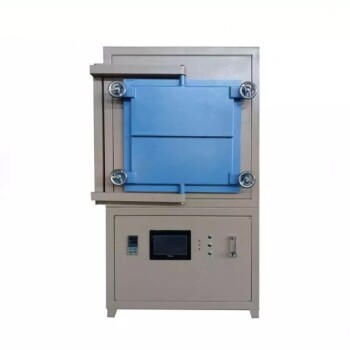
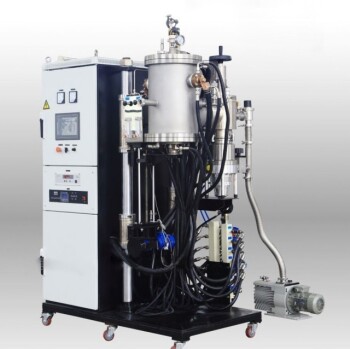
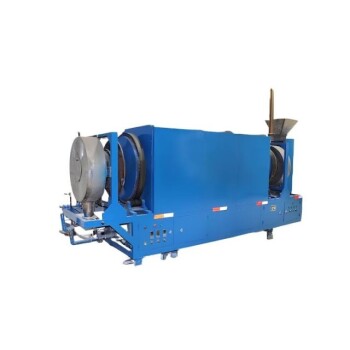
Achieving reproducible, publication-grade results in post-build thermal processing requires uncompromising thermal and atmospheric control. KINTEK specializes in advanced laboratory high-temperature equipment, providing researchers with customizable, high-precision furnaces—including tube, vacuum, muffle, atmosphere, and CVD furnaces—tailored to meet the exact requirements of additive manufacturing and metallurgy.
Whether you need tight temperature gradients (±5°C) or ultra-pure inert gas flow to prevent oxidation in SLM stainless steel, KINTEK offers reliable, industry-leading solutions designed for your lab's unique needs.
Ready to transform your heat treatment experiments? Contact KINTEK today to consult with our technical specialists and design the perfect furnace system for your research!
Related Products
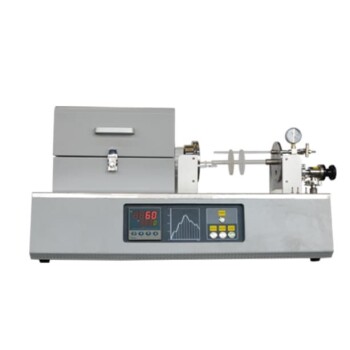
- Laboratory Quartz Tube Furnace RTP Heating Tubular Furnace
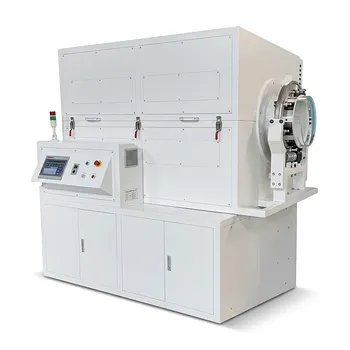
- Laboratory Vacuum Tilt Rotary Tube Furnace Rotating Tube Furnace
- Laboratory Muffle Oven Furnace with Bottom Lifting
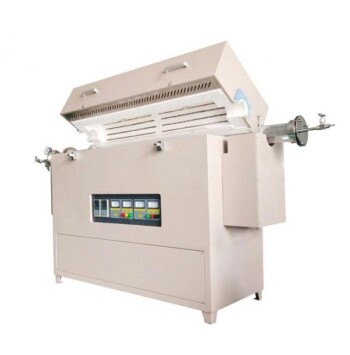
- 1400℃ High Temperature Laboratory Tube Furnace with Alumina Tube
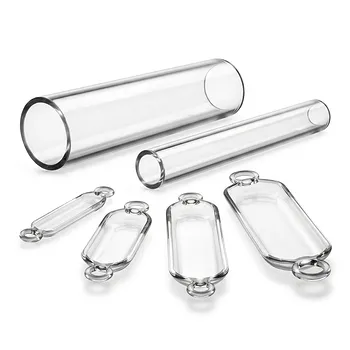
- High Purity Quartz Tube and Quartz Boat for Laboratory Furnaces
People Also Ask
- What physical conditions does a laboratory Tube Furnace provide for SOEC? Precision Heat for Solid Oxide Characterization
- What are the main features and functions of a laboratory tube furnace? Unlock Precise High-Temp Control for Your Lab
- What role does a laboratory tube furnace play in geological and mineralogical research? Unlock Earth's Secrets with Precision
- What parameters must be controlled when calcining freeze-dried oxide precursors in a laboratory tube furnace? A Guide
- What conditions do tube furnaces provide for Au-Seeded TiO2 nanowires? Master Precision Thermal Synthesis