
To use a 70mm tube furnace safely, you must follow strict operational procedures, wear appropriate personal protective equipment (PPE), and ensure the equipment is properly maintained. Key precautions involve controlling heating and cooling rates to prevent thermal shock, preparing samples correctly to ensure experimental accuracy, and understanding emergency shutdown protocols.
A tube furnace is a powerful tool, but its safe and effective operation depends on a disciplined approach. The core principle is to manage extreme temperatures methodically, protecting yourself, the equipment, and the integrity of your experiment at all times.
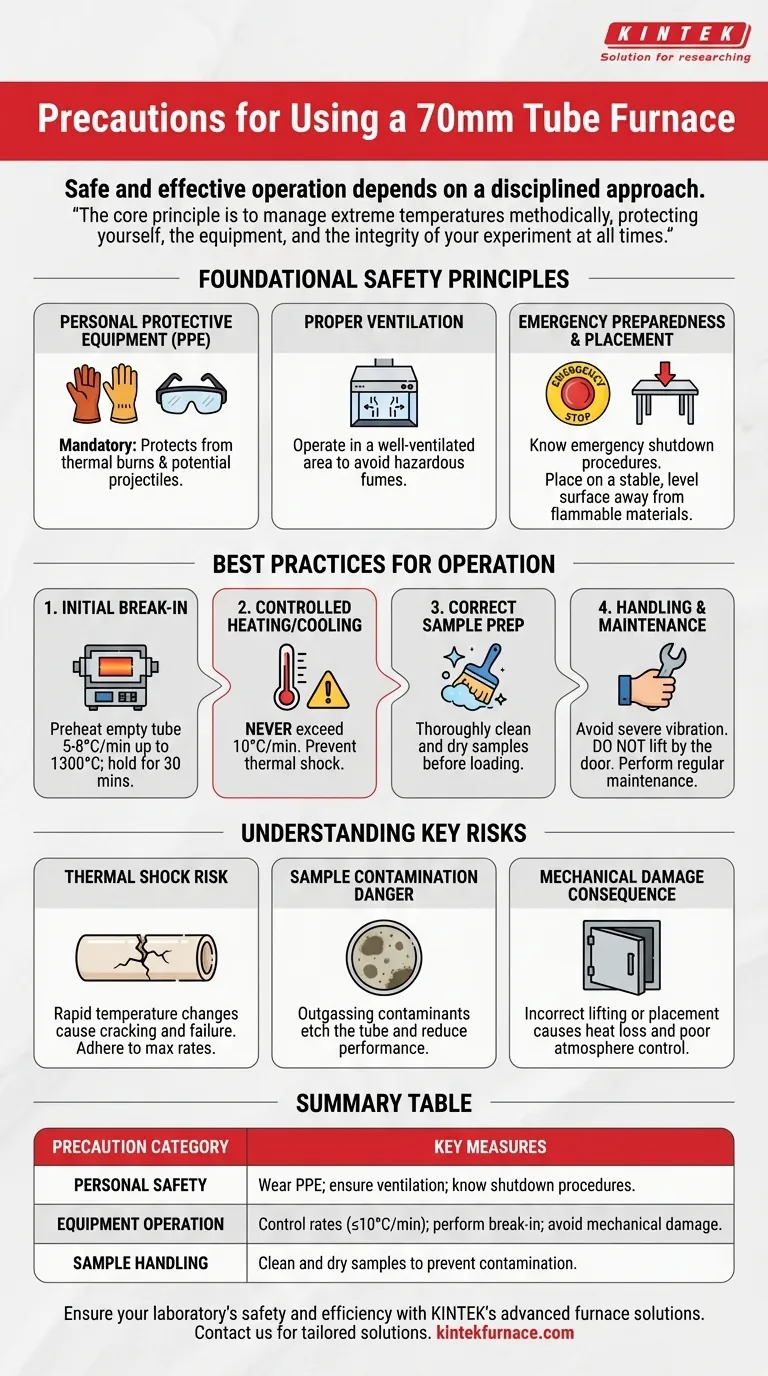
Foundational Safety Principles
Properly using a high-temperature furnace begins with establishing a safe environment and being prepared for any contingency. These foundational measures are non-negotiable.
Personal Protective Equipment (PPE)
Due to the extreme operating temperatures, heat-resistant gloves and safety glasses are mandatory. This equipment protects you from thermal burns and potential projectiles in the rare event of tube failure.
Proper Ventilation
The furnace must be operated in a well-ventilated area. High-temperature processes can release fumes from your sample or the furnace itself, and proper ventilation is critical to prevent the buildup of hazardous gases.
Emergency Preparedness
Every operator must be thoroughly trained on the furnace's specific emergency shutdown procedures. Familiarity with these protocols ensures you can react quickly and correctly to events like over-temperature alarms or power failures.
Safe Installation and Placement
The furnace should be placed on a stable, level surface away from any flammable or explosive materials. It must also be kept clear of wet areas to avoid electrical hazards and potential damage.
Best Practices for Operation
Beyond personal safety, following precise operational protocols ensures the longevity of the furnace and the reliability of your results.
Initial Furnace Break-in
For the very first use, the furnace tube requires a conditioning cycle. Preheat the empty tube at a rate of 5-8°C per minute up to 1300°C and hold it at that temperature for 30 minutes. This process removes residual stress and pollutants from manufacturing.
Controlled Heating and Cooling
Thermal shock is the primary enemy of a furnace tube. Never exceed a heating or cooling rate of 10°C per minute. Rapid temperature changes can cause the ceramic tube to crack, leading to costly repairs and experimental failure.
Correct Sample Preparation
To ensure accurate results and prevent furnace contamination, all samples must be thoroughly cleaned and dried before being placed inside. Moisture or contaminants can vaporize at high temperatures, affecting the atmosphere and potentially damaging the furnace interior.
Handling and Maintenance
Avoid subjecting the furnace to severe vibration or resonance. It is also strictly prohibited to lift or move the furnace by its door, as this can misalign the door and damage the sealing mechanism. Regular maintenance, as outlined by the manufacturer, is essential for its continued normal operation.
Understanding the Key Risks
Knowing what can go wrong is just as important as knowing the correct procedures. Understanding these risks reinforces the importance of following every precaution.
The Risk of Thermal Shock
As mentioned, rapid temperature changes create stress in the ceramic furnace tube. A cracked tube can ruin an experiment, create a safety hazard, and requires a complete replacement. This is why adhering to the maximum heating/cooling rate is critical.
The Danger of Sample Contamination
Introducing a "dirty" or wet sample does more than just compromise your results. The outgassing contaminants can etch the inside of the furnace tube or react with the heating elements, reducing the equipment's lifespan and performance.
The Consequence of Mechanical Damage
Lifting the furnace incorrectly or placing it in a high-vibration area can cause hidden damage. Misalignment of the door can lead to poor atmosphere control and heat loss, while severe vibration can damage the delicate heating elements and internal electronics.
Making the Right Choice for Your Goal
Your specific objective dictates which precautions are most critical to prioritize.
- If your primary focus is personal safety: Always wear appropriate PPE, ensure proper ventilation, and be an expert on the emergency shutdown procedures for your specific model.
- If your primary focus is equipment longevity: Adhere strictly to the maximum heating and cooling rates and perform the initial break-in procedure correctly.
- If your primary focus is experimental accuracy: Meticulously clean and dry every sample before heating and follow precise procedures for maintaining a controlled atmosphere.
Ultimately, a disciplined and knowledgeable approach is the key to mastering the tube furnace for safe and repeatable results.
Summary Table:
| Precaution Category | Key Measures |
|---|---|
| Personal Safety | Wear heat-resistant gloves and safety glasses; ensure proper ventilation; know emergency shutdown procedures. |
| Equipment Operation | Control heating/cooling rates (≤10°C/min); perform initial break-in; avoid mechanical damage and improper handling. |
| Sample Handling | Clean and dry samples thoroughly to prevent contamination and ensure experimental accuracy. |
Ensure your laboratory's safety and efficiency with KINTEK's advanced high-temperature furnace solutions. Leveraging exceptional R&D and in-house manufacturing, we offer Muffle, Tube, Rotary Furnaces, Vacuum & Atmosphere Furnaces, and CVD/PECVD Systems, all with strong deep customization to meet your unique experimental needs. Contact us today to discuss how our tailored solutions can enhance your operations and deliver precise, reliable results!
Visual Guide
Related Products
- Vertical Laboratory Quartz Tube Furnace Tubular Furnace
- Vacuum Sealed Continuous Working Rotary Tube Furnace Rotating Tube Furnace
- Magnesium Extraction and Purification Condensing Tube Furnace
- Split Multi Heating Zone Rotary Tube Furnace Rotating Tube Furnace
- High Pressure Laboratory Vacuum Tube Furnace
People Also Ask
- What are the key differences between single-zone and multi-zone vertical tube furnaces? Choose the Right Furnace for Your Lab
- How are wafers loaded and unloaded in a vertical tube furnace? Achieve Precision and Purity in Wafer Processing
- What physical conditions does a vertical tube furnace provide for desulfurization experiments? Precision Heat Control
- Why is a vertical tube furnace preferred for quenching tests? Achieve Rapid, Repeatable Cooling for Accurate Results
- What is a vertical tube furnace and how does it function? Optimize Material Processing with Precision



















