
The process used to produce calcined clay for geopolymer hemp concrete is flash calcination. This technique involves subjecting low-grade kaolinite clay to high temperatures for an extremely short duration. This rapid exposure triggers immediate dehydration, transforming the raw material into amorphous metakaolin.
Core Takeaway Unlike traditional slow-roasting methods, flash calcination prioritizes rapid heat transfer to preserve the clay's chemical potential. This speed creates an amorphous structure, which is the key factor in achieving the high reactivity required for geopolymer binders.
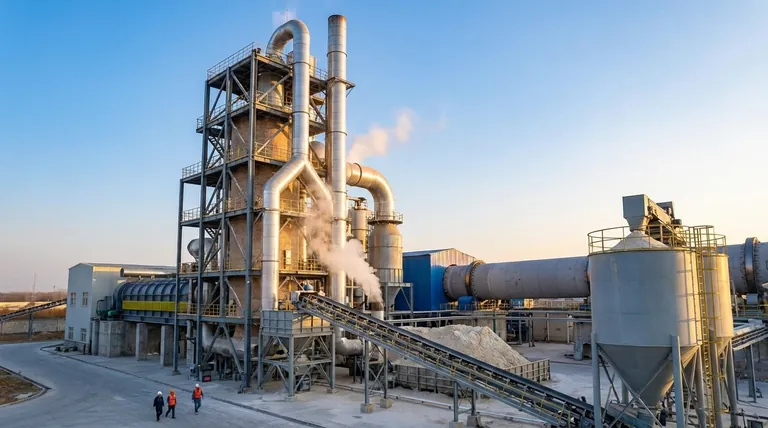
The Mechanics of Flash Calcination
Rapid Heating
The defining characteristic of this process is the speed of heat application. Flash calcination equipment brings clay particles to high temperatures almost instantly.
This differs significantly from traditional methods, which ramp up heat slowly over time.
Short Duration Exposure
The clay remains inside the heating element for a very brief period. The goal is to alter the clay quickly without "overcooking" it or allowing it to sinter into a non-reactive state.
This precise timing ensures the material reaches the exact state necessary for geopolymerization.
Material Transformation
Utilizing Low-Grade Inputs
This process is specifically noted for its ability to process low-grade kaolinite raw materials.
It turns an otherwise standard or lower-quality resource into a high-performance industrial binder.
Creating Amorphous Metakaolin
The rapid dehydration causes a specific chemical change. It strips water from the clay structure so quickly that the molecules do not have time to align into a stable crystal lattice.
Instead, they form amorphous metakaolin. This disordered, "amorphous" state possesses high internal energy, making it highly reactive when mixed with the geopolymer activator.
Understanding the Methodological Distinctions
Flash vs. Rotary Kiln
It is critical to distinguish this process from traditional rotary kiln calcination.
Rotary kilns typically involve longer residence times and slower heating profiles. Flash calcination replaces this with high-intensity, short-duration processing to maximize reactivity.
The Role of Reactivity
The success of geopolymer hemp concrete relies on the geopolymer reactivity of the binder.
If the clay is not calcined rapidly enough, it may not achieve the necessary amorphous state. Flash calcination ensures the output is chemically active enough to bond effectively with the hemp aggregate.
Making the Right Choice for Your Project
When evaluating calcined clay sources for geopolymer applications, consider the production method to ensure material performance.
- If your primary focus is binder strength: Ensure the supplier uses flash calcination to guarantee the clay has been converted to highly reactive amorphous metakaolin.
- If your primary focus is resource efficiency: Verify that the process is capable of utilizing low-grade kaolinite inputs to maximize raw material availability.
The quality of your final concrete depends less on the raw clay's initial grade and more on the speed and precision of its thermal transformation.
Summary Table:
| Feature | Flash Calcination | Traditional Rotary Kiln |
|---|---|---|
| Heating Speed | Near-instantaneous | Slow ramping |
| Exposure Duration | Extremely short | Long residence time |
| Output Structure | Amorphous (Highly reactive) | Crystalline (Lower reactivity) |
| Raw Material Use | Efficient for low-grade kaolinite | Often requires higher grade |
| Primary Benefit | Maximum chemical potential | Bulk processing consistency |
Upgrade Your Geopolymer Production with Precision Thermal Systems
Achieving the perfect amorphous state in metakaolin requires precise temperature control and specialized heating technology. KINTEK provides the cutting-edge laboratory and industrial solutions necessary to optimize your material transformation.
Backed by expert R&D and manufacturing, KINTEK offers Muffle, Tube, Rotary, Vacuum, and CVD systems, along with other specialized lab high-temp furnaces—all fully customizable to meet the unique reactivity requirements of your geopolymer hemp concrete projects.
Maximize your binder strength and resource efficiency today. Contact our thermal processing experts now to find the ideal system for your research or production needs.
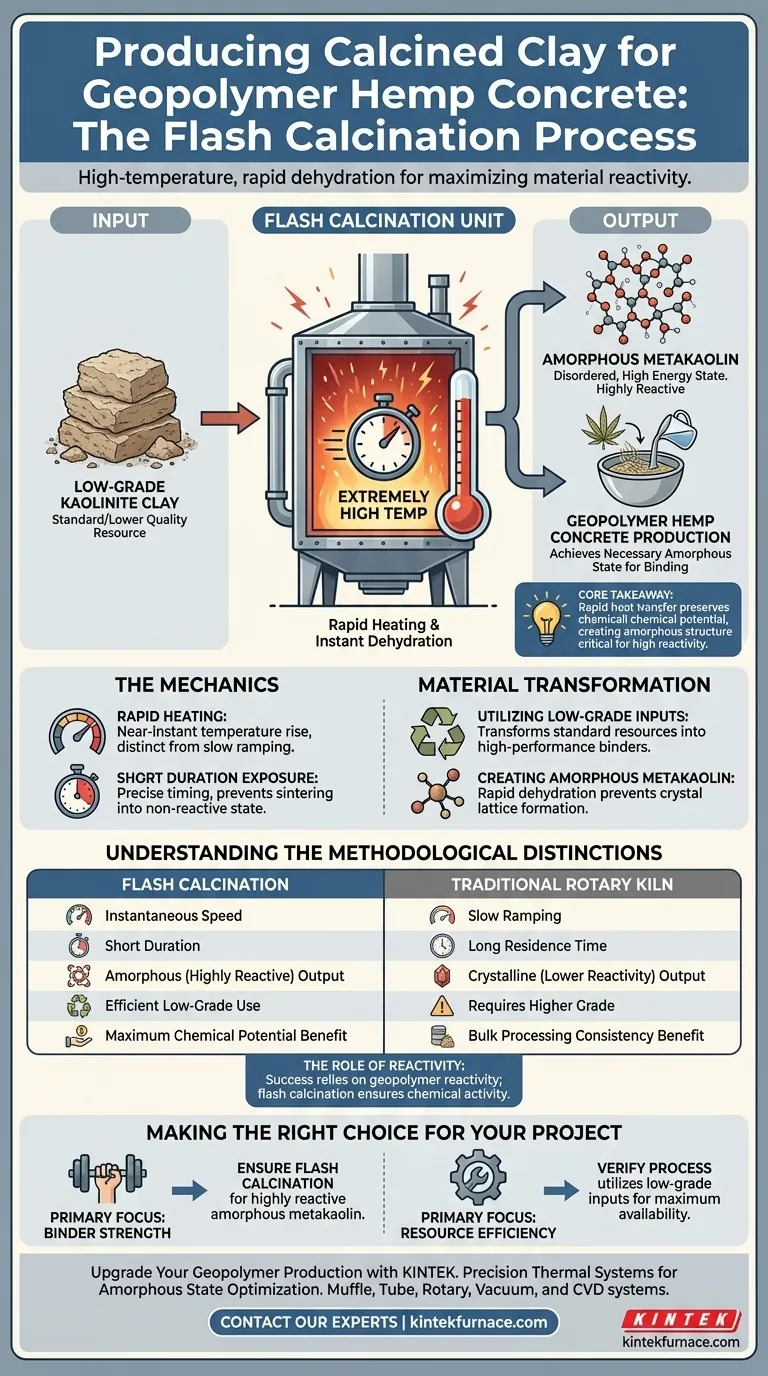
Visual Guide
Related Products
- Electric Rotary Kiln Pyrolysis Furnace Plant Machine Small Rotary Kiln Calciner
- Spark Plasma Sintering SPS Furnace
- High Temperature Muffle Oven Furnace for Laboratory Debinding and Pre Sintering
- Laboratory Muffle Oven Furnace with Bottom Lifting
- Custom Made Versatile CVD Tube Furnace Chemical Vapor Deposition CVD Equipment Machine
People Also Ask
- What are the advantages of electric rotary kilns compared to fuel-fired ones? Boost Precision and Efficiency in Your Process
- What advantages do electric rotary kilns offer over fuel-based kilns? Boost Efficiency and Purity in Your Process
- What materials can be processed in an electric rotary kiln? Versatile Solutions for Advanced Materials
- What is the significance of the refractory lining in a rotary kiln electric furnace? Unlock Efficiency and Longevity
- What are the main applications of a rotary kiln electric furnace? Achieve Uniform Heat Treatment for Powders



















