The primary purpose of using a high-purity quartz vacuum ampule is to create a hermetically sealed, contamination-free environment that maintains the precise chemical balance of the reaction. By operating under ultra-high vacuum, the ampule prevents external oxidation while simultaneously trapping volatile components like selenium, ensuring they react with tungsten at the required stoichiometric ratio.
Core Takeaway
High-quality Tungsten Diselenide (WSe2) synthesis relies on a delicate balance of extreme heat and chemical precision. The quartz ampule acts as a containment vessel that withstands 1050°C temperatures to enable Chemical Vapor Transport (CVT) without allowing the loss of vital ingredients or the intrusion of impurities.
The Critical Role of Containment
Preserving Stoichiometry
The synthesis of WSe2 is strictly governed by the ratio of Tungsten to Selenium. However, Selenium is a volatile component that can easily vaporize and escape at high temperatures.
The quartz ampule solves this by sealing the reactants in a closed system. This ensures that the selenium remains available to react fully with the tungsten, rather than dissipating, guaranteeing the correct stoichiometric ratio in the final crystal.
Eliminating Contamination
For electronic-grade crystals, even microscopic impurities can degrade performance. The ampule is composed of high-purity quartz, a material specifically chosen because it does not leach contaminants into the reaction.
Furthermore, the ampule is evacuated to an ultra-high vacuum (less than 10^-3 Pa) before sealing. This removes environmental contaminants such as oxygen and moisture that would otherwise oxidize the materials and ruin the crystal structure.
Thermal Requirements and CVT
Withstanding Extreme Heat
The synthesis process utilizes Chemical Vapor Transport (CVT), a method that requires sustained high temperatures to facilitate crystal growth.
The reaction takes place at approximately 1050°C. High-purity quartz is chemically inert and thermally stable enough to withstand this environment without melting, deforming, or reacting with the WSe2 components.
Facilitating Vapor Transport
The vacuum environment inside the ampule is not just about purity; it is essential for the physics of the transport agent.
The low pressure allows the transport agent to effectively volatilize the source material and deposit it as crystals at the cooler end of the ampule (if a gradient is used) or within the reaction zone.
Understanding the Operational Constraints
The "All-or-Nothing" Seal
The primary trade-off of using a quartz vacuum ampule is the absolute reliance on the integrity of the seal.
Because the process operates at 1050°C, any micro-fracture or imperfect seal will lead to immediate oxidation or the explosive loss of pressure. There is no margin for error; if the vacuum is compromised, the batch is effectively destroyed.
Complexity of Preparation
Achieving a vacuum of less than 10^-3 Pa requires specialized pumping equipment and careful handling.
This adds a layer of complexity and time to the synthesis process compared to open-system reactions, but it is the non-negotiable cost of achieving high crystalline quality.
Making the Right Choice for Your Goal
When designing your synthesis experiment, prioritize your setup based on your specific quality requirements:
- If your primary focus is Electronic Purity: Ensure your vacuum system can reliably achieve pressures below 10^-3 Pa to eliminate all traces of environmental oxygen.
- If your primary focus is Stoichiometric Accuracy: Verify the ampule sealing technique to guarantee zero loss of volatile selenium during the 1050°C heating phase.
The quartz ampule is not merely a container; it is the active control mechanism that makes high-quality WSe2 growth possible.
Summary Table:
| Feature | Function in WSe2 Synthesis | Benefit |
|---|---|---|
| High-Purity Quartz | Provides a chemically inert containment vessel | Prevents contamination and leaching |
| Ultra-High Vacuum | Eliminates oxygen and moisture (< 10^-3 Pa) | Prevents oxidation of Tungsten/Selenium |
| Hermetic Seal | Traps volatile components like Selenium | Maintains precise stoichiometric ratios |
| Thermal Stability | Withstands temperatures up to 1050°C | Enables Chemical Vapor Transport (CVT) |
Elevate Your Material Synthesis with KINTEK Precision
Achieving perfect crystal stoichiometry requires equipment that can withstand the rigors of high-vacuum and high-temperature environments. KINTEK provides industry-leading solutions designed for the most demanding research and production needs.
Why partner with KINTEK?
- Specialized Systems: Backed by expert R&D and manufacturing, we offer Muffle, Tube, Rotary, Vacuum, and CVD systems.
- Customizable Solutions: All our lab high-temp furnaces are fully customizable to meet your unique stoichiometric and thermal requirements.
- Expert Support: We help you navigate the complexities of Chemical Vapor Transport (CVT) and vacuum processing.
Don't let contamination or thermal instability compromise your results. Contact our technical team today to find the perfect furnace for your WSe2 synthesis or other advanced material applications!
References
- Monaam Benali, Zdeněk Sofer. 2D Rhenium- and Niobium-Doped WSe<sub>2</sub> Photoactive Cathodes in Photo-Enhanced Hybrid Zn-Ion Capacitors. DOI: 10.1021/acsanm.4c01405
This article is also based on technical information from Kintek Furnace Knowledge Base .
Related Products
- High Pressure Laboratory Vacuum Tube Furnace
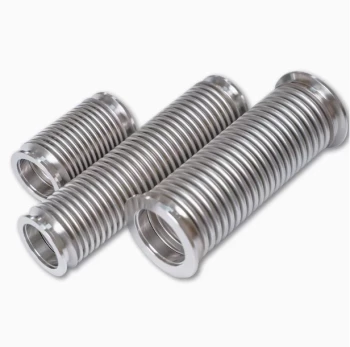
- High Performance Vacuum Bellows for Efficient Connection and Stable Vacuum in Systems
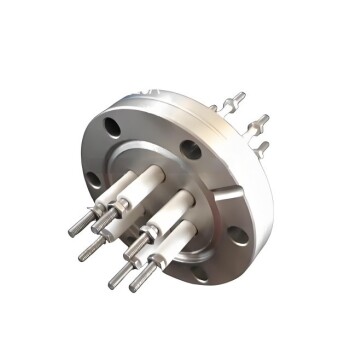
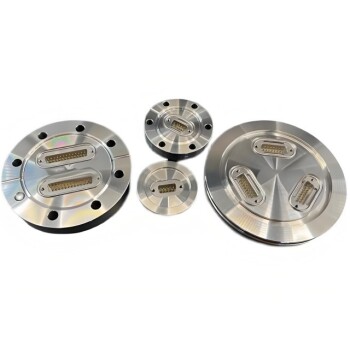
- CF KF Flange Vacuum Electrode Feedthrough Lead Sealing Assembly for Vacuum Systems
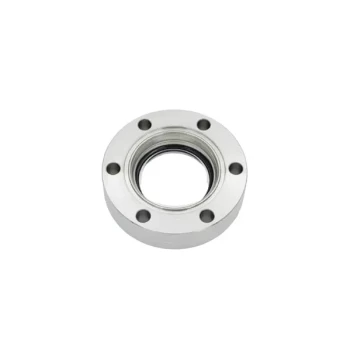
- Ultra High Vacuum Observation Window Stainless Steel Flange Sapphire Glass Sight Glass for KF
- Vacuum Induction Melting Furnace
People Also Ask
- What role does a high vacuum tube furnace play in Co-Al sintering? Master High-Purity Porous Material Synthesis
- What are the different types of tube furnaces available? Find the Perfect Fit for Your Lab's Needs
- What are the main advantages of vacuum tube furnaces in the market? Achieve Purity and Precision in Material Processing
- What is the role of a vacuum tube furnace during the final thermal treatment stage of Fe3O4@CSAC catalysts?
- What parameters must be controlled when calcining freeze-dried oxide precursors in a laboratory tube furnace? A Guide