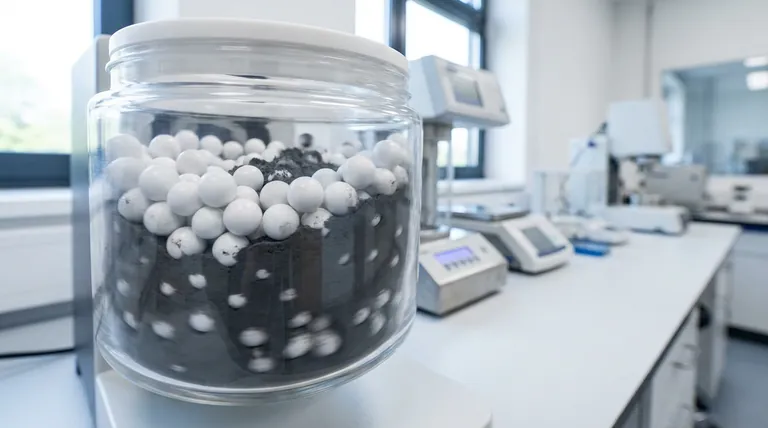
Yttria-Stabilized Zirconia (YSZ) milling balls are the definitive choice for mixing Mn2AlB2 precursor powders due to their superior combination of physical durability and chemical inertness. By utilizing YSZ, researchers ensure that the rigorous rotary ball milling process delivers the necessary kinetic energy for mixing without introducing impurities from the grinding media itself.
The selection of YSZ grinding media is driven by the critical need for purity in MAB phase synthesis. Its exceptional wear resistance prevents debris contamination during high-energy collisions, directly protecting the chemical integrity of the final Mn2AlB2 product.
Preserving Material Purity
The Threat of Media Degradation
In high-energy rotary ball milling, the grinding media is subjected to intense impact forces. Inferior materials can chip, crack, or degrade under this stress.
If the media degrades, microscopic debris mixes with the precursor powders. This contamination alters the stoichiometry of the mixture, potentially ruining the formation of the Mn2AlB2 phase.
The YSZ Advantage: Low Wear Rates
YSZ balls are selected specifically for their exceptional wear resistance. They possess an extremely low physical wear rate compared to other ceramic or metallic media.
This durability ensures that the balls remain intact throughout the milling cycle. By resisting physical abrasion, YSZ guarantees that the powder collected at the end of the process is chemically identical to the precursors added at the start.
Mechanics of Effective Mixing
Delivering Collision Energy
Mixing Mn2AlB2 precursors requires significant mechanical force to ensure homogeneity.
YSZ balls are dense and hard, allowing them to transfer high amounts of collision energy to the powder mixture. This energy is essential for breaking down agglomerates and ensuring intimate contact between the manganese, aluminum, and boron particles.
Chemical Stability Under Stress
Beyond physical toughness, YSZ offers high chemical stability. Even as the kinetic energy within the milling jar rises, the media does not react chemically with the precursor powders.
Common Pitfalls to Avoid
Overlooking Media Contamination
A common error in powder metallurgy is focusing solely on the purity of the raw powders while neglecting the milling media.
Using media with lower wear resistance is a critical mistake. It inevitably introduces foreign elements into the mixture, which acts as a "poison" to the reaction, preventing the synthesis of a pure high-quality Mn2AlB2 MAB phase.
Making the Right Choice for Your Synthesis
To ensure the successful synthesis of Mn2AlB2, align your media selection with your specific experimental goals:
- If your primary focus is Phase Purity: Select YSZ media to eliminate the risk of foreign debris altering your chemical composition.
- If your primary focus is Mixing Efficiency: Rely on YSZ to provide the necessary collision energy required to homogenize difficult precursor blends.
High-quality MAB phase synthesis demands that the integrity of your processing tools matches the quality of your raw materials.
Summary Table:
| Feature | Benefit of YSZ Media | Impact on Mn2AlB2 Synthesis |
|---|---|---|
| Wear Resistance | Extremely low physical wear rate | Prevents debris contamination and maintains stoichiometry |
| High Density | Delivers high collision energy | Breaks down agglomerates for intimate contact/homogeneity |
| Chemical Stability | Non-reactive under high stress | Protects chemical integrity of the final MAB phase product |
| Physical Hardness | Durable during rotary milling | Guarantees consistency between precursor and final powder |
Elevate Your Synthesis with KINTEK Precision
Ensure the integrity of your MAB phase research with processing tools that match your material standards. At KINTEK, we understand that phase purity is non-negotiable.
Backed by expert R&D and manufacturing, KINTEK offers a comprehensive range of laboratory solutions, including:
- High-Performance Grinding Media: Including YSZ for contamination-free milling.
- Advanced Furnace Systems: Muffle, Tube, Rotary, Vacuum, and CVD systems.
- Customization: All systems can be tailored to meet your unique high-temperature processing needs.
Don't let inferior equipment compromise your results. Contact us today to discover how our customizable high-temperature furnaces and laboratory consumables can enhance your research efficiency and material quality.
Visual Guide

References
- Fatma Nur Tuzluca Yesilbag, Ahmad Hüseyin. The effect of Aluminum (Al) ratio on the synthesis of the laminated Mn2AlB2 MAB Phase. DOI: 10.18185/erzifbed.1514470
This article is also based on technical information from Kintek Furnace Knowledge Base .
Related Products
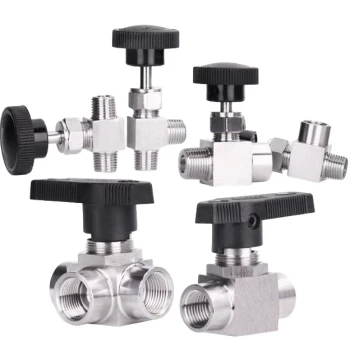
- 304 316 Stainless Steel High Vacuum Ball Stop Valve for Vacuum Systems
- Electric Rotary Kiln Small Rotary Furnace Biomass Pyrolysis Plant Rotating Furnace
- Electric Rotary Kiln Pyrolysis Furnace Plant Machine Small Rotary Kiln Calciner
- High Temperature Muffle Oven Furnace for Laboratory Debinding and Pre Sintering
- Electric Rotary Kiln Continuous Working Small Rotary Furnace Kiln for Pyrolysis Plant Heating
People Also Ask
- What role do vacuum-sealed high-purity silica ampoules play in phase equilibrium experiments? Enhance Sample Integrity
- What is the function of quartz vacuum encapsulation in RhSeCl CVT? Mastering Pure Crystal Growth
- What role does a closed pressure vessel play during the carbonation of gamma-C2S? Unlock Rapid Mineralization
- What type of pump is used in water circulating vacuum pumps and how is it installed? Discover Robust Fluid-Based Vacuum Solutions
- What is the specific function of the water circulation cooler in zirconium sponge processing? Key for Purity & Safety