
Operating a benchtop furnace requires a systematic approach to safety. At a minimum, you must have a fire extinguisher rated for electrical fires (Class C or ABC) readily accessible, a functional smoke detector installed in the work area, and heat-resistant personal protective equipment (PPE) like gloves and safety glasses. This equipment forms the foundation of a safe operating environment.
True furnace safety is not about a single piece of equipment, but about creating an integrated system. This system has three critical layers: environmental safeguards for the workspace, personal protective equipment for the operator, and disciplined procedures that prevent incidents before they happen.
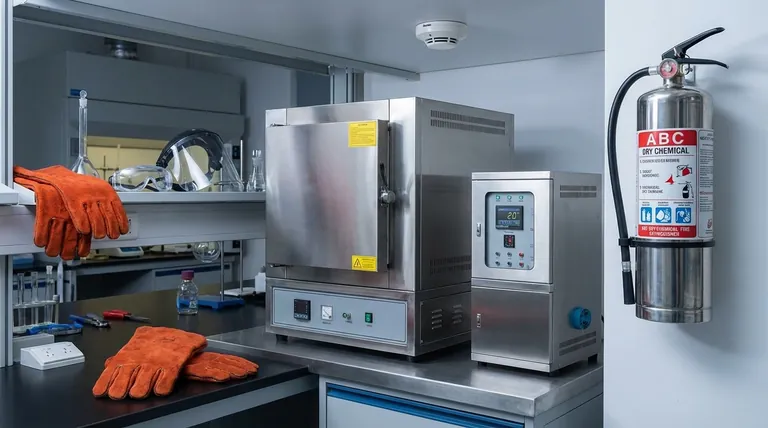
Layer 1: Environmental Safeguards
Your immediate workspace must be prepared to contain or alert you to a potential fire. These items are non-negotiable.
The Essential Fire Extinguisher
A benchtop furnace is an electrical appliance, meaning its primary fire risk is electrical. You must have a Class C or, more commonly, an ABC-rated dry chemical fire extinguisher.
Using a water-based (Class A) extinguisher on an electrical fire can conduct electricity, creating a severe shock hazard and potentially making the fire worse.
Early Warning and Power Control
A properly installed smoke detector provides the earliest possible warning of a fire, giving you crucial time to react.
Furthermore, ensure the furnace is connected to a circuit you can de-energize quickly. Know the location of the circuit breaker or emergency shut-off switch.
Electrical Integrity
Before use, always inspect the furnace's electrical connections. Look for frayed wires, damaged plugs, or loose connections that can create sparks or short circuits.
The furnace must be properly grounded according to the manufacturer's manual. If you have any doubts, consult a qualified electrician.
Layer 2: Personal Protective Equipment (PPE)
PPE shields you directly from the intense heat, potential sparks, and other hazards associated with furnace operation.
Protecting Your Hands and Body
Heat-resistant gloves are mandatory for handling any items that have been in the furnace.
For frequent use or higher-temperature work, flame-resistant clothing provides a critical layer of protection against accidental contact or heat radiation.
Shielding Your Eyes and Face
Safety glasses or goggles must be worn at all times to protect your eyes from debris or unexpected sparks.
When opening the furnace door at high temperatures, a full face shield is recommended to protect your entire face from the intense radiant heat.
Respiratory Considerations
If you are heating materials that could produce fine dust, vapors, or fumes, respiratory protection is necessary. This could range from a simple dust mask to a full respirator, depending on the specific materials involved.
Common Pitfalls to Avoid
Having the right gear is only half the battle. Avoiding common mistakes is just as important.
Complacency is the Real Hazard
The most advanced safety equipment is useless if it's not used correctly or maintained. Regularly inspect your extinguisher's charge and ensure your PPE is in good condition.
Neglecting Procedural Discipline
The most critical safety procedure is knowing the emergency shutdown process for your specific furnace model. This should be your first reaction to any sign of malfunction.
Never bypass a pre-operation check. Taking 30 seconds to inspect the power cord can prevent the most common cause of furnace fires.
Assuming All Fires Are the Same
Remember the danger of using the wrong extinguisher. Training yourself to grab the ABC extinguisher, not a water-based one, is a critical mental habit.
Making the Right Choice for Your Goal
Your specific application dictates the necessary level of safety preparation.
- If your primary focus is basic, low-risk heating: Ensure you have an ABC fire extinguisher, basic PPE (gloves and safety glasses), and have memorized the shutdown procedure.
- If your primary focus is frequent or high-temperature operation: You need a comprehensive system including a face shield, flame-resistant clothing, and a rigorously followed pre-operation electrical inspection.
- If you are working with materials that produce dust or fumes: Your plan must include an assessment of ventilation needs and the selection of appropriate respiratory protection in addition to all other safeguards.
A disciplined approach to safety transforms this powerful tool into a predictable and secure asset for your work.
Summary Table:
| Safety Equipment | Purpose | Key Details |
|---|---|---|
| Fire Extinguisher | Extinguish electrical fires | Must be Class C or ABC-rated; avoid water-based types |
| Smoke Detector | Early fire warning | Install in work area for timely alerts |
| Heat-Resistant Gloves | Hand protection | Mandatory for handling hot items |
| Safety Glasses / Goggles | Eye protection | Protect from debris and sparks |
| Face Shield | Face protection | Recommended when opening furnace at high temps |
| Flame-Resistant Clothing | Body protection | For frequent or high-temperature use |
| Respiratory Protection | Guard against fumes | Use masks or respirators for dusty or fuming materials |
Ensure your laboratory operates safely and efficiently with KINTEK's advanced high-temperature furnace solutions. Leveraging exceptional R&D and in-house manufacturing, we offer a diverse product line including Muffle, Tube, Rotary Furnaces, Vacuum & Atmosphere Furnaces, and CVD/PECVD Systems, all backed by strong deep customization capabilities to meet your unique experimental needs. Contact us today to discuss how we can enhance your lab's safety and performance!
Visual Guide

Related Products
- Laboratory Muffle Oven Furnace with Bottom Lifting
- Mesh Belt Controlled Atmosphere Furnace Inert Nitrogen Atmosphere Furnace
- Vacuum Heat Treat Sintering Furnace with Pressure for Vacuum Sintering
- High Temperature Muffle Oven Furnace for Laboratory Debinding and Pre Sintering
- Small Vacuum Heat Treat and Tungsten Wire Sintering Furnace
People Also Ask
- Why is a high-temperature muffle furnace required for FeOx-MOx/TiO2? Engineering High-Performance Nanocomposites
- What is the importance of the calcination process? Master High-Purity Calcium Phosphate Nanopowder Production
- What function does a muffle furnace perform in Ba0.75Ca0.25TiO3 calcination? Ensure Phase Purity & Synthesis
- What critical experimental conditions does a laboratory muffle furnace provide for waste sample oxidation? Achieve Precision
- Why is a laboratory muffle furnace required for the secondary heating of ground filler powders? Prevent Voids & Defects



















