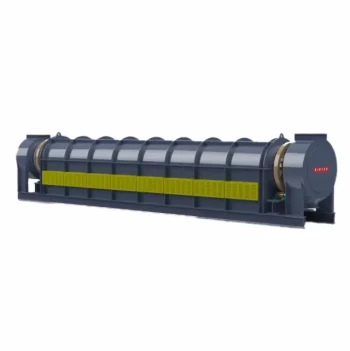
The primary technical advantage of using a laboratory static box furnace for solid-phase sulfation roasting is its ability to maintain permanent physical contact between reactant particles. This stability is critical for the diffusion of cations, which drives the conversion of materials like lithium during the roasting process.
For solid-phase reactions, success depends on the continuous interface between solid particles. A static box furnace ensures this contact remains undisturbed, whereas the mechanical motion of a rotary kiln can actively hinder the reaction by breaking these essential particle-to-particle bonds.
Maximizing Solid-Phase Reaction Efficiency
The Role of Cation Diffusion
In sulfation roasting, the chemical transformation is largely governed by the diffusion of cations between the particles of the "black powder" and the reactants. This process requires the particles to remain in a fixed, proximal state for an extended duration.
Maintaining Permanent Interface Contact
A static box furnace provides a stable, motionless environment that preserves the interface between solid reactants. This permanent contact allows for thorough chemical exchange, leading to higher conversion rates for the targeted elements.
Preventing Interface Disruption
Unlike gas-solid reactions, solid-solid roasting does not benefit from constant agitation. By eliminating movement, the static furnace ensures that the micro-environment at the contact point of two particles remains chemically active throughout the heating cycle.
Why Tumbling Can Inhibit Sulfation Roasting
The Impact of Continuous Friction
In a rotary kiln, the material is subjected to constant tumbling and internal friction. While this is excellent for mixing, it frequently breaks the physical contact points required for solid-phase roasting to proceed effectively.
Reduced Reaction Kinetics
When the interface between particles is repeatedly broken and reformed, the kinetic efficiency of the sulfation reaction drops. The system spends more time moving particles than allowing the diffusion-limited chemical reaction to occur.
Mechanical Limitations for Solid-Solid Processes
While rotary motion is ideal for preventing powder accumulation in gas-reliant processes, it creates a disconnected environment for solid-phase roasting. This can lead to incomplete reactions or the need for significantly longer processing times to achieve the same yield as a static furnace.
Understanding the Trade-offs
Temperature Gradient Challenges
The most significant downside of a static box furnace is the potential for temperature gradients within the material bed. Without the dynamic mixing found in a rotary furnace, the core of a large sample may heat more slowly than the exterior.
Gas-Phase Interaction Limits
If your roasting process requires heavy interaction with carrier gases or activating agents (like steam or methane), a static furnace is less efficient. Rotary kilns excel at ensuring every particle surface is exposed to the atmosphere, whereas static beds can suffer from "localized pockets" of stagnant gas.
Potential for Localized Overheating
In a static environment, there is no mechanical means to redistribute heat if a specific area becomes too hot. Rotary tube furnaces naturally mitigate this by constantly stirring the material through the high-temperature zone.
Choosing the Right Furnace for Your Process
How to Apply This to Your Project
Selecting the correct equipment depends entirely on whether your reaction is driven by solid-to-solid contact or solid-to-gas interaction.
- If your primary focus is solid-phase diffusion (e.g., lithium sulfation): Use a static box furnace to ensure permanent particle contact and maximize cation exchange efficiency.
- If your primary focus is uniform gas-solid activation (e.g., activated carbon): Choose a rotary tube furnace to eliminate temperature gradients and ensure consistent exposure to activating agents.
- If your primary focus is building conductive networks (e.g., graphene coating): Opt for a rotary-sealed environment to prevent powder accumulation and ensure a uniform coating on every particle surface.
By prioritizing the physical state of your reactants over simple heating speed, you can significantly improve the purity and yield of your final roasted product.
Summary Table:
| Feature | Static Box Furnace | Rotary Kiln |
|---|---|---|
| Particle Contact | Permanent & Undisturbed | Intermittent & Disrupted |
| Primary Mechanism | Solid-Phase Cation Diffusion | Gas-Solid Interaction |
| Mixing Action | None (Static Bed) | Continuous Tumbling |
| Thermal Uniformity | Potential for Gradients | Highly Uniform Mixing |
| Best Application | Lithium Sulfation, Solid Diffusion | Activated Carbon, Gas-Solid Activation |
Optimize Your Thermal Processing with KINTEK Precision
Choosing between a static environment and mechanical agitation is critical for your reaction's success. KINTEK specializes in high-performance laboratory equipment, offering a comprehensive range of high-temperature furnaces designed to meet the most demanding research requirements.
Whether you need the stable interface of a muffle furnace for solid-phase sulfation or the uniform exposure of a rotary, vacuum, CVD, or atmosphere furnace, our solutions are fully customizable to your unique needs. We also provide specialized dental and induction melting furnaces, ensuring your lab has the exact tools for maximum purity and yield.
Ready to elevate your research efficiency? Contact KINTEK today to consult with our experts and find the perfect furnace for your application.
References
- Jeraldiny Becker, Bernd Friedrich. Selective Extraction of Lithium from Spent Lithium-Ion Manganese Oxide Battery System through Sulfating Roasting and Water-Leaching. DOI: 10.3390/met13091612
This article is also based on technical information from Kintek Furnace Knowledge Base .
Related Products
- Laboratory Quartz Tube Furnace RTP Heating Tubular Furnace
- Laboratory Muffle Oven Furnace with Bottom Lifting
- Laboratory Vacuum Tilt Rotary Tube Furnace Rotating Tube Furnace
- 1200℃ Split Tube Furnace Laboratory Quartz Tube Furnace with Quartz Tube
- 1200℃ Muffle Oven Furnace for Laboratory
People Also Ask
- What physical conditions does a laboratory Tube Furnace provide for SOEC? Precision Heat for Solid Oxide Characterization
- What are the main features and functions of a laboratory tube furnace? Unlock Precise High-Temp Control for Your Lab
- What role does a laboratory tube furnace play in geological and mineralogical research? Unlock Earth's Secrets with Precision
- Why is control of heating rate and gas flow in a lab tube furnace critical for EM wave absorption materials?
- Why is a laboratory tube furnace necessary for BiVO4/RGO synthesis? Achieve Precise Nano-Structure Control