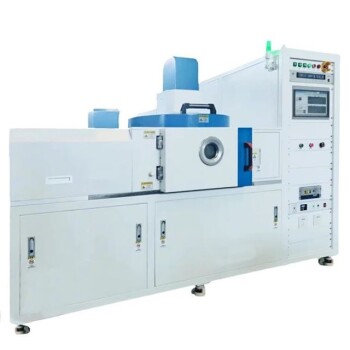
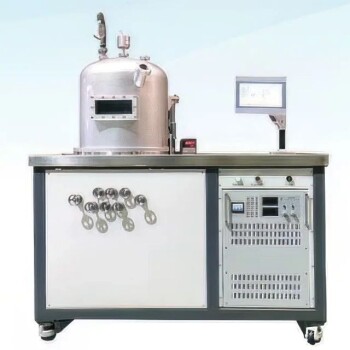
The core technical advantages of Laser Diode Floating Zone (LD-FZ) systems lie in their superior directionality, high power density, and precise spatial controllability. Unlike traditional halogen lamp systems, laser diodes allow for linear power adjustment over a wider range and the creation of significantly smaller focal spots, enabling specific thermal conditions required for advanced crystal growth.
While traditional lamp-based systems provide broad heating, LD-FZ systems leverage high-density optical energy to generate the steep temperature gradients necessary for growing complex materials. This approach allows researchers to decouple the stability of the molten zone from the thermal stress applied to the crystal.
Precision and Temperature Control
Achieving Higher Power Density
Laser diodes function as a heat source with significantly higher power density than halogen lamps. Because the light source is highly directional, energy can be delivered with extreme efficiency to a specific target area.
The Benefit of Smaller Focal Spots
This superior directionality allows the beam to be focused into a much smaller spot size. This capability is critical for establishing a tight, controlled molten zone without heating the surrounding environment unnecessarily.
Generating Steep Temperature Gradients
The concentration of energy in a small focal spot results in extremely steep temperature gradients. This thermal characteristic is technically advantageous for materials that require rapid changes in temperature at the growth interface.
Advanced Material Processing
Growth of Incongruently Melting Materials
The steep temperature gradients produced by LD-FZ systems are particularly valuable for specific classes of materials. They enable the successful growth of incongruently melting materials, which are often difficult or impossible to process using the broader thermal profiles of lamp-pumped systems.
Linear Power Adjustment
Control systems in LD-FZ units offer linear power adjustment over a wide dynamic range. This allows for smooth, granular changes to the heat input, preventing the sudden thermal shocks often associated with less precise power sources.
Thermal Profile Management
Optical Beam Shaping
A distinct advantage of laser systems is the ability to optically shape the beam. Rather than a fixed distribution, the geometry of the light can be altered to create specific temperature profiles across the sample.
Balancing Stress and Stability
By customizing the temperature profile, operators can fine-tune the growth environment. This capability is essential for balancing the reduction of thermal stress in the solidifying crystal with the physical stability of the molten zone.
Understanding the Trade-offs
Managing Thermal Gradients
While steep temperature gradients are an advantage for incongruently melting materials, they present a challenge for others. If not carefully managed via beam shaping, extreme gradients can induce excessive thermal stress, leading to cracks in the crystal.
Complexity of Control
The ability to shape beams and adjust profiles adds a layer of complexity to the operation. Achieving the perfect balance between melt stability and stress reduction requires a deeper understanding of the optical configuration than simple lamp-based heating.
Making the Right Choice for Your Research
To determine if an LD-FZ system is the correct upgrade for your laboratory, consider your specific material requirements.
- If your primary focus is growing incongruently melting materials: The LD-FZ system is superior due to its ability to generate the required steep temperature gradients via small focal spots.
- If your primary focus is minimizing crystal defects: The optical beam shaping capabilities allow you to customize temperature profiles to balance thermal stress reduction with zone stability.
The precision of laser diodes transforms the floating zone technique from a blunt thermal process into a highly tunable optical science.
Summary Table:
| Feature | Traditional Lamp-Pumped FZ | Laser Diode Floating Zone (LD-FZ) |
|---|---|---|
| Energy Density | Lower / Broad heating | Significantly Higher / Targeted |
| Focal Spot Size | Large / Diffuse | Small / Precision-focused |
| Thermal Gradient | Gentle / Gradual | Steep / Highly controllable |
| Power Adjustment | Non-linear / Basic | Linear / Wide dynamic range |
| Material Suitability | Standard congruently melting | Complex & Incongruently melting |
| Beam Shaping | Limited / Fixed | Advanced / Optically customizable |
Revolutionize Your Material Synthesis with KINTEK
Precise crystal growth demands more than just heat—it requires total control over thermal gradients and power density. Backed by expert R&D and manufacturing, KINTEK offers state-of-the-art Laser Diode Floating Zone (LD-FZ) systems alongside our wide range of Muffle, Tube, Rotary, Vacuum, and CVD systems.
Whether you are processing incongruently melting materials or seeking to minimize crystal defects through custom beam shaping, our high-temp lab solutions are fully customizable for your unique research needs.
Ready to elevate your lab's capabilities? Contact us today to speak with a specialist and find the perfect high-precision system for your application.
References
- Naoki Kikugawa. Recent Progress of Floating-Zone Techniques for Bulk Single-Crystal Growth. DOI: 10.3390/cryst14060552
This article is also based on technical information from Kintek Furnace Knowledge Base .
Related Products
- RF PECVD System Radio Frequency Plasma Enhanced Chemical Vapor Deposition
- HFCVD Machine System Equipment for Drawing Die Nano Diamond Coating
- Multi Heating Zones CVD Tube Furnace Machine for Chemical Vapor Deposition Equipment
- Multi Zone Laboratory Quartz Tube Furnace Tubular Furnace
People Also Ask
- What is RF in PECVD? A Critical Control for Plasma Deposition
- What is the role of RF power in PECVD and how does the RF-PECVD process work? Master Thin Film Deposition Control
- What are the applications of plasma enhanced chemical vapor deposition? Key Uses in Electronics, Optics & Materials
- What are the key advantages of PECVD technology? Achieve Low-Temperature, High-Quality Thin Film Deposition
- How are deposition rates and film properties controlled in PECVD? Master Key Parameters for Optimal Thin Films