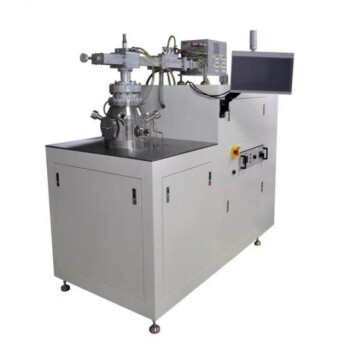
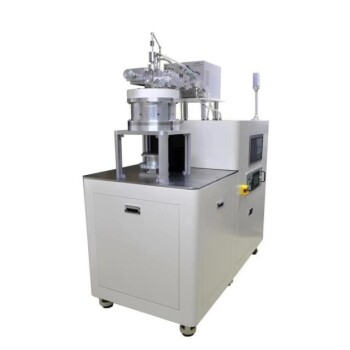
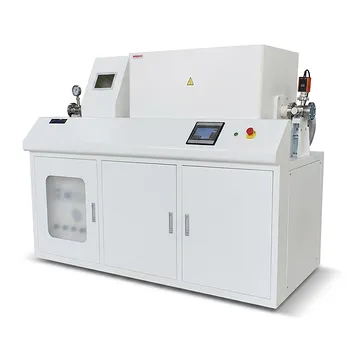
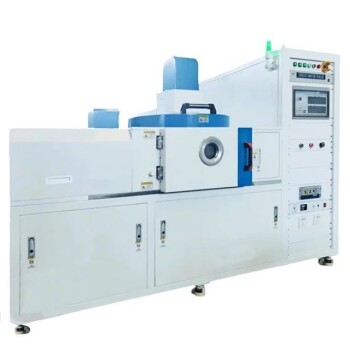
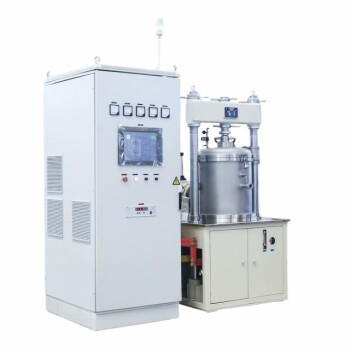
Chemical Vapor Deposition (CVD) equipment provides a more precise and cleaner coating process than Pack Cementation by utilizing gaseous precursors in a controlled environment. This method allows for the simultaneous coating of both internal and external surfaces of nickel-based superalloys, ensuring high purity and uniform thickness. Unlike pack cementation, which relies on a powder bed, CVD eliminates the risk of clogging intricate cooling holes with solid residues, making it the preferred choice for high-performance turbine components.
CVD offers unmatched control over coating composition and the ability to protect complex internal geometries without physical obstruction, whereas pack cementation is often limited by its reliance on a powder pack and the risk of particle contamination.
Precision Control and Material Quality
Gaseous Precursor Management
CVD equipment allows for precise control over the activity and flow rate of gaseous precursors, such as AlCl3. This granular control ensures that the chemical reaction remains consistent throughout the entire deposition cycle.
Exceptional Coating Purity
Because the active aluminum vapor is generated in an external reactor, the resulting coatings are extremely clean and pure. CVD can achieve high-purity deposits that often exceed 99.995%, significantly reducing the risk of defects or inclusions within the protective layer.
Microstructure and Density
The process allows for meticulous adjustment of film thickness and microstructure by tuning reaction conditions. This results in coatings that achieve near-theoretical density, providing a more robust barrier against oxidation and corrosion.
Superior Handling of Complex Geometries
Internal Cooling Hole Protection
Turbine blades often feature complex internal cooling holes that are critical for thermal management. CVD technology enables reaction gases to pass through these complex internal geometries, providing uniform protection where traditional methods fail.
Prevention of Clogging
A major disadvantage of pack cementation is the risk of clogging narrow passages with diluent particles or powder residues. CVD eliminates this risk entirely, as it uses only gaseous phases to transport the coating materials.
Conformal and Homogeneous Layers
CVD coatings conform homogeneously to the contours of the substrate, regardless of its shape. This ensures that even high length-to-diameter ratio passages receive a consistent protective layer without "shadowing" effects.
Understanding the Trade-offs
Equipment Complexity and Cost
CVD systems are generally more technically complex and require a higher initial capital investment than pack cementation setups. The need for gas delivery systems, vacuum chambers, and external reactors adds a layer of operational sophistication.
Process Temperature Requirements
While CVD can be adapted for various temperatures, many high-performance aluminide coatings still require significant heat. This means users must carefully manage the thermal history of the nickel-based superalloy to avoid degrading the base material's mechanical properties.
Throughput vs. Simplicity
Pack cementation is often praised for its simplicity and ability to process large batches of simple parts with minimal infrastructure. CVD is more suited for high-value, high-complexity components where the cost of failure justifies the more advanced technology.
How to Apply This to Your Project
When deciding between CVD and Pack Cementation for nickel-based superalloy protection, consider the geometric complexity and performance requirements of your specific component.
- If your primary focus is protecting internal cooling passages: Utilize CVD equipment to ensure all internal geometries are coated uniformly without the risk of physical blockages.
- If your primary focus is maximum material purity and density: Select CVD to achieve near-theoretical density and high-purity aluminide layers for extreme environments.
- If your primary focus is low-cost coating for simple external shapes: Consider Pack Cementation as a more accessible and cost-effective alternative for parts without internal cooling requirements.
By leveraging the precision of gaseous precursors, CVD ensures that the most advanced turbine components can survive the harshest thermal environments.
Summary Table:
| Feature | CVD Equipment | Pack Cementation |
|---|---|---|
| Precursor State | Gaseous (Precise control) | Solid Powder Bed |
| Coating Purity | High (Exceeds 99.995%) | Risk of particle contamination |
| Internal Geometries | Uniformly coats complex holes | Limited; prone to clogging |
| Microstructure | Near-theoretical density | Variable density and thickness |
| Equipment Complexity | High (Vacuum & Gas delivery) | Low (Simple powder boxes) |
| Best For | High-value turbine components | Simple shapes & low-cost needs |
Elevate Your Coating Precision with KINTEK
Are you looking to achieve superior surface protection for nickel-based superalloys? KINTEK specializes in high-performance laboratory equipment and consumables, offering a comprehensive range of customizable high-temperature furnaces, including specialized CVD, vacuum, and atmosphere systems.
Whether you need to protect complex internal geometries or ensure maximum material purity, our advanced furnace solutions are engineered to meet your exact specifications. Don't compromise on your material's performance—let our experts help you design the perfect system for your research or production needs.
Contact KINTEK today for a customized consultation!
References
- Akhmadjon Abduvokhidovich Jumaev, Nargiza Kamoljonovna Jumaeva. Analysis of The Influence of Alloying on the Performance Properties of Cast Iron Grades 280Cr29Ni and 330Cr17 with the Purpose of Increasing their Quality. DOI: 10.52209/2706-977x_2024_4_3
This article is also based on technical information from Kintek Furnace Knowledge Base .
Related Products
- Custom Made Versatile CVD Tube Furnace Chemical Vapor Deposition CVD Equipment Machine
- HFCVD Machine System Equipment for Drawing Die Nano Diamond Coating
- Multi Heating Zones CVD Tube Furnace Machine for Chemical Vapor Deposition Equipment
- 915MHz MPCVD Diamond Machine Microwave Plasma Chemical Vapor Deposition System Reactor
- Cylindrical Resonator MPCVD Machine System for Lab Diamond Growth
People Also Ask
- Why are CVD tube furnace sintering systems indispensable for 2D material research and production? Unlock Atomic-Scale Precision
- What is a CVD tube furnace and what is its primary function? Discover Precision Thin-Film Deposition
- Which industries and research fields benefit from CVD tube furnace sintering systems for 2D materials? Unlock Next-Gen Tech Innovations
- How does CVD tube furnace sintering enhance graphene growth? Achieve Superior Crystallinity and High Electron Mobility
- What customization options are available for CVD tube furnaces? Tailor Your System for Superior Material Synthesis