Knowledge thermal elements How does a K-type thermocouple ensure process reliability in lead-bismuth alloy separation? Master Thermal Precision
Author avatar

Tech Team · Kintek Furnace

Updated 2 weeks ago

How does a K-type thermocouple ensure process reliability in lead-bismuth alloy separation? Master Thermal Precision


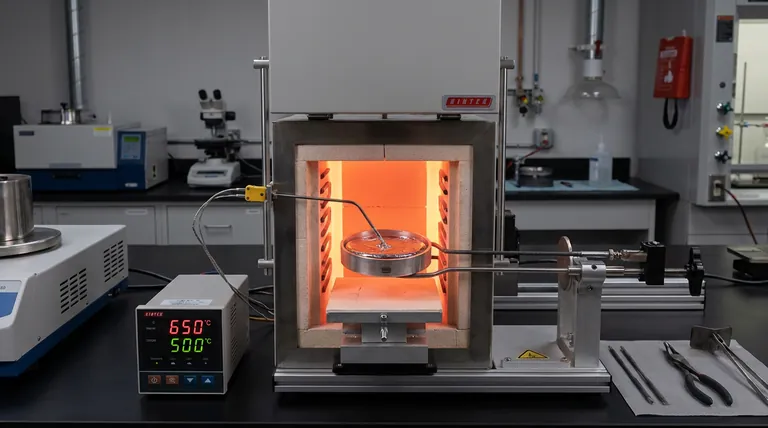
A K-type thermocouple ensures process reliability by serving as the precise feedback mechanism within the temperature control system. It continuously monitors the molten alloy across a wide thermal spectrum, ensuring the melt adheres strictly to the narrow temperature windows required for effective chemical separation.

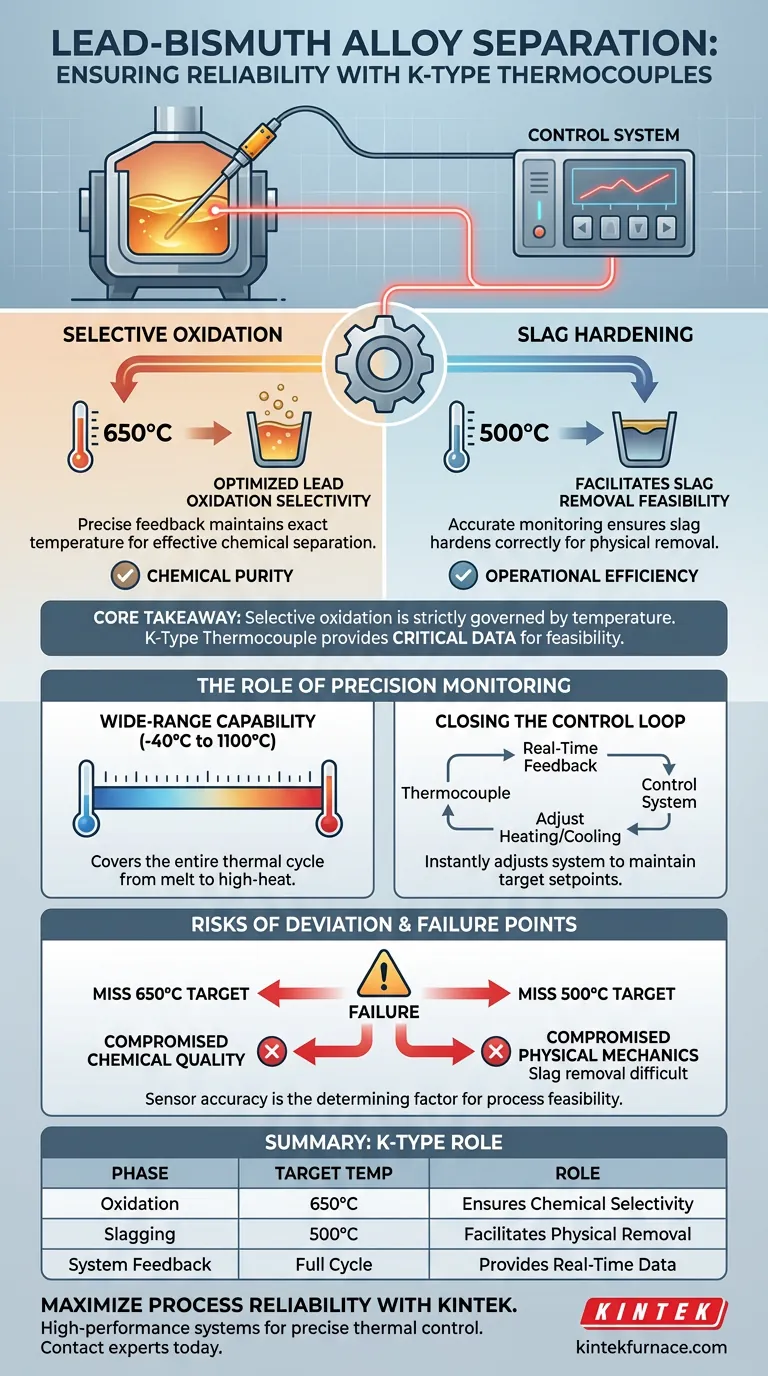
Core Takeaway Lead-bismuth separation relies heavily on selective oxidation, a reaction that is strictly governed by temperature. The K-type thermocouple provides the critical data needed to maintain the melt at exactly 650°C for oxidation and 500°C for slagging, ensuring the physical feasibility of the separation process.
How does a K-type thermocouple ensure process reliability in lead-bismuth alloy separation? Master Thermal Precision

The Role of Precision Monitoring

Wide-Range Capability

The separation process involves significant thermal shifts. A K-type thermocouple is ideal for this application because it offers a monitoring range typically spanning from -40°C to 1100°C.

This broad range covers the entire operational cycle of the alloy, from the initial melt to the high-heat oxidation phases.

Closing the Control Loop

Reliability is not just about measuring temperature; it is about controlling it. The thermocouple connects directly to the temperature control system.

This connection provides real-time feedback, allowing the system to adjust heating or cooling elements instantly to maintain the target setpoints.

Critical Temperature Checkpoints

Optimizing Oxidation Selectivity

The core of the separation process is the selective oxidation of lead. To achieve this, the system must maintain a melt temperature of 650°C.

The K-type thermocouple ensures the alloy stays at this specific point. If the temperature deviates, the selectivity of lead oxidation drops, resulting in poor separation efficiency.

Facilitating Slag Hardening

Once oxidation occurs, the process requires a cooling phase to manage the resulting slag. The target temperature for this phase is 500°C.

Accurate monitoring here is vital for the feasibility of slag removal. If the sensor fails to confirm this temperature, the slag may not harden correctly, making physical removal difficult or impossible.

Understanding the Risks of Deviation

The Consequence of Inaccuracy

The primary trade-off in this process is the reliance on sensor accuracy. The "feasibility" of the entire operation is directly linked to the thermocouple's performance.

If the sensor feedback drifts or becomes inaccurate, the process will miss the 650°C or 500°C targets.

Operational Failure Points

Missing the 650°C target compromises the chemical quality of the separation. Missing the 500°C target compromises the physical mechanics of the operation.

Therefore, the reliability of the thermocouple is not a convenience; it is the determining factor in whether the slag hardening and removal operations can actually be performed.

Making the Right Choice for Your Goal

To maximize the effectiveness of your lead-bismuth separation process, consider these operational targets:

  • If your primary focus is Chemical Purity: Ensure the thermocouple calibration is verified to hold the melt strictly at 650°C to maximize lead oxidation selectivity.
  • If your primary focus is Operational Efficiency: Prioritize the sensor's response time during the cooling phase to hit 500°C quickly, ensuring slag hardens properly for easy removal.

Reliable thermal data is the difference between a theoretical separation process and a feasible, repeatable operation.

Summary Table:

Process Phase Target Temperature Role of K-Type Thermocouple
Initial Melting Varies Monitoring wide thermal shifts from ambient to melt state
Selective Oxidation 650°C Ensures chemical selectivity for precise lead oxidation
Slag Hardening 500°C Facilitates physical hardening for efficient slag removal
System Feedback Full Cycle Provides real-time data to close the control loop

Maximize Your Process Reliability with KINTEK

Precision in lead-bismuth separation requires more than just high temperatures; it demands absolute thermal control. Backed by expert R&D and world-class manufacturing, KINTEK provides high-performance Muffle, Tube, Vacuum, and CVD systems designed to meet the rigorous demands of material science. Our customizable lab high-temp furnaces ensure your research and production benefit from the precise monitoring and feedback loops necessary for repeatable success.

Ready to elevate your lab's thermal accuracy? Contact KINTEK experts today to find the perfect customizable solution for your unique separation and heating needs.

Visual Guide
How does a K-type thermocouple ensure process reliability in lead-bismuth alloy separation? Master Thermal Precision Visual Guide

References

  1. Investigation of the Process of Increasing Bismuth Content in Lead Alloys Using the Oxygen Oxidation Method. DOI: 10.3390/pr13051276

This article is also based on technical information from Kintek Furnace Knowledge Base .

Related Products

People Also Ask

Related Products

Silicon Carbide SiC Thermal Heating Elements for Electric Furnace

Silicon Carbide SiC Thermal Heating Elements for Electric Furnace

High-performance SiC heating elements for labs, offering 600-1600°C precision, energy efficiency, and long lifespan. Customizable solutions available.

Molybdenum Disilicide MoSi2 Thermal Heating Elements for Electric Furnace

Molybdenum Disilicide MoSi2 Thermal Heating Elements for Electric Furnace

High-performance MoSi2 heating elements for labs, reaching 1800°C with superior oxidation resistance. Customizable, durable, and reliable for high-temperature applications.

High Temperature Muffle Oven Furnace for Laboratory Debinding and Pre Sintering

High Temperature Muffle Oven Furnace for Laboratory Debinding and Pre Sintering

KT-MD Debinding & Pre-Sintering Furnace for ceramics - precise temperature control, energy-efficient design, customizable sizes. Boost your lab efficiency today!

1200℃ Split Tube Furnace Laboratory Quartz Tube Furnace with Quartz Tube

1200℃ Split Tube Furnace Laboratory Quartz Tube Furnace with Quartz Tube

Discover KINTEK's 1200℃ Split Tube Furnace with quartz tube for precise high-temperature lab applications. Customizable, durable, and efficient. Get yours now!

Electric Rotary Kiln Small Rotary Furnace Biomass Pyrolysis Plant Rotating Furnace

Electric Rotary Kiln Small Rotary Furnace Biomass Pyrolysis Plant Rotating Furnace

KINTEK's Rotary Biomass Pyrolysis Furnace converts biomass to biochar, bio-oil, and syngas efficiently. Customizable for research or production. Get your solution now!

Electric Rotary Kiln Pyrolysis Furnace Plant Machine Small Rotary Kiln Calciner

Electric Rotary Kiln Pyrolysis Furnace Plant Machine Small Rotary Kiln Calciner

KINTEK Electric Rotary Kiln: Precise 1100℃ calcination, pyrolysis & drying. Eco-friendly, multi-zone heating, customizable for lab & industrial needs.

Vacuum Heat Treat Furnace with Ceramic Fiber Liner

Vacuum Heat Treat Furnace with Ceramic Fiber Liner

KINTEK's Vacuum Furnace with Ceramic Fiber Lining offers precise high-temperature processing up to 1700°C, ensuring uniform heat distribution and energy efficiency. Ideal for labs and production.

1400℃ High Temperature Laboratory Tube Furnace with Quartz and Alumina Tube

1400℃ High Temperature Laboratory Tube Furnace with Quartz and Alumina Tube

KINTEK's Tube Furnace with Alumina Tube: Precision high-temperature processing up to 2000°C for labs. Ideal for material synthesis, CVD, and sintering. Customizable options available.

Stainless Steel Quick Release Vacuum Chain Three Section Clamp

Stainless Steel Quick Release Vacuum Chain Three Section Clamp

Stainless steel quick release vacuum clamps ensure leak-free connections for high vacuum systems. Durable, corrosion-resistant, and easy to install.

Electric Rotary Kiln Continuous Working Small Rotary Furnace Kiln for Pyrolysis Plant Heating

Electric Rotary Kiln Continuous Working Small Rotary Furnace Kiln for Pyrolysis Plant Heating

KINTEK's electric rotary furnaces offer precision heating up to 1100°C for calcination, drying, and pyrolysis. Durable, efficient, and customizable for labs and production. Explore models now!

CF KF Flange Vacuum Electrode Feedthrough Lead Sealing Assembly for Vacuum Systems

CF KF Flange Vacuum Electrode Feedthrough Lead Sealing Assembly for Vacuum Systems

Reliable CF/KF flange vacuum electrode feedthrough for high-performance vacuum systems. Ensures superior sealing, conductivity & durability. Customizable options available.

Multi Zone Laboratory Quartz Tube Furnace Tubular Furnace

Multi Zone Laboratory Quartz Tube Furnace Tubular Furnace

KINTEK Multi-Zone Tube Furnace: Precise 1700℃ heating with 1-10 zones for advanced material research. Customizable, vacuum-ready, and safety-certified.

2200 ℃ Graphite Vacuum Heat Treat Furnace

2200 ℃ Graphite Vacuum Heat Treat Furnace

2200℃ Graphite Vacuum Furnace for high-temperature sintering. Precise PID control, 6*10⁻³Pa vacuum, durable graphite heating. Ideal for research & production.

1400℃ Controlled Inert Nitrogen Atmosphere Furnace

1400℃ Controlled Inert Nitrogen Atmosphere Furnace

KT-14A Controlled Atmosphere Furnace for labs & industry. 1400°C max temp, vacuum sealing, inert gas control. Customizable solutions available.

1200℃ Controlled Inert Nitrogen Atmosphere Furnace

1200℃ Controlled Inert Nitrogen Atmosphere Furnace

KINTEK 1200℃ Controlled Atmosphere Furnace: Precision heating with gas control for labs. Ideal for sintering, annealing, and material research. Customizable sizes available.

Ultra-High Vacuum Flange Aviation Plug Glass Sintered Airtight Circular Connector for KF ISO CF

Ultra-High Vacuum Flange Aviation Plug Glass Sintered Airtight Circular Connector for KF ISO CF

Ultra-High Vacuum Flange Aviation Plug Connector for aerospace & labs. KF/ISO/CF compatible, 10⁻⁹ mbar airtight, MIL-STD certified. Durable & customizable.

Vacuum Heat Treat Sintering Furnace with Pressure for Vacuum Sintering

Vacuum Heat Treat Sintering Furnace with Pressure for Vacuum Sintering

KINTEK's Vacuum Pressure Sintering Furnace offers 2100℃ precision for ceramics, metals, and composites. Customizable, high-performance, and contamination-free. Get a quote now!

1800℃ High Temperature Muffle Oven Furnace for Laboratory

1800℃ High Temperature Muffle Oven Furnace for Laboratory

KINTEK Muffle Furnaces: Precision 1800°C heating for labs. Energy-efficient, customizable, with PID control. Ideal for sintering, annealing, and research.

Vacuum Hot Press Furnace Machine Heated Vacuum Press Tube Furnace

Vacuum Hot Press Furnace Machine Heated Vacuum Press Tube Furnace

Discover KINTEK's advanced Vacuum Tube Hot Press Furnace for precise high-temperature sintering, hot pressing, and material bonding. Customizable solutions for labs.

Vacuum Heat Treat Sintering Furnace Molybdenum Wire Vacuum Sintering Furnace

Vacuum Heat Treat Sintering Furnace Molybdenum Wire Vacuum Sintering Furnace

KINTEK's Vacuum Molybdenum Wire Sintering Furnace excels in high-temperature, high-vacuum processes for sintering, annealing, and material research. Achieve precise 1700°C heating with uniform results. Custom solutions available.


Leave Your Message