
High-precision temperature control is the critical mechanism that dictates the structural integrity and performance reliability of high-entropy materials. By utilizing advanced measurement tools like infrared thermometry alongside programmable heating profiles, these systems ensure the strict execution of the specific thermal curves required to navigate complex phase transformations.
The formation of high-entropy solid solutions requires more than just high heat; it demands the ability to hold specific temperatures within narrow windows. Precise thermal regulation is the only way to facilitate necessary elemental diffusion while simultaneously preventing the microstructural defects caused by local overheating.
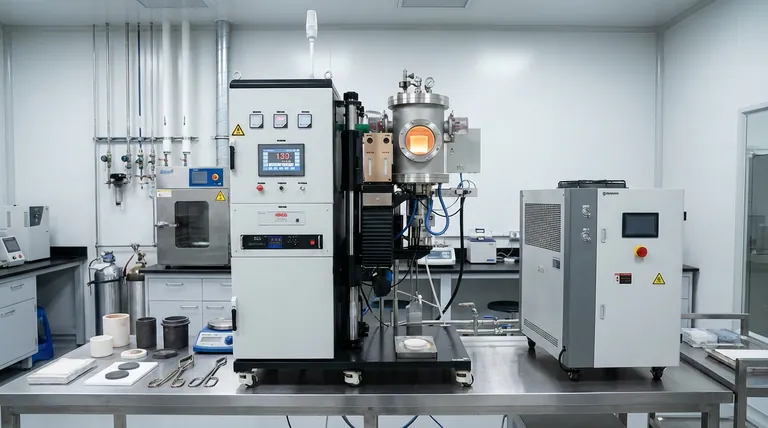
Navigating Complex Phase Transformations
Crossing the Phase Window
High-entropy solid solutions are thermodynamically complex. To form correctly, these materials often must cross specific phase transformation temperature windows.
Strict Adherence to Heating Curves
A standard furnace setup is often insufficient for this task. The system requires programmable temperature control to execute a heating curve with absolute strictness.
This automation ensures the material spends the exact amount of time required in specific thermal zones to stabilize the desired phase.
Controlling Microstructure and Diffusion
Preventing Abnormal Grain Coarsening
One of the primary risks during sintering is local overheating. If the temperature spikes unevenly, it triggers abnormal grain coarsening.
High-precision systems mitigate this by maintaining uniform thermal conditions. This prevention is vital for maintaining the mechanical strength of the final bulk material.
Ensuring Sufficient Elemental Diffusion
High-entropy materials are composed of multiple distinct elements. These components require precise, sustained temperatures to diffuse sufficiently into a cohesive solution.
If the temperature fluctuates or falls short of the preset value, the elements will not mix uniformly, leading to segregation and weak points in the material.
The Result: Consistency and Uniformity
Achieving Uniform Microstructures
The direct output of a high-precision system is a high-entropy bulk material with a uniform microstructure. The absence of thermal gradients during sintering ensures the internal structure is consistent throughout the part.
Guaranteeing High Performance Consistency
Ultimately, precise control translates to reliability. Because the sintering process effectively manages diffusion and grain growth, the final material exhibits high performance consistency, making it suitable for demanding applications.
Understanding the Trade-offs
Measurement Complexity
While systems like infrared thermometry offer high precision, they require careful setup. Factors such as surface emissivity can change during the sintering process, demanding sophisticated calibration to maintain accuracy.
System Cost vs. Material Quality
Implementing programmable, high-precision control increases the initial capital investment of the sintering setup. However, this is a necessary trade-off to avoid the high scrap rates associated with failed solid solution formation in cheaper, less accurate furnaces.
Making the Right Choice for Your Goal
To maximize the quality of your high-entropy materials, align your control strategy with your specific outcome:
- If your primary focus is Material Homogeneity: Prioritize systems with tight programmable control to ensure all component elements have sufficient time and energy to diffuse at preset temperatures.
- If your primary focus is Structural Integrity: Focus on high-precision measurement (such as IR thermometry) to detect and prevent local overheating that leads to abnormal grain coarsening.
Precision in sintering is not a luxury; it is the fundamental prerequisite for unlocking the potential of high-entropy alloys.
Summary Table:
| Impact Factor | Effect on High-Entropy Materials | Benefit of High-Precision Control |
|---|---|---|
| Phase Transformation | Requires crossing narrow thermal windows | Strict adherence to programmable heating curves |
| Grain Growth | Local overheating causes abnormal coarsening | Uniform thermal conditions for mechanical strength |
| Elemental Diffusion | Uneven mixing leads to phase segregation | Sustained temperature stability for homogeneity |
| Microstructure | Thermal gradients cause inconsistencies | Uniform internal structure and high performance consistency |
Elevate Your Research with Precision Sintering Technology
High-entropy material innovation demands zero-compromise thermal accuracy. Backed by expert R&D and manufacturing, KINTEK offers high-performance Muffle, Tube, Rotary, Vacuum, and CVD systems designed to master complex phase transformations. Our lab high-temp furnaces are fully customizable to your specific heating profiles, ensuring uniform microstructures and consistent results every time.
Ready to optimize your material quality? Contact KINTEK today to discuss your unique laboratory needs.
References
- Wen Jiang, Peng Fu. Achieving efficient almost CO-free hydrogen production from methanol steam reforming on Cu modified α-MoC. DOI: 10.1039/d3ra07448j
This article is also based on technical information from Kintek Furnace Knowledge Base .
Related Products
- 9MPa Air Pressure Vacuum Heat Treat and Sintering Furnace
- 2200 ℃ Tungsten Vacuum Heat Treat and Sintering Furnace
- High Temperature Muffle Oven Furnace for Laboratory Debinding and Pre Sintering
- 2200 ℃ Graphite Vacuum Heat Treat Furnace
- Vacuum Heat Treat Sintering Furnace Molybdenum Wire Vacuum Sintering Furnace
People Also Ask
- What are the key features of vacuum pressure sintering furnaces? Unlock High-Purity, Dense Materials
- What safety features are integrated into vacuum pressure sintering furnaces? Ensure Operator and Equipment Protection
- What are the key components of a vacuum pressure sintering furnace? Essential Systems for High-Performance Materials
- What materials can be processed using vacuum pressure sintering furnaces? Unlock High-Performance Material Densification
- What are the main technical parameters of vacuum pressure sintering furnaces? Key Specs for Advanced Materials



















