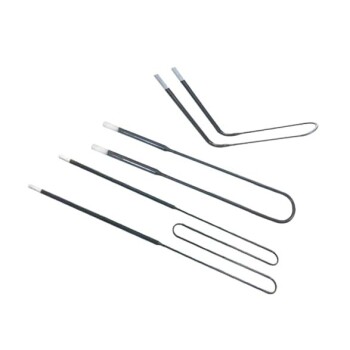
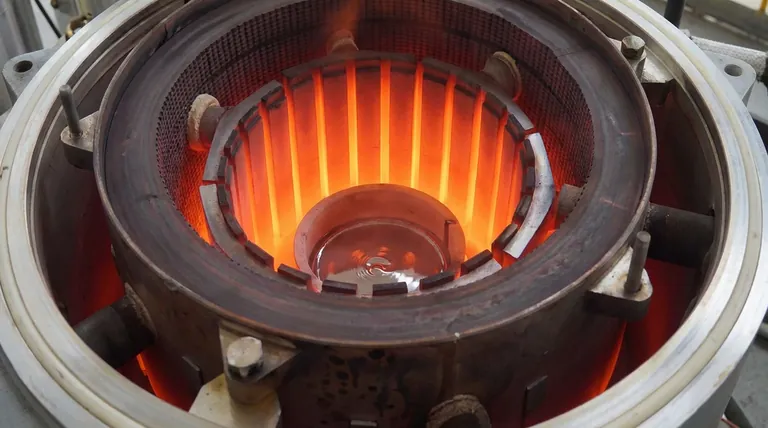
The graphite heater functions as the primary engine of thermal control within a single-crystal silicon furnace. Acting as the central power source via resistance heating, it does more than simply melt silicon; it establishes the specific thermal profile required to sustain stable crystal growth.
The graphite heater dictates the temperature gradient within the melt through precise power adjustment and design. This control is the deciding factor in managing crystallization rates, defining the shape of the solid-liquid interface, and preventing structural defects caused by thermal stress.
The Mechanism of Thermal Regulation
Generating the High-Temperature Environment
The furnace relies on resistance heating generated by the graphite component to achieve the extreme temperatures necessary for silicon processing.
Because the heater acts as the central power source, its ability to maintain consistent heat is the baseline requirement for the entire operation.
Shaping the Temperature Gradient
Beyond raw heat, the heater's design determines the temperature gradient across the silicon melt.
This gradient is not accidental; it is a calculated distribution of thermal energy that drives the direction and speed of solidification.
Impact on Crystal Quality
Managing Crystallization Rate
The precise regulation of power allows operators to control the crystallization rate of the silicon.
If the heat input fluctuates, the growth rate becomes unstable, potentially ruining the single-crystal structure.
Defining the Interface Shape
The heater’s distribution of heat directly sculpts the solid-liquid interface, the boundary where the crystal meets the melt.
Maintaining the correct interface shape is essential for uniform growth and material homogeneity.
Preventing Dislocation Defects
Improper heating leads to thermal stress within the growing crystal.
By ensuring a smooth and controlled thermal field, the graphite heater minimizes this stress, thereby preventing the formation of dislocation defects that compromise the silicon's electronic properties.
Understanding the Trade-offs of Heater Geometry
The Risk of Localized Hot Spots
The geometric structure of the heater significantly influences the electric and thermal field distribution.
Traditional tubular heaters often struggle with high surface loads, which can create local hot spots. These irregularities lead to radial temperature differences that can destabilize the melt.
Improving Uniformity with Plate Designs
In contrast, plate-shaped heaters are designed to increase the area available for radiation heat exchange.
This design reduces the surface heat flux density, resulting in superior temperature uniformity in the heating zone and extending the service life of the component.
Optimizing for Crystal Growth
To ensure the highest quality silicon production, you must match the heater's capabilities to your specific processing goals.
- If your primary focus is Defect Reduction: Prioritize a heater design that offers precise power adjustment to minimize thermal stress and prevent dislocations.
- If your primary focus is Thermal Uniformity and Longevity: Consider plate-shaped geometries to lower surface heat flux and eliminate radial temperature discrepancies.
The graphite heater is not just a heat source; it is the fundamental tool for architecting the internal environment of your furnace.
Summary Table:
| Feature | Impact on Thermal Field | Benefit for Crystal Growth |
|---|---|---|
| Power Regulation | Precise control of thermal gradient | Maintains stable crystallization rates |
| Heater Geometry | Influences heat flux density | Ensures radial temperature uniformity |
| Interface Shaping | Sculpts solid-liquid boundary | Improves material homogeneity |
| Stress Management | Minimizes thermal fluctuations | Prevents dislocation defects |
Elevate Your Crystal Production with KINTEK
Precise thermal field control is the difference between a high-yield harvest and a failed batch. At KINTEK, we specialize in the engineering of high-performance graphite components and advanced furnace systems tailored for the semiconductor industry.
Backed by expert R&D and manufacturing, KINTEK offers Muffle, Tube, Rotary, Vacuum, and CVD systems, alongside customizable high-temp lab furnaces designed to meet your unique processing needs. Whether you are aiming to reduce dislocation defects or extend heater longevity through optimized geometry, our team is ready to deliver the solution.
Ready to optimize your thermal profile? Contact KINTEK experts today to discuss your custom furnace requirements.
References
- Lei Jiang, Yue Zhao. A Soft Measurement Method for the Tail Diameter in the Growing Process of Czochralski Silicon Single Crystals. DOI: 10.3390/app14041569
This article is also based on technical information from Kintek Furnace Knowledge Base .
Related Products
- Silicon Carbide SiC Thermal Heating Elements for Electric Furnace
- 2200 ℃ Graphite Vacuum Heat Treat Furnace
- Molybdenum Disilicide MoSi2 Thermal Heating Elements for Electric Furnace
- Multi Heating Zones CVD Tube Furnace Machine for Chemical Vapor Deposition Equipment
- Small Vacuum Heat Treat and Tungsten Wire Sintering Furnace
People Also Ask
- How do the different types of silicon carbide heating elements compare in terms of applications? Find the Best Fit for Your High-Temp Needs
- What are the temperature capabilities and mounting options for silicon carbide heating elements? Unlock High-Temp Flexibility and Durability
- How do silicon carbide heating elements enhance the heat treatment of alloys? Achieve Superior Temperature Control
- What is the recommended surface load for silicon carbide heating elements at different furnace temperatures? Maximize Lifespan & Performance
- What are the advantages of using silicon carbide heating elements in industrial furnaces? Boost Efficiency and Durability