Shrinkage isn’t just a length change—it’s a kinetic fingerprint. Laboratory dilatometer analysis under precisely controlled heating rates gives you a continuous, real-time measurement of linear shrinkage (ΔL/L₀) as temperature increases. From this raw data, you derive the shrinkage rate curve (dy/dT), which directly reveals the onset temperature of rapid densification, the temperature of peak shrinkage rate, and the overall densification completeness. This information allows you to extract the activation energy of sintering, identify the dominant mass transport mechanisms, and build optimized thermal profiles that deliver the target density with minimal energy and distortion.
The real power is that a single controlled-rate dilatometer run replaces dozens of trial-and-error furnace cycles. By comparing shrinkage rate curves across multiple heating rates, you can mathematically separate the temperature and time contributions to densification—turning the sintering process from an empirical art into a predictable, kinetically grounded science.
Translating Continuous Shrinkage Data into Kinetic Insight
The Measurement Principle
A high-temperature dilatometer uses a push-rod and a Linear Variable Displacement Transducer (LVDT) to track the length of a powder compact as it is heated. The raw output is a continuous trace of ΔL/L₀ versus temperature. When you have a furnace with precise ramp-rate control (e.g., 1 to 20 K/min), this trace becomes highly reproducible and suitable for kinetic analysis.
Deriving the Rate Curve that Matters
The key step is to differentiate the shrinkage trace with respect to temperature to obtain dy/dT (the instantaneous densification rate). This derivative curve exposes the onset temperature where rapid densification begins and the peak shrinkage rate temperature where densification is fastest. These temperatures are your first tangible kinetic parameters—they tell you exactly where to focus your thermal budget.
Why the Total Shrinkage Area Stays Constant
Experiments consistently show that while a faster heating rate shifts the peak shrinkage rate to a higher temperature, the integrated area under the dy/dT curve remains nearly constant. In other words, you get the same total amount of densification regardless of ramp speed—you just achieve it over a different temperature window. This constancy is the foundation for predicting final dimensions even when you change heating profiles.
Extracting Activation Energy and Identifying Transport Mechanisms
The Multi-Rate Method for Activation Energy
By running the same powder compact at several controlled heating rates (e.g., 5, 10, and 15 K/min) you can extract the sintering activation energy. The shift in the peak shrinkage rate temperature with heating rate follows an Arrhenius-like relationship. Plotting the logarithm of the heating rate against the inverse of the peak temperature yields the activation energy—without the need for complex isothermal experiments.
Pinpointing the Dominant Diffusion Path
The magnitude of the activation energy directly tells you which atomic transport mechanism dominates densification. Lower activation energies typically point to grain boundary diffusion, while higher values indicate volume diffusion. This distinction is critical for alloy design: if volume diffusion controls densification, you might need higher temperatures or longer holds to reach full density, whereas grain-boundary-dominated systems can be processed at lower temperatures.
Linking Kinetics to Microstructural Homogenization
In mixed powder systems, the same diffusion processes that densify also homogenize chemical gradients. The degree of homogenization scales with volume diffusivity and time, following ( H \approx D_V t / \lambda^2 ). Because diffusivity rises exponentially with temperature, the activation energy you extract from dilatometry also predicts how quickly your material will chemically homogenize. This dual insight lets you balance densification against the elimination of compositional heterogeneities.
How Heating Rate Selects the Mass Transport Regime
Low Rates: Coarsening Without Densification
When you heat slowly (e.g., 1 K/min), surface diffusion becomes the dominant mass transport path in the early stages. Surface diffusion grows necks between particles and coarsens the microstructure but contributes almost nothing to shrinkage. The result is a compact that may lose driving force for densification and end up with a coarse grain structure and low density.
High or Tailored Rates: Bypassing Surface Diffusion
A faster heating rate (e.g., 10–20 K/min) pushes the compact quickly through the low-temperature window where surface diffusion is active. By the time significant atomic mobility begins, the temperature is already in a regime where volume and grain boundary diffusion take over. These mechanisms directly produce densification and limit grain growth, giving you a finer-grained, higher-density part from the same powder.
Stepwise Heating and Neck Growth Acceleration
Even within a single ramp, the heating schedule matters. Numerical simulations show that the rate of neck growth between powder grains is inversely proportional to the time spent at each temperature step. Using shorter dwell segments (e.g., 2.5 minutes instead of 20) during stepwise heating accelerates early-stage neck formation. A furnace with multi-segment, programmable PID control gives you this fine resolution.
Navigating the Trade-Offs and Pitfalls
When Faster Heating Creates Problems
Shifting the densification to higher temperatures by heating faster can introduce thermal gradients across the part. If the furnace cannot maintain ±5°C uniformity at high ramp rates, the outside of the compact will sinter before the core, leading to warping, cracking, or differential shrinkage. The kinetic data from a small dilatometer sample must be verified on production-scale geometries.
The Densification Plateau Trap
Certain materials, like copper compacts heated to 1050°C, reach a densification plateau around 91–92% of theoretical density. Beyond that point, no amount of additional isothermal hold time produces further shrinkage. Dilatometry reveals this plateau as a flatline in the shrinkage rate curve. Continuing to hold at temperature simply wastes energy and can cause unnecessary grain growth.
Constant Shrinkage Doesn’t Mean Constant Microstructure
While the total shrinkage area is heating-rate invariant, the resulting grain size and pore distribution are not. Two cycles that both achieve 95% density via different ramp profiles can have very different mechanical properties. Always complement dilatometry with microstructural characterization to confirm that the “kinetically efficient” profile also delivers your performance targets.
Turning Kinetics into Controlled Densification
The ultimate value of laboratory dilatometer analysis is in translating these kinetic parameters into real-world furnace recipes.
- If your primary goal is to minimize energy consumption: Use the peak shrinkage rate temperature to set your hold point, and shorten your furnace time by ramping quickly to just below that temperature before a brief isothermal soak.
- If your primary goal is to achieve maximum density while controlling grain size: Apply a fast initial ramp to bypass surface diffusion coarsening, then switch to a slower, controlled rate in the temperature window where volume and grain boundary diffusion dominate.
- If your primary goal is to predict final part dimensions accurately: Rely on the constant total shrinkage area principle; from a single calibration run at one heating rate, you can calculate the shrinkage you will get at any other rate, eliminating iterative trial-and-error.
- If your primary goal is to identify the sintering mechanism for a novel alloy: Run three or more controlled heating rates, extract the activation energy, and compare it to known self-diffusion and grain boundary diffusion values to pinpoint the controlling transport path.
With a calibrated dilatometer and a furnace that holds its programmed ramp to within 0.1 K/min, you stop guessing about sintering time and temperature—you start predicting final density with analytical certainty.
Summary Table:
| Parameter / Feature | Kinetic Indicator | Practical Impact on Process |
|---|---|---|
| Shrinkage Rate Curve (dy/dT) | Onset & peak shrinkage temperatures | Defines exact temperature window for rapid densification |
| Activation Energy ($E_a$) | Arrhenius slope across multiple ramp rates | Identifies dominant mechanism (grain boundary vs. volume diffusion) |
| Fast Heating Rates | Suppression of low-temp neck growth | Bypasses coarsening surface diffusion for higher final density |
| Total Shrinkage Area | Area under dy/dT curve (constant value) | Enables accurate dimensional prediction across varying ramp profiles |
Ready to turn your sintering process from trial-and-error into a predictable, kinetically grounded science? At KINTEK, we specialize in premium laboratory equipment and consumables designed to meet demanding research and manufacturing standards. We offer a comprehensive line of customizable high-temperature furnaces—including muffle, tube, rotary, vacuum, CVD, atmosphere, dental, and induction melting systems—engineered with the precise multi-segment ramp control and thermal uniformity essential for kinetic optimization. Upgrade your thermal processing capabilities today—contact KINTEK experts now to find the ideal furnace solution for your unique application!
Related Products
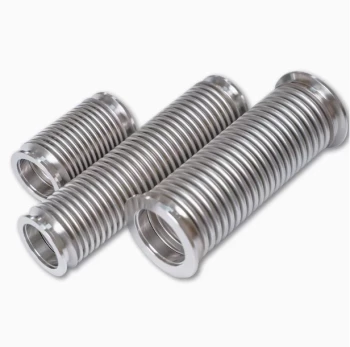
- High Performance Vacuum Bellows for Efficient Connection and Stable Vacuum in Systems
- Multi Heating Zones CVD Tube Furnace Machine for Chemical Vapor Deposition Equipment
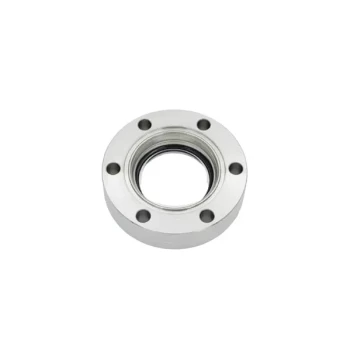
- Ultra High Vacuum CF Observation Window Flange with High Borosilicate Glass Sight Glass
- Multi Zone Laboratory Quartz Tube Furnace Tubular Furnace
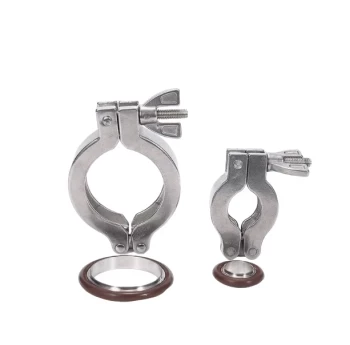
- Stainless Steel Quick Release Vacuum Chain Three Section Clamp
People Also Ask
- Why is an Ultra-High Vacuum (UHV) System Required for In2Se3? Achieving Atomic-Level Ferroelectric Clarity
- Why is an environmental laboratory chamber equipped with an optical window required for synthesizing Hafnium Carbide?
- What role does a closed pressure vessel play during the carbonation of gamma-C2S? Unlock Rapid Mineralization
- Why are desiccators containing saturated salt solutions used when evaluating the hygroscopicity of modified wood?
- How does the pressure environment affect the metallic thermal reduction for titanium? Master Precision Control