An Ultra-High Vacuum (UHV) system is strictly required to create a pristine environment for observing and manipulating two-dimensional ferroelectric materials like In2Se3.
By eliminating air molecules and environmental impurities, UHV systems remove interference that would otherwise obscure the material's surface. This allows sensitive instruments, such as Scanning Tunneling Microscopes (STM), to detect atomic arrangements accurately and apply the strong electric fields necessary to manipulate the material's ferroelectric properties.
UHV provides the critical isolation needed to detect local electronic states without contamination while simultaneously supporting the high-voltage tip interactions required to switch atomic-level polarization.
Achieving Atomic-Level Clarity
To characterize materials like In2Se3 at the atomic scale, you must remove all external variables that could distort the data.
Eliminating Environmental Interference
In a standard environment, air molecules constantly bombard surfaces.
A UHV system creates an extremely clean observation environment by eliminating these air molecules.
This ensures that the "noise" of the environment does not interfere with the delicate measurements of the sample's surface.
Removing Surface Impurities
The atomic structure of 2D materials is easily hidden by dust or chemical adsorbates.
UHV prevents these impurities from settling on the In2Se3 surface.
This allows the characterization equipment to "see" the actual atomic arrangements rather than a layer of contamination.
Enabling Advanced Tool Functionality
The primary tool for this type of characterization—the Scanning Tunneling Microscope (STM)—relies heavily on the vacuum environment to function correctly.
Detecting Local Electronic States
STM tips act as ultra-sensitive probes that detect local electronic states on the material's surface.
UHV ensures that the signal detected by the tip comes solely from the In2Se3 surface, not from contaminants on the tip or the sample.
Preventing Signal Distortion
Without a vacuum, interactions between the tip and atmospheric gases could alter the electronic readings.
UHV guarantees the fidelity of the data, allowing for precise mapping of the material's electronic properties.
Facilitating Ferroelectric Manipulation
Beyond simple observation, UHV is essential for actively manipulating the properties of ferroelectric materials.
Generating Strong Electric Fields
To influence the material, the STM tip must generate a concentrated, strong electric field.
The UHV environment supports these high-intensity fields without the risk of dielectric breakdown or scattering that might occur in air.
Driving Polarization Switching
The electric field generated by the tip acts as a physical driver.
It forces atomic-level polarization switching, allowing researchers to reorient the electric dipoles within the material.
Manipulating Domain Boundaries
This process allows for the precise manipulation of domain boundaries (the interfaces between different polarization regions).
Such control is only possible when the electric field is stable and the surface is free of defects caused by contamination.
Understanding the Trade-offs
While UHV is powerful, it represents a significant operational constraint that must be understood.
Complexity vs. Data Integrity
The primary trade-off is the high complexity and cost of maintaining a UHV system versus the quality of data obtained.
You cannot achieve atomic-level resolution or reliable polarization switching in ambient conditions; the data would be compromised by noise and contamination.
The Necessity of Isolation
The system isolates the sample completely, which limits the types of experiments you can run simultaneously (e.g., exposing the sample to reactive gases).
However, this isolation is the non-negotiable price for accessing the intrinsic properties of the material without environmental interference.
Making the Right Choice for Your Research
When planning your characterization strategy for 2D ferroelectrics, consider your specific analytical goals.
- If your primary focus is Structural Imaging: You need UHV to prevent impurities from obscuring the atomic lattice and to ensure the STM tip detects the true surface topography.
- If your primary focus is Ferroelectric Switching: You need UHV to sustain the strong, stable electric fields required to physically drive polarization changes and manipulate domain boundaries.
UHV is not just a storage condition; it is an active component of the measurement system that enables the physics of atomic manipulation.
Summary Table:
| Feature | Requirement for In2Se3 Characterization | Benefit of UHV System |
|---|---|---|
| Surface Purity | Zero contamination from air or dust | Ensures clear imaging of the atomic lattice without noise |
| Signal Fidelity | High signal-to-noise ratio for STM probes | Prevents electronic signal distortion from atmospheric gases |
| Electric Fields | High-intensity field for polarization switching | Supports strong fields without dielectric breakdown |
| Domain Control | Precise manipulation of domain boundaries | Provides stable environment for atomic-level dipole reorientation |
Precision in 2D material research starts with a controlled thermal and vacuum environment. Backed by expert R&D and manufacturing, KINTEK offers high-performance vacuum solutions and laboratory systems, including Muffle, Tube, Rotary, Vacuum, and CVD systems—all fully customizable to meet your unique characterization needs. Ensure the integrity of your atomic-level research by partnering with the leaders in high-temperature and vacuum technology. Contact KINTEK today to discuss your custom system requirements.
References
- Fan Zhang, Chenggang Tao. Atomic-scale manipulation of polar domain boundaries in monolayer ferroelectric In2Se3. DOI: 10.1038/s41467-023-44642-9
This article is also based on technical information from Kintek Furnace Knowledge Base .
Related Products
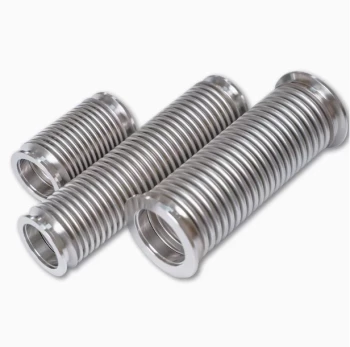
- High Performance Vacuum Bellows for Efficient Connection and Stable Vacuum in Systems
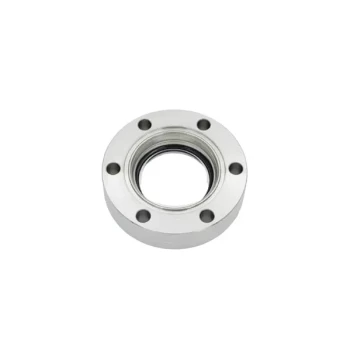
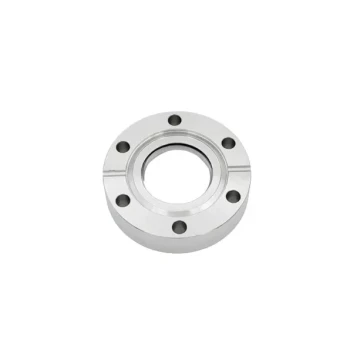
- Ultra High Vacuum CF Observation Window Flange with High Borosilicate Glass Sight Glass
- Ultra High Vacuum Observation Window Stainless Steel Flange Sapphire Glass Sight Glass for KF
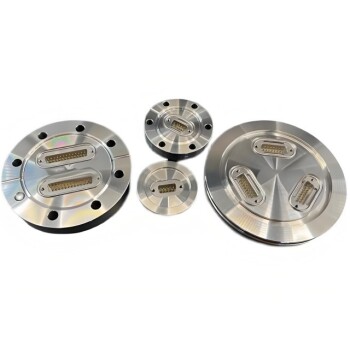
- Ultra-High Vacuum Flange Aviation Plug Glass Sintered Airtight Circular Connector for KF ISO CF
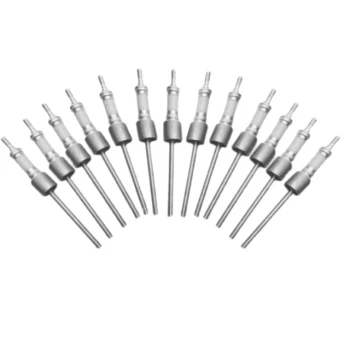
- Ultra Vacuum Electrode Feedthrough Connector Flange Power Lead for High Precision Applications
People Also Ask
- Why is an environmental laboratory chamber equipped with an optical window required for synthesizing Hafnium Carbide?
- What role does a closed pressure vessel play during the carbonation of gamma-C2S? Unlock Rapid Mineralization
- Why are desiccators containing saturated salt solutions used when evaluating the hygroscopicity of modified wood?
- How does the pressure environment affect the metallic thermal reduction for titanium? Master Precision Control
- Why is a vacuum or inert gas environment required for the preparation of polysulfide fluxes? Ensure Material Purity