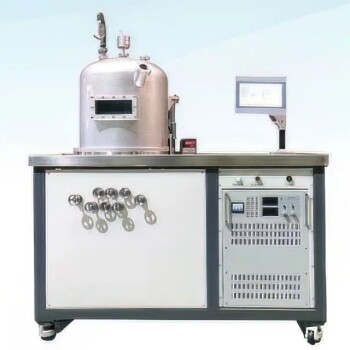
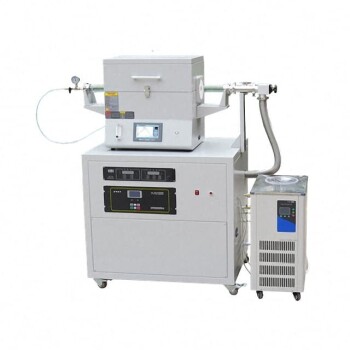
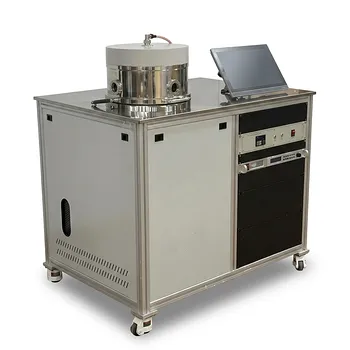
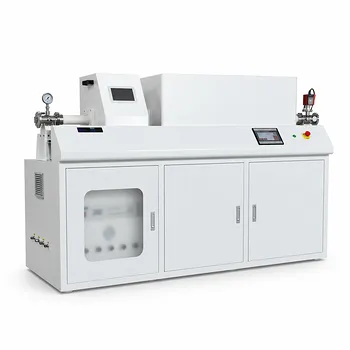
The core value of a high-temperature CVD system in MMC manufacturing is as a highly engineered interphase architect. It doesn't just coat a fiber; it solves a fundamental incompatibility problem. By precisely controlling gas-phase chemical reactions within a furnace, manufacturers deposit uniform, protective barrier layers on fiber surfaces. This engineered coating acts as a diffusion barrier to prevent destructive chemical reactions, while simultaneously engineering the fiber surface to promote wetting and bonding when the liquid metal matrix is later introduced.
In metal matrix composites, the interface between the fiber and the metal dictates performance. High-temperature CVD is the primary method for building a custom interphase at this critical junction. Its role is to turn a reactive, incompatible surface into a stable, functional bridge that protects the fiber during manufacturing and use, directly preventing the composite from failing at its weakest point.
The Core Problem: Why Bare Fibers Fail in Metal Matrices
The drive to create MMCs stems from the need for materials that are both incredibly strong and light. However, simply mixing high-strength fibers into molten metal is a recipe for material failure.
The Threat of Interfacial Chemical Reactions
The fundamental challenge is thermodynamic instability. Most high-performance reinforcing fibers, like carbon or silicon carbide, are chemically reactive with common metal matrices like titanium, aluminum, or magnesium at high temperatures.
During liquid metal infiltration or high-temperature consolidation, uncontrolled chemical reactions occur. The fiber surface reacts with the matrix, forming brittle intermetallic compounds or carbides at the interface. This reaction layer acts as a crack path and severely degrades the composite's strength.
The Damage During Service
The problem doesn't end after manufacturing. Even if a component survives fabrication, it must endure elevated-temperature service, such as in a jet engine. This sustained heat accelerates solid-state diffusion between the fiber and matrix, causing the damaging interfacial reaction zone to grow over time, a phenomenon known as thermal aging, which ultimately leads to premature failure.
The Wettability Obstacle
A successful MMC requires intimate contact between fiber and matrix to transfer stress effectively. However, many high-temperature metals do not naturally "wet" ceramic fiber surfaces. Instead of spreading, they bead up like water on a waxed car, leaving voids and unbonded interfaces that guarantee poor load transfer.
The CVD Solution: Engineering an Artificial Interphase
A high-temperature CVD furnace isn't just a coating tool; it's a precision reactor for building a bespoke protective layer on each individual fiber within a bundle or preform.
The Mechanism of Barrier Coatings
The process works by introducing gaseous precursor chemicals into a heated furnace chamber containing the fibers. These precursors decompose on the hot fiber surface, depositing a solid, high-purity ceramic layer atom by atom.
This deposited layer serves as a physical diffusion barrier. By placing a stable, impervious material like silicon carbide (SiC) or boron nitride (BN) between the fiber and the future metal matrix, any direct chemical interaction is physically stopped. The coating separates the incompatible partners, preserving the fiber's structural integrity.
How the Furnace System Enables Precision
Lab-scale CVD furnaces achieve this nanoscale control through exacting regulation of several parameters. Multi-zone thermal control ensures every fiber in the hot zone experiences the same temperature, preventing uneven deposition. Advanced gas delivery systems precisely meter the ratio of precursor gases (like SiCl4 and CH4) and carrier gases (like argon or hydrogen), directly influencing coating stoichiometry and purity. Vacuum and pressure control manages the reaction kinetics and gas flow dynamics to ensure precursor molecules can weave through a dense fiber bundle, coating each filament uniformly without blocking pore channels.
Material Selection and Coating Functionality
The choice of the interphase material is a strategic decision. Each option brings a specific set of properties to solve the interface problem.
SiC Coatings for High-Temperature Stability
Silicon carbide deposited via CVD is a workhorse material for MMCs. It is highly stable at extreme temperatures and acts as an excellent diffusion barrier, particularly with aluminum and titanium matrices. Its coefficient of thermal expansion can bridge the gap between a carbon fiber and a metal matrix, reducing thermal stresses during thermal cycling.
Pyrolytic Carbon and BN as Compliant Interlayers
Sometimes a rigid barrier isn't optimal. A softer, layered coating like pyrolytic carbon (PyC) or hexagonal boron nitride (BN) is introduced. These materials deflect matrix cracks, preventing them from propagating into and fracturing the load-bearing fiber. Their graphitic, layered structure provides a weak interface that can debond and slip, which is a critical energy-dissipation mechanism that leads to tough, damage-tolerant ceramic matrix composites and MMCs.
Functionalizing Fiber Surfaces for Application Demands
Beyond basic protection, CVD coatings add functionality. A coating can provide high-temperature oxidation resistance to protect carbon fibers. It can also heal nano-scale surface defects on the fiber itself, reducing the stress concentration from which a catastrophic crack could originate. This transforms a fragile, reactive fiber into a robust, ready-to-infiltrate reinforcement.
Understanding the Trade-offs
The CVD process is powerful but involves complex balancing acts that require careful consideration of the end goal.
The Cost of Perfection
Achieving perfect, uniform coatings on thousands of individual filaments is slow and expensive. The process demands high-purity gases, sophisticated vacuum equipment, and precise control, making it a manufacturing bottleneck compared to lower-cost, less-controlled techniques.
The Risk of Degrading Fiber Strength
The high-temperature environment and chemically aggressive nature of halide-based precursors (like SiCl4) pose a risk. If not perfectly controlled, the CVD furnace environment can etch or corrode the fiber surface during the initial stages of deposition, creating new defects rather than healing old ones and inadvertently weakening the fiber.
Uniformity Versus Infiltration Depth
A key trade-off exists between coating the outer fibers of a dense bundle quickly and achieving uniform coating on the innermost filaments. Aggressive, rapid deposition conditions tend to bridge gaps and seal the outside of the preform first, a phenomenon known as "canning." This prevents gas from reaching the interior, leading to non-uniform interphases and a highly heterogeneous composite. Slower, diffusion-limited processes are often required for thick preforms.
Making the Right Choice for Your Goal
Your application should dictate the CVD coating strategy and furnace parameters, not the other way around.
-
If your primary focus is maximizing composite toughness and damage tolerance: Prioritize a compliant interphase. Investigate layered CVD systems that deposit a thin, ductile layer like pyrolytic carbon or hexagonal boron nitride to enable crack deflection and fiber pull-out.
-
If your primary focus is long-term, high-temperature oxidative stability: Select a dense, highly crystalline SiC coating optimized for oxidation resistance. The entire strategy shifts to creating the most hermetic, chemically inert seal possible to protect the fiber from both the matrix and the atmosphere.
-
If your primary focus is manufacturing a thick, multi-dimensional fiber preform: You must shift from surface coating deposition (CVD) to matrix infiltration (CVI). This requires a dedicated furnace strategy operating at lower pressures and slower rates to maximize gas diffusion depth over coating thickness, a fundamentally different process optimized to fill the voids between fibers, not just coat them.
The CVD system is the tool that gives you atomic-level control over the interface, allowing you to architect a material from the inside out.
Summary Table:
| MMC Interphase Challenge | Impact on Composite | CVD Solution & Mechanism | Common Interphase Coating |
|---|---|---|---|
| Interfacial Chemical Reactions | Degradation of fiber strength & thermal aging | High-purity physical diffusion barrier | Silicon Carbide (SiC) |
| Matrix Crack Propagation | Brittle, catastrophic failure | Compliant interlayer for crack deflection & debonding | Pyrolytic Carbon (PyC), Boron Nitride (BN) |
| Poor Matrix Wettability | Voids and incomplete stress transfer | Surface functionalization & defect healing | Engineered CVD Ceramic Coatings |
Ready to optimize your interphase engineering and advanced composite production? KINTEK specializes in premium laboratory equipment and consumables, delivering a comprehensive range of high-temperature furnaces—including advanced CVD, vacuum, atmosphere, tube, and muffle furnace systems—all fully customizable to meet your specific research and manufacturing demands. Elevate your material performance with our precise thermal processing solutions. Contact KINTEK Today
Related Products
- Multi Heating Zones CVD Tube Furnace Machine for Chemical Vapor Deposition Equipment
- Custom Made Versatile CVD Tube Furnace Chemical Vapor Deposition CVD Equipment Machine
- Slide PECVD Tube Furnace with Liquid Gasifier PECVD Machine
- HFCVD Machine System Equipment for Drawing Die Nano Diamond Coating
- High Temperature Muffle Oven Furnace for Laboratory Debinding and Pre Sintering
People Also Ask
- What is the function of a multi-zone tube furnace in CVD synthesis? Master 2D In2Se3 Nanosheet Precision
- What temperature-related capabilities make multi zone tube furnaces valuable for research? Unlock Precision Thermal Control
- What role do multi zone tube furnaces play in new energy research? Unlock Precise Thermal Control for Innovation
- Why are multi zone tube furnaces particularly useful for nanomaterial research? Unlock Precise Thermal Control for Advanced Synthesis
- What environmental protection applications utilize multi zone tube furnaces? Unlock Precision in Waste Treatment and Green Tech