Precise gas management is the fundamental control knob for material quality in Chemical Vapor Deposition (CVD). A CVD system must be equipped with high-precision Mass Flow Controllers (MFC) because the specific properties of synthesized materials—such as layer count, crystal domain size, and phase purity—are hypersensitive to the concentration and ratio of precursor gases. Without the exact regulation provided by an MFC, it is impossible to maintain the stable reaction environment required for high-quality, repeatable growth.
The quality and atomic structure of synthesized materials depend directly on the stability of the gas supply. High-precision MFCs allow you to fine-tune growth kinetics and precursor ratios, ensuring that sensitive materials like graphene can be produced with high repeatability across different experimental runs.
The Critical Role of Gas Regulation in Synthesis
Controlling Precursor Ratios and Stoichiometry
In CVD processes, the chemical composition of the final product is dictated by the ratio of gases introduced into the chamber.
For example, when synthesizing materials like Molybdenum Phosphide (MoP), the flow rate determines the concentration of phosphorus vapor. High-precision MFCs strictly regulate this ratio to ensure the final sample maintains precise stoichiometry (such as a 1:1 Mo:P ratio).
Defining Material Structure and Quality
The physical characteristics of the material—specifically thickness and lateral size—are governed by how much precursor is available at any given moment.
In graphene synthesis, the number of layers and the size of crystal domains are extremely sensitive to the concentration of carbon sources like methane. MFCs provide the fine-tuning necessary to control these variables, preventing uncontrolled overgrowth or structural defects.
Stabilizing Growth Kinetics
The rate at which a material grows (growth kinetics) is driven by the supersaturation levels of the gas within the chamber.
By ensuring a constant transport rate of precursor vapors, MFCs stabilize the reaction atmosphere. This stability allows for the precise control of reaction rates, such as the phosphorylation rate in MoP synthesis, which is vital for achieving consistent morphological characteristics.
Physical Transport and Uniformity
Managing Vapor Transport
Beyond chemical composition, the gas flow acts as a vehicle for transporting solid precursors that have been vaporized.
Whether transporting sulfur vapor for MoS2 or precursor vapors for In2Se3, a stable gas flow ensures uniform transport to the substrate. This maintains a constant chemical potential throughout the high-temperature furnace, ensuring the material grows evenly across the reaction zone.
Creating Physical Force for Grain Movement
In specific applications, the gas flow serves a mechanical purpose as well as a chemical one.
For MoS2 synthesis, the carrier gas (often Argon) provides the physical impact force necessary to drive the translation and long-range drift of grains across the substrate. Precise control over flow rates via multi-channel meters is required to manipulate this physical movement accurately.
Understanding the Trade-offs of Flow Instability
Loss of Phase Purity
If gas flow fluctuates, the reaction environment becomes unstable, leading to variations in the chemical phase of the material.
In the synthesis of In2Se3, maintaining a stable reaction atmosphere is a critical hardware requirement. Without the regulation of an MFC, you risk producing samples with mixed phases or low purity, rendering the material useless for high-performance applications.
Inconsistent Repeatability
The most significant risk of poor flow control is the inability to reproduce results.
Experimental success relies on the ability to replicate specific growth conditions exactly. As noted in graphene research, high repeatability is only possible when the supply of carbon sources is stabilized by high-precision controllers, eliminating variables between runs.
Making the Right Choice for Your Goal
To configure your CVD system effectively, match your flow control strategy to your specific material requirements:
- If your primary focus is 2D Material Quality (e.g., Graphene): Prioritize MFC precision to control layer count and crystal domain size by fine-tuning carbon source concentrations.
- If your primary focus is Compound Stoichiometry (e.g., MoP, In2Se3): Rely on MFCs to strictly regulate gas ratios to ensure phase purity and correct atomic proportions.
- If your primary focus is Structural Alignment (e.g., MoS2): Ensure your flow control system can deliver the precise physical force needed to drive grain translation and drift.
Ultimate material control requires regarding the gas flow not merely as a supply line, but as a precise instrument for atomic assembly.
Summary Table:
| Key Factor | Impact of High-Precision MFC | Consequence of Flow Instability |
|---|---|---|
| Stoichiometry | Maintains precise atomic ratios (e.g., 1:1 Mo:P) | Incorrect chemical phases & low purity |
| Material Structure | Controls layer count and crystal domain size | Uncontrolled overgrowth & structural defects |
| Growth Kinetics | Stabilizes supersaturation and reaction rates | Inconsistent morphology & slow growth |
| Uniformity | Ensures even vapor transport across substrate | Uneven thickness and non-uniform grains |
| Repeatability | Guarantees identical conditions across runs | Failed experimental replication |
Elevate Your Material Research with KINTEK Precision
Don't let unstable gas flows compromise your thin-film quality or experimental repeatability. At KINTEK, we understand that gas regulation is the fundamental control knob for your success. Backed by expert R&D and manufacturing, we offer high-performance CVD, Muffle, Tube, Rotary, and Vacuum systems—all fully customizable to meet your specific precursor and flow requirements.
Whether you are synthesizing graphene, 2D semiconductors, or complex compounds, our systems provide the stability and precision needed for cutting-edge results. Contact us today to design your custom high-temperature solution!
References
- Mitigating Silicon Amorphization in Si–Gr Anodes: A Pathway to Stable, High‐Energy Density Anodes for Li‐Ion Batteries. DOI: 10.1002/smll.202504704
This article is also based on technical information from Kintek Furnace Knowledge Base .
Related Products
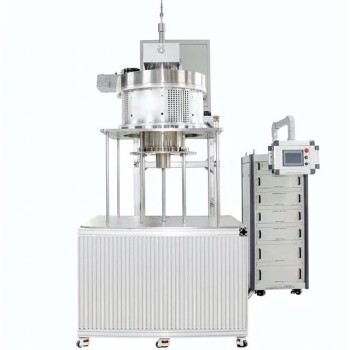
- 915MHz MPCVD Diamond Machine Microwave Plasma Chemical Vapor Deposition System Reactor
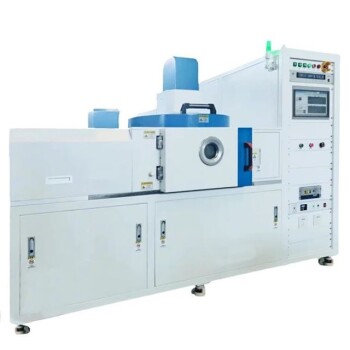
- Custom Made Versatile CVD Tube Furnace Chemical Vapor Deposition CVD Equipment Machine
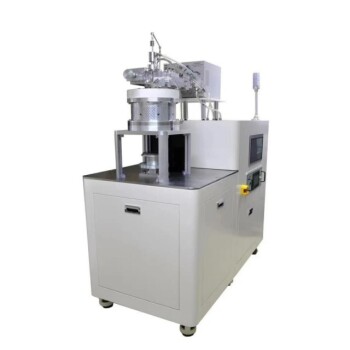
- RF PECVD System Radio Frequency Plasma Enhanced Chemical Vapor Deposition
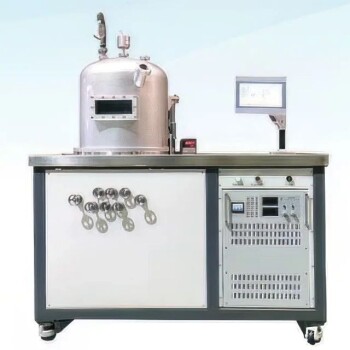
- MPCVD Machine System Reactor Bell-jar Resonator for Lab and Diamond Growth
- HFCVD Machine System Equipment for Drawing Die Nano Diamond Coating
People Also Ask
- What is the MPCVD method and why is it considered effective for diamond deposition? Superior Purity & High Growth Rates
- What factors influence the quality of diamond deposition in the MPCVD method? Master the Critical Parameters for High-Quality Diamond Growth
- What are some key features and benefits of the microwave plasma chemical vapor deposition system? Achieve Unmatched Material Synthesis
- What is the purpose of a microwave plasma chemical vapor deposition system? Grow High-Purity Diamonds and Advanced Materials
- What is the basic principle of operation for the microwave plasma chemical vapor deposition system? Unlock High-Purity Material Growth