Knowledge Why is precise temperature sensor placement critical in high-temp viscometers? Expert Insights for Accurate Melt Data
Author avatar

Tech Team · Kintek Furnace

Updated 1 day ago

Why is precise temperature sensor placement critical in high-temp viscometers? Expert Insights for Accurate Melt Data


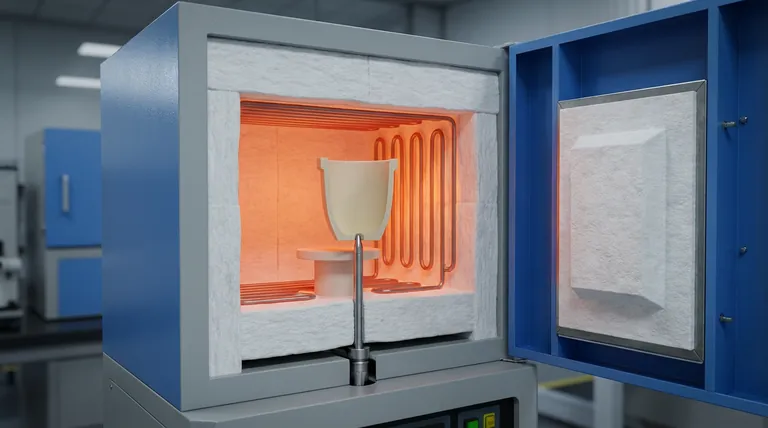
The integrity of viscosity data relies on thermal precision. In high-temperature oscillating cup viscometers, sensors typically cannot directly contact the fluid. Consequently, the sensor must be placed in a metal thermowell immediately adjacent to the cup bottom to ensure the recorded temperature matches the actual melt temperature as closely as possible.

Because direct immersion is rarely feasible, temperature sensors must be housed in a metal finger positioned against the cup's base. This precise proximity minimizes systemic deviation, allowing for accurate thermodynamic data when paired with proper calibration.
Why is precise temperature sensor placement critical in high-temp viscometers? Expert Insights for Accurate Melt Data

The Physical Constraints of the System

The Limitation of Direct Contact

In many high-temperature viscosity experiments, you cannot simply dip a thermometer into the sample. The measurement cup is often enclosed, and the harsh environment may damage sensitive instruments like platinum resistance thermometers or thermocouples.

The Necessity of Indirect Measurement

Because of these physical barriers, temperature measurement in these systems is inherently indirect. You are measuring the environment surrounding the sample, rather than the sample itself. This introduces a risk of thermal discrepancy.

Optimizing Sensor Placement

The Role of the Thermowell

To facilitate accurate readings without direct contact, sensors are positioned within a dedicated metal thermowell or "metal finger." This metal housing protects the sensor while serving as a thermal conductor between the heat source, the cup, and the sensor.

Critical Positioning at the Cup Bottom

The tip of this metal finger must be located immediately adjacent to the bottom of the cup. This is the critical design feature. Placing the sensor anywhere else introduces significant thermal lag and inaccurate gradients.

Minimizing Systemic Deviation

The goal of this specific physical positioning is to minimize systemic deviation. This is the error gap between what the sensor reads and the true temperature of the melt inside the cup. The closer the physical coupling, the smaller this gap becomes.

Understanding the Trade-offs

The Inevitability of Error

Even with perfect mechanical alignment, indirect measurement is never 100% accurate on its own. There will always be a slight thermal resistance between the cup wall and the sensor.

Reliance on Calibration

You cannot rely solely on the hardware placement. The physical setup reduces the error, but it does not eliminate it entirely. If you neglect the software side of the equation—specifically calibration—your data will remain skewed.

The Role of Blank Experiments

To account for the remaining deviation, you must perform system calibration via blank experiments. These experiments quantify the specific offset of your machine, allowing you to mathematically correct the data to achieve true thermodynamic accuracy.

Ensuring Accuracy in Your Experiments

To ensure your viscosity measurements are valid, you must address both the physical setup and the experimental procedure.

  • If your primary focus is Equipment Setup: Ensure the metal thermowell is installed so it sits flush against or immediately adjacent to the measurement cup bottom.
  • If your primary focus is Data Analysis: Always correct your raw temperature readings using data derived from blank calibration experiments to account for systemic deviation.

Physical proximity minimizes the error, but only rigorous calibration eliminates it.

Summary Table:

Feature Importance in Viscometry Key Benefit
Thermowell Finger Protects sensor from harsh environments Ensures sensor longevity
Bottom Placement Minimizes thermal lag and gradients Closer match to actual melt temp
Indirect Sensing Avoids sample contamination/interference Maintains sample integrity
Blank Calibration Corrects inherent systemic deviations Achieves true thermodynamic data

Maximize Your Research Precision with KINTEK

Precise thermal control is the backbone of reliable high-temperature material science. KINTEK empowers your laboratory with cutting-edge high-temp solutions, including Muffle, Tube, Rotary, Vacuum, and CVD systems. Whether you are measuring viscosity or conducting complex thermal analysis, our customizable systems are backed by expert R&D and manufacturing to meet your most demanding specifications.

Ready to eliminate systemic deviation in your lab?

Contact KINTEK Today to discuss your unique needs with our technical specialists.

References

  1. V. M. B. Nunes, C. A. Nieto de Castro. Correct Use of Oscillating-Cup Viscometers for High-Temperature Absolute Measurements of Newtonian Melts. DOI: 10.1007/s10765-024-03355-x

This article is also based on technical information from Kintek Furnace Knowledge Base .

Related Products

People Also Ask

Related Products

1700℃ High Temperature Muffle Oven Furnace for Laboratory

1700℃ High Temperature Muffle Oven Furnace for Laboratory

KT-17M Muffle Furnace: High-precision 1700°C lab furnace with PID control, energy efficiency, and customizable sizes for industrial & research applications.

1400℃ High Temperature Laboratory Tube Furnace with Quartz and Alumina Tube

1400℃ High Temperature Laboratory Tube Furnace with Quartz and Alumina Tube

KINTEK's Tube Furnace with Alumina Tube: Precision high-temperature processing up to 2000°C for labs. Ideal for material synthesis, CVD, and sintering. Customizable options available.

2200 ℃ Tungsten Vacuum Heat Treat and Sintering Furnace

2200 ℃ Tungsten Vacuum Heat Treat and Sintering Furnace

2200°C Tungsten Vacuum Furnace for high-temperature materials processing. Precise control, superior vacuum, customizable solutions. Ideal for research & industrial applications.

1400℃ Muffle Oven Furnace for Laboratory

1400℃ Muffle Oven Furnace for Laboratory

KT-14M Muffle Furnace: Precision 1400°C heating with SiC elements, PID control, and energy-efficient design. Ideal for labs.

1400℃ Controlled Inert Nitrogen Atmosphere Furnace

1400℃ Controlled Inert Nitrogen Atmosphere Furnace

KT-14A Controlled Atmosphere Furnace for labs & industry. 1400°C max temp, vacuum sealing, inert gas control. Customizable solutions available.

1700℃ High Temperature Laboratory Tube Furnace with Quartz or Alumina Tube

1700℃ High Temperature Laboratory Tube Furnace with Quartz or Alumina Tube

KINTEK's Tube Furnace with Alumina Tube: Precision heating up to 1700°C for material synthesis, CVD, and sintering. Compact, customizable, and vacuum-ready. Explore now!

1700℃ Controlled Inert Nitrogen Atmosphere Furnace

1700℃ Controlled Inert Nitrogen Atmosphere Furnace

KT-17A Controlled Atmosphere Furnace: Precise 1700°C heating with vacuum & gas control. Ideal for sintering, research & material processing. Explore now!

1200℃ Controlled Inert Nitrogen Atmosphere Furnace

1200℃ Controlled Inert Nitrogen Atmosphere Furnace

KINTEK 1200℃ Controlled Atmosphere Furnace: Precision heating with gas control for labs. Ideal for sintering, annealing, and material research. Customizable sizes available.

Laboratory Muffle Oven Furnace with Bottom Lifting

Laboratory Muffle Oven Furnace with Bottom Lifting

Boost lab efficiency with KT-BL Bottom Lifting Furnace: precise 1600℃ control, superior uniformity, and enhanced productivity for material science and R&D.

High Temperature Muffle Oven Furnace for Laboratory Debinding and Pre Sintering

High Temperature Muffle Oven Furnace for Laboratory Debinding and Pre Sintering

KT-MD Debinding & Pre-Sintering Furnace for ceramics - precise temperature control, energy-efficient design, customizable sizes. Boost your lab efficiency today!

Vacuum Heat Treat Furnace with Ceramic Fiber Liner

Vacuum Heat Treat Furnace with Ceramic Fiber Liner

KINTEK's Vacuum Furnace with Ceramic Fiber Lining offers precise high-temperature processing up to 1700°C, ensuring uniform heat distribution and energy efficiency. Ideal for labs and production.

1200℃ Split Tube Furnace Laboratory Quartz Tube Furnace with Quartz Tube

1200℃ Split Tube Furnace Laboratory Quartz Tube Furnace with Quartz Tube

Discover KINTEK's 1200℃ Split Tube Furnace with quartz tube for precise high-temperature lab applications. Customizable, durable, and efficient. Get yours now!

2200 ℃ Graphite Vacuum Heat Treat Furnace

2200 ℃ Graphite Vacuum Heat Treat Furnace

2200℃ Graphite Vacuum Furnace for high-temperature sintering. Precise PID control, 6*10⁻³Pa vacuum, durable graphite heating. Ideal for research & production.

High Pressure Laboratory Vacuum Tube Furnace Quartz Tubular Furnace

High Pressure Laboratory Vacuum Tube Furnace Quartz Tubular Furnace

KINTEK High Pressure Tube Furnace: Precision heating up to 1100°C with 15Mpa pressure control. Ideal for sintering, crystal growth, and lab research. Customizable solutions available.

Vacuum Heat Treat Sintering Furnace Molybdenum Wire Vacuum Sintering Furnace

Vacuum Heat Treat Sintering Furnace Molybdenum Wire Vacuum Sintering Furnace

KINTEK's Vacuum Molybdenum Wire Sintering Furnace excels in high-temperature, high-vacuum processes for sintering, annealing, and material research. Achieve precise 1700°C heating with uniform results. Custom solutions available.

Mesh Belt Controlled Atmosphere Furnace Inert Nitrogen Atmosphere Furnace

Mesh Belt Controlled Atmosphere Furnace Inert Nitrogen Atmosphere Furnace

KINTEK Mesh Belt Furnace: High-performance controlled atmosphere furnace for sintering, hardening & heat treatment. Customizable, energy-efficient, precise temperature control. Get a quote now!

Small Vacuum Heat Treat and Tungsten Wire Sintering Furnace

Small Vacuum Heat Treat and Tungsten Wire Sintering Furnace

Compact vacuum tungsten wire sintering furnace for labs. Precise, mobile design with superior vacuum integrity. Ideal for advanced material research. Contact us!

Laboratory Quartz Tube Furnace RTP Heating Tubular Furnace

Laboratory Quartz Tube Furnace RTP Heating Tubular Furnace

KINTEK's RTP Rapid Heating Tube Furnace delivers precise temperature control, rapid heating up to 100°C/sec, and versatile atmosphere options for advanced lab applications.

600T Vacuum Induction Hot Press Vacuum Heat Treat and Sintering Furnace

600T Vacuum Induction Hot Press Vacuum Heat Treat and Sintering Furnace

600T Vacuum Induction Hot Press Furnace for precise sintering. Advanced 600T pressure, 2200°C heating, vacuum/atmosphere control. Ideal for research & production.

9MPa Air Pressure Vacuum Heat Treat and Sintering Furnace

9MPa Air Pressure Vacuum Heat Treat and Sintering Furnace

Achieve superior ceramic densification with KINTEK's advanced air pressure sintering furnace. High-pressure up to 9MPa, precise 2200℃ control.


Leave Your Message

