The preference for optical pyrometers in high-temperature pyrolysis stems from their ability to provide accurate, non-contact measurements in environments where traditional thermocouples physically fail. At temperatures exceeding 1200°C, traditional contact sensors are susceptible to material degradation, chemical reactions with carbon-rich atmospheres, and measurement errors. By using infrared technology, pyrometers provide the precise thermal feedback necessary to manage the delicate microstructural evolution of the material.
Optical pyrometers eliminate the risks of sensor contamination and physical breakdown in extreme vacuum environments. This non-contact approach is essential for maintaining the precise heating curves required to control the formation of metal clusters and the graphitization of the carbon matrix.
The Physical Limitations of Contact Sensors
Chemical Reactivity in Carbon-Rich Environments
During the pyrolysis of diphthalocyanines, the atmosphere becomes rich in carbon and volatile organic components. At temperatures reaching 1200°C to 1850°C, traditional thermocouple sheaths can react chemically with these elements.
These reactions often lead to "sensor poisoning," where the metallurgical composition of the thermocouple changes. This results in significant drift, meaning the reported temperature no longer reflects the actual conditions inside the furnace.
Material Degradation and Mechanical Failure
High-temperature vacuum environments place immense stress on physical probes. Contact-based thermocouples may experience brittle failure or melting when subjected to the extreme heat required for advanced sintering.
Furthermore, the mechanical interface between a thermocouple and the sample can introduce thermal gradients. This interference can skew the data, making it difficult to follow the "preset heating curve" necessary for consistent production.
Precision Control for Material Synthesis
Managing Metal Cluster Size
The formation of metal clusters from diphthalocyanine precursors is highly sensitive to thermal fluctuations. Precise real-time monitoring via an optical pyrometer allows researchers to modulate heat input instantly.
Without this level of accuracy, metal clusters may aggregate or grow unevenly. Maintaining a steady temperature ensures that the resulting material has the specific catalytic or electronic properties intended by the design.
Determining the Degree of Graphitization
The transition of precursors into a turbostratic carbon matrix depends on specific temperature thresholds and holding times. Even a small margin of error in temperature measurement can result in incomplete graphitization.
Optical pyrometers provide the rapid feedback needed to identify these stage transitions. This ensuring the carbon matrix achieves the desired structural integrity and conductivity.
Understanding the Trade-offs and Challenges
The Role of Surface Emissivity
While pyrometers offer superior durability, their accuracy depends entirely on knowing the emissivity of the target material. If the emissivity of the diphthalocyanine changes as it transforms into carbon, the pyrometer must be calibrated to account for this shift.
Optical Path Obstructions
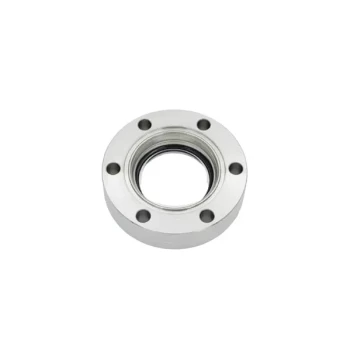
A pyrometer requires a clear "line of sight" to the sample, usually through a sapphire window or a specific measurement hole in the mold. If soot or vaporized byproducts from the pyrolysis process deposit on the window, the sensor will detect a lower temperature than reality.
Applying This to Your Pyrolysis Project
Making the Right Choice for Your Goal
- If your primary focus is producing high-purity carbon matrices: Use an optical pyrometer to prevent the sample contamination that often occurs when thermocouple materials degrade and leach into the precursor.
- If your primary focus is identifying low-temperature reaction stages: Supplement your setup with external thermocouples to monitor reactor surface heat loss while using the pyrometer for the high-heat core monitoring.
- If your primary focus is repeatable industrial sintering: Ensure your equipment uses a sapphire window and a dedicated sightline hole to maintain the optical clarity required for the pyrometer’s accuracy.
The transition from contact-based sensors to optical pyrometry is the critical step in moving from basic thermal processing to precise material engineering.
Summary Table:
| Feature | Optical Pyrometer | Traditional Thermocouple |
|---|---|---|
| Measurement Type | Non-contact (Infrared) | Physical Contact |
| High-Temp Stability | Excellent (>1200°C) | Poor (Material degradation) |
| Contamination Risk | None | High (Sensor poisoning) |
| Response Time | Instantaneous | Slower (Thermal mass lag) |
| Ideal Environment | Carbon-rich / Vacuum | Low-temperature reactors |
| Primary Challenge | Emissivity calibration | Mechanical/Chemical failure |
Optimize Your Thermal Processes with KINTEK
Achieve unmatched precision in your high-temperature pyrolysis and material synthesis. KINTEK specializes in high-performance laboratory equipment and consumables, offering a comprehensive range of customizable high-temperature furnaces, including muffle, tube, rotary, vacuum, CVD, atmosphere, and induction melting systems.
Don't let sensor failure or contamination compromise your research results. Our expert team provides tailored solutions to ensure your heating curves are managed with absolute accuracy.
Consult with a KINTEK Specialist Today to find the perfect furnace for your laboratory’s unique requirements!
References
- V. Yu. Bairamukov, M. Yu. Presniakov. Структура металлоуглеродного нанокомпозита на основе пиролизатов дифталоцианинов для иммобилизации радиоактивных отходов. DOI: 10.22184/1993-8578.2019.12.2.108.113
This article is also based on technical information from Kintek Furnace Knowledge Base .
Related Products
- High Temperature Muffle Oven Furnace for Laboratory Debinding and Pre Sintering
- Multi Heating Zones CVD Tube Furnace Machine for Chemical Vapor Deposition Equipment
- Multi Zone Laboratory Quartz Tube Furnace Tubular Furnace
- Vertical Laboratory Quartz Tube Furnace Tubular Furnace
- Laboratory Quartz Tube Furnace RTP Heating Tubular Furnace
People Also Ask
- What thermal phenomena occur during polymer binder burnout in ceramic green bodies? Lab Furnace Guide
- Why is controlled heat treatment in a muffle furnace necessary for calcined clay? Achieve Optimal Pozzolanic Activity
- What role does a high-temperature muffle furnace play in STFO synthesis? Achieve Pure Perovskite Results
- How does a high-temperature muffle furnace facilitate the formation of LaNbxAl1−xO3+δ perovskite structures? Key Roles
- What role does a high-temperature muffle furnace play in the multi-stage synthesis of Li0.5MnFe1.5O4? Key to Pure Spinel