A vacuum impregnation environment is critical because it is the only reliable method to eliminate air pockets trapped between the complex filaments of polyacrylonitrile-based graphite fiber (PAN-GF). By applying negative pressure, the process forces the electrode slurry deep into the microscopic pores of the fiber structure, ensuring complete physical and electrical contact between the active materials and the current collector.
The dense structure of graphite fibers creates natural air barriers that resist liquid penetration under standard atmospheric pressure. Vacuum impregnation overcomes this by utilizing capillary action to drive slurry into fine pores, significantly reducing electrical resistance and securing the structural integrity required for high-performance electrodes.
Overcoming Microscopic Barriers
The Problem of Trapped Air
PAN-GF electrodes are composed of tightly packed fiber filaments. Under normal atmospheric conditions, air naturally resides in the spaces between these filaments.
Creating a Path for Infiltration
This trapped air acts as a physical barrier to liquids. It prevents the electrode slurry from penetrating deep into the 3D structure of the fiber.
Leveraging Negative Pressure
Vacuum impregnation removes this air by creating a negative pressure environment. This evacuation creates a void within the fiber bundle that the slurry must fill.
Utilizing Capillary Action
Once the opposing air pressure is removed, the slurry is drawn into the fine pores via capillary action. This ensures the liquid reaches the deepest parts of the fiber network.
Optimizing Electrode Performance
Ensuring Thorough Contact
The primary engineering goal is connectivity. This process guarantees thorough contact between the active materials in the slurry and the 3D current collector.
Reducing Contact Resistance
When air gaps are eliminated, the interface between the fiber and the active material is maximized. This directly results in lower contact resistance, facilitating more efficient electron transfer.
Enabling High-Loading Designs
Thick, high-loading electrodes are prone to mechanical failure. Vacuum impregnation enhances structural stability by anchoring the active material deep within the fiber structure, preventing delamination.
Understanding the Trade-offs
Equipment Complexity
While effective, vacuum impregnation introduces complexity to the manufacturing line. It requires specialized vacuum chambers and pumps, unlike simpler dip-coating or spray-coating methods.
Process Time Constraints
The process is not instantaneous. Adequate time is required to ensure full air evacuation and subsequent slurry infiltration, which may impact throughput speed compared to atmospheric coating techniques.
Making the Right Choice for Your Goal
To maximize the potential of your PAN-GF electrodes, consider your specific performance targets:
- If your primary focus is High Energy Density: Use vacuum impregnation to enable high-loading designs that remain structurally stable without delaminating.
- If your primary focus is Power Efficiency: Prioritize this method to minimize internal contact resistance by eliminating insulating air gaps between the fiber and active material.
Vacuum impregnation transforms the coating process from a superficial application into a deep structural integration.
Summary Table:
| Feature | Atmospheric Coating | Vacuum Impregnation |
|---|---|---|
| Air Removal | Poor; air pockets remain trapped | Complete; creates negative pressure void |
| Slurry Penetration | Superficial/Surface level | Deep infiltration via capillary action |
| Contact Resistance | High due to air barriers | Low; maximized electrical contact |
| Structural Stability | Prone to delamination | High; anchored in 3D fiber network |
| Best For | Thin, low-cost prototypes | High-loading, high-performance electrodes |
Elevate Your Electrode Manufacturing with KINTEK
Don't let trapped air compromise your battery performance. At KINTEK, we specialize in the engineering and manufacturing of high-precision laboratory systems designed to solve complex material challenges. Whether you require Vacuum, CVD, or High-Temperature Muffle systems, our solutions are fully customizable to meet your unique R&D needs.
Ready to optimize your PAN-GF electrode coating? Contact our experts today to discover how our advanced vacuum technology can reduce your contact resistance and enhance structural integrity. Let KINTEK provide the tools you need for the next generation of energy storage.
References
- Qian Wu, Yuanzheng Luo. Hierarchical porous biomass-derived electrodes with high areal loading for lithium–sulfur batteries. DOI: 10.1039/d5ra02380g
This article is also based on technical information from Kintek Furnace Knowledge Base .
Related Products
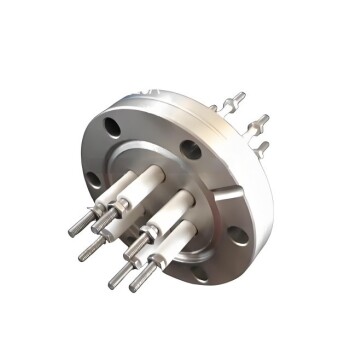
- CF KF Flange Vacuum Electrode Feedthrough Lead Sealing Assembly for Vacuum Systems
- Ultra Vacuum Electrode Feedthrough Connector Flange Power Lead for High Precision Applications
People Also Ask
- Why is a vacuum sealing process necessary for the synthesis of TaAs2 single crystals? Ensuring Purity in CVT Method
- Why is a PTFE-lined stainless steel autoclave used for Ni12P5 synthesis? Key Benefits for Nanomaterial Production
- What is the function of PTFE sealing rings in plastic pyrolysis? Ensure Safe, Anaerobic Material Decomposition
- What is the function of a Teflon-lined stainless steel autoclave in the hydrothermal synthesis of Bi2O3 precursors?
- Why is a stainless steel autoclave with a Teflon liner necessary for BiVO4? Ensure Purity & High Performance