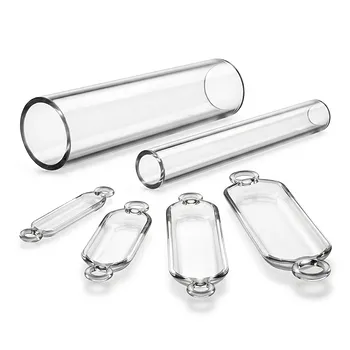
Maintaining data integrity requires strictly controlling the atmosphere until the sample reaches room temperature. Continuously introducing high-purity nitrogen (N2) during the cooling stage acts as an inert shield for solid samples inside the quartz tube. This prevents the hot, highly reactive material from interacting with atmospheric oxygen or moisture, ensuring the physical and chemical state achieved during roasting is preserved without alteration.
The primary function of nitrogen cooling is to effectively "freeze" the sample's chemical state the moment the experiment concludes. By excluding air, you prevent non-prescribed secondary reactions, guaranteeing that your analysis reflects only the specific roasting conditions rather than artifacts of the cooling process.
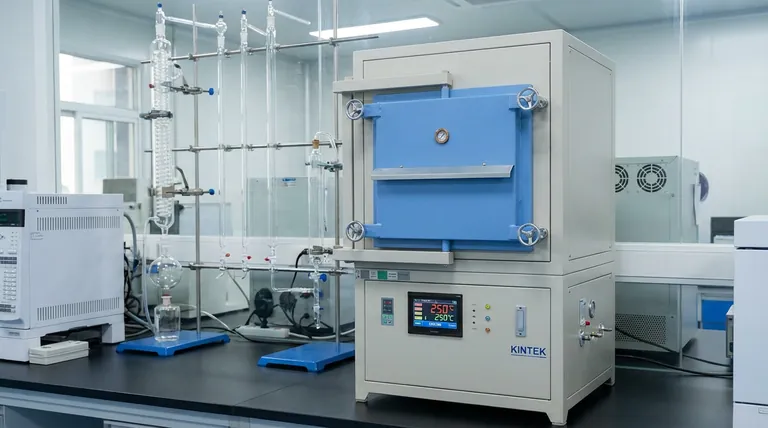
The Mechanics of Sample Preservation
Preventing Secondary Oxidation
After the heat source is removed, solid samples remain at high temperatures for a significant period. At these temperatures, materials are chemically active and susceptible to rapid oxidation.
High-purity nitrogen displaces oxygen within the reaction vessel. This prevents "secondary oxidation," where the sample continues to react with air during cooldown, which would otherwise alter the final phase state and falsify the experimental results.
Blocking Atmospheric Moisture
In addition to oxygen, ambient air contains humidity that can skew results. Many roasted samples are sensitive to moisture, particularly while they are still warm.
Continuous nitrogen flow isolates the sample from atmospheric moisture. This is critical for preventing unintended hydration reactions that would artificially increase the sample mass or alter surface chemistry.
Ensuring Microstructural Fidelity
The goal of the experiment is to capture the material's properties at a specific roasting temperature. If the environment changes during cooling, the microstructure may evolve further.
Nitrogen ensures the microstructural data collected represents the reaction results at the set temperature. It prevents the formation of surface artifacts that could be misinterpreted during physical analysis.
Common Pitfalls to Avoid
Premature Flow Termination
Stopping the nitrogen flow before the sample reaches room temperature is a critical error. Even at moderate temperatures (e.g., 100°C–200°C), certain materials remain reactive enough to oxidize or absorb moisture.
Improper Transition Sequence
As noted in best practices, the supply of reactants (such as water vapor used during roasting) must be stopped prior to or immediately upon starting the cooling phase. Failing to fully purge these vapors with nitrogen results in a "non-prescribed" atmosphere that distorts mass gain data.
Making the Right Choice for Your Goal
To ensure your post-experiment analysis is valid, align your cooling protocol with your analytical objectives:
- If your primary focus is Phase Composition (e.g., XRD): The nitrogen atmosphere prevents the formation of oxides that were not part of the high-temperature equilibrium, ensuring accurate phase identification.
- If your primary focus is Kinetic or Mass Data: Continuous nitrogen flow is non-negotiable to prevent weight changes caused by post-experiment oxidation or moisture absorption.
Treat the cooling phase not as the end of the experiment, but as a critical control step in your data validation process.
Summary Table:
| Factor | Role of Nitrogen (N2) Cooling | Impact on Data Accuracy |
|---|---|---|
| Oxidation Control | Displaces O2 to prevent high-temp reactions | Prevents falsification of final phase state |
| Moisture Shield | Blocks ambient humidity from warm samples | Avoids mass gain and surface chemistry alterations |
| Phase Stability | 'Freezes' the chemical state at equilibrium | Ensures XRD and microstructural fidelity |
| Atmosphere | Purges reactive vapors/reactants | Eliminates non-prescribed secondary reactions |
Secure Your Experimental Precision with KINTEK
Don't let post-roasting artifacts compromise your research data. KINTEK’s advanced laboratory systems—including our customizable Muffle, Tube, Rotary, and Vacuum furnaces—are engineered for precise atmosphere control and cooling integrity. Backed by expert R&D and manufacturing, we provide the high-performance tools necessary to maintain microstructural fidelity and prevent unwanted oxidation.
Ready to upgrade your high-temperature processes? Contact us today to find the perfect customizable solution for your unique lab needs.
References
- Xiaojiao Chen, Zijian Wang. Study on the Migration and Release of Sulfur during the Oxidizing Roasting of High-Sulfur Iron Ore. DOI: 10.3390/min14030276
This article is also based on technical information from Kintek Furnace Knowledge Base .
Related Products
- 1400℃ Controlled Inert Nitrogen Atmosphere Furnace
- 1700℃ Controlled Inert Nitrogen Atmosphere Furnace
- 1200℃ Controlled Inert Nitrogen Atmosphere Furnace
- High Purity Quartz Tube and Quartz Boat for Laboratory Furnaces
- Vacuum Induction Melting Furnace
People Also Ask
- How does oxygen partial pressure control affect ceramic sintering? Master Defect Chemistry
- Why is thorough binder burnout necessary before sintering advanced ceramics? Ensure Peak Density & Zero Defects
- Why is controlled-atmosphere heating required for functional ceramics and sensors? Master Defect Engineering
- How do controlled-atmosphere furnaces support polymer pyrolysis? Master SiC & Si3N4 Ceramic Conversion
- How does real-time dilatometric analysis in a controlled-atmosphere furnace optimize PZT ceramic sintering?