
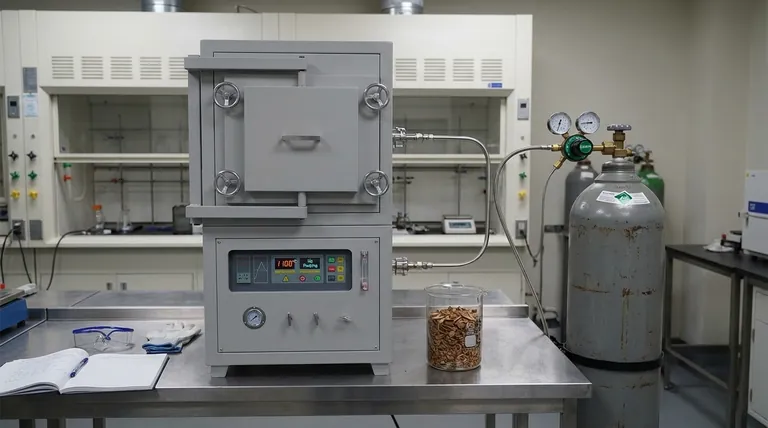
A nitrogen (N2) purging system is the primary defense against combustion and product loss. It is strictly necessary to displace oxygen within the heat treatment equipment before the process begins and continuously through the cooling phase. By maintaining this inert atmosphere, the system prevents the biomass from catching fire, ensuring it undergoes controlled thermal degradation rather than burning into ash.
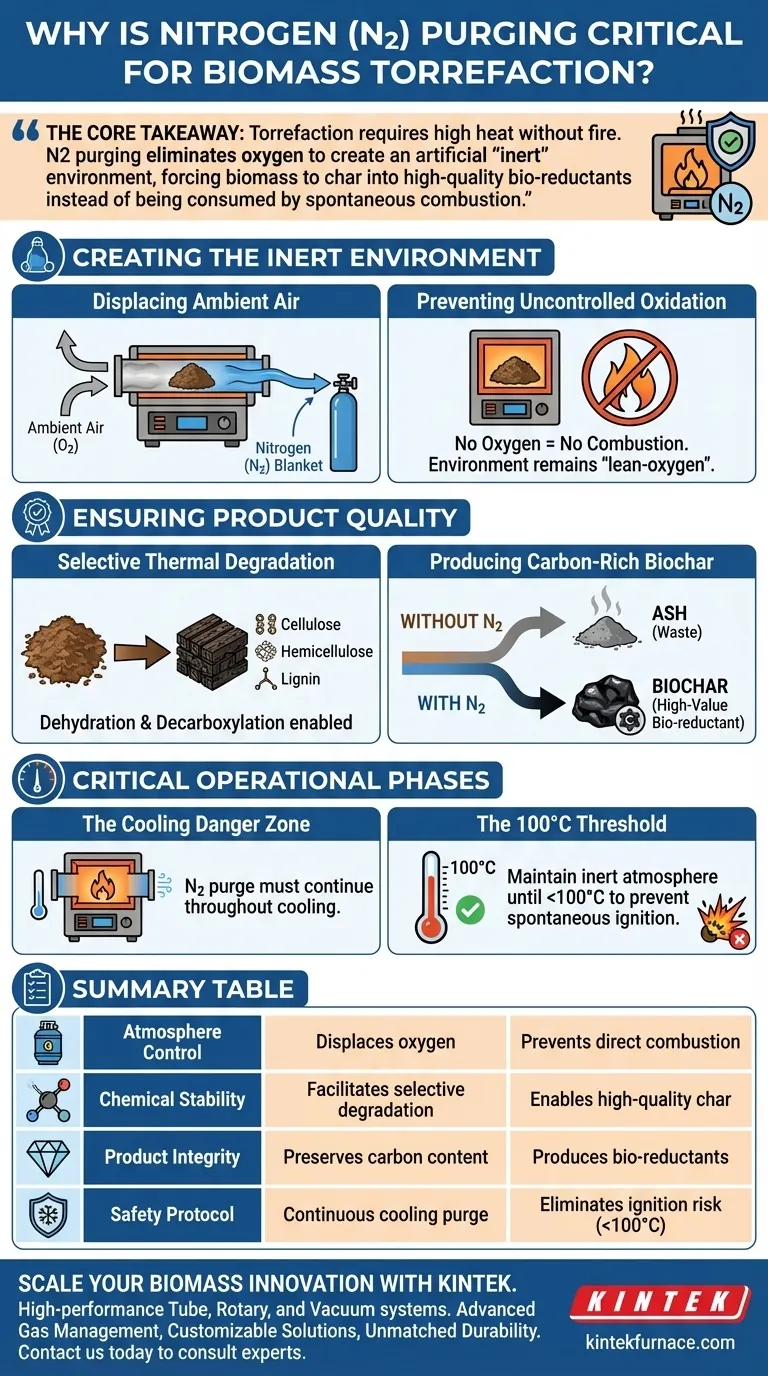
The Core Takeaway Torrefaction requires high heat without fire. Nitrogen purging eliminates oxygen to create an artificial "inert" environment, forcing biomass to char into high-quality bio-reductants instead of being consumed by spontaneous combustion.
Creating the Inert Environment
Displacing Ambient Air
Before the torrefaction process can begin, the heat treatment equipment is naturally filled with ambient air, which contains oxygen.
The nitrogen purging system is introduced specifically to displace this air. This creates a "blanket" around the biomass, removing the oxidant required for fire.
Preventing Uncontrolled Oxidation
Biomass is highly flammable when subjected to the high temperatures required for torrefaction.
Without an oxygen-deficient environment, the heat would trigger direct combustion. Nitrogen ensures that the environment remains "lean-oxygen" or oxygen-free, preventing the material from simply burning up.
Ensuring Product Quality
Selective Thermal Degradation
The goal of torrefaction is not to burn the material, but to chemically alter it.
Nitrogen allows for the selective thermal degradation of specific biomass components: cellulose, hemicellulose, and lignin. This occurs through dehydration and decarboxylation, processes that require heat but cannot function correctly in the presence of oxygen.
Producing Carbon-Rich Biochar
If oxygen is present, carbon reacts with it to form ash and gases.
By excluding oxygen, the nitrogen atmosphere preserves the carbon content within the solid material. This guarantees the production of high-quality carbonized solid products (bio-reductants) rather than waste ash.
Critical Operational Phases
The Cooling Danger Zone
The risk of fire does not end when the heating cycle finishes.
The primary reference explicitly states that the nitrogen purge must continue throughout the cooling phase. The biomass remains hot enough to ignite if suddenly exposed to fresh air during this time.
The 100°C Threshold
The system must maintain the inert atmosphere until the equipment and material temperature drops below 100°C.
Stopping the nitrogen flow before reaching this temperature creates an immediate risk of spontaneous combustion, potentially destroying the batch you just processed.
Understanding the Trade-offs
Consumable Costs vs. Product Value
Using a nitrogen system introduces an ongoing operational cost for the gas supply.
However, this cost is unavoidable; without it, the yield drops significantly as valuable biomass turns to ash. The expense of the gas is a trade-off for the high yield of the final carbonized product.
Process Complexity
Implementing this system requires precise control over gas flow and equipment sealing.
You must ensure the furnace or tube is sealed well enough to maintain the atmosphere. Leaks that allow oxygen ingress will degrade the quality of the biochar regardless of how much nitrogen is pumped in.
Making the Right Choice for Your Goal
To optimize your torrefaction process, align your purging strategy with your specific objectives:
- If your primary focus is safety: Rigorously automate the purging cycle to continue until the internal temperature is strictly below 100°C to prevent downstream fires.
- If your primary focus is product quality: Monitor the dew point and purity of the nitrogen supply to ensure efficient dehydration and maximum preservation of the carbon structure.
Proper nitrogen management is the single most critical factor in converting raw biomass into a high-value industrial fuel.
Summary Table:
| Feature | Role of Nitrogen Purging | Benefit to Torrefaction |
|---|---|---|
| Atmosphere Control | Displaces oxygen and ambient air | Prevents direct combustion and material loss |
| Chemical Stability | Facilitates dehydration/decarboxylation | Enables selective degradation of lignin and cellulose |
| Product Integrity | Preserves carbon content | Produces high-value bio-reductants instead of ash |
| Safety Protocol | Continuous cooling purge (<100°C) | Eliminates risk of spontaneous ignition during discharge |
Scale Your Biomass Innovation with KINTEK
Don't let oxygen-related product loss compromise your torrefaction yields. KINTEK provides high-performance, precision-engineered Tube, Rotary, and Vacuum systems designed specifically for sensitive thermal processes like biochar production.
Our equipment offers:
- Advanced Gas Management: Integrated N2 purging systems for airtight oxygen displacement.
- Customizable Solutions: R&D-backed designs tailored to your specific temperature and atmospheric requirements.
- Unmatched Durability: Industrial-grade manufacturing to withstand rigorous heating and cooling cycles.
Ready to optimize your lab or production facility? Contact us today to consult with our experts on the perfect high-temperature furnace for your needs.
Visual Guide
References
- Richard Deutsch, Gernot Krammer. Characteristics of High-Temperature Torrefied Wood Pellets for Use in a Blast Furnace Injection System. DOI: 10.3390/en18030458
This article is also based on technical information from Kintek Furnace Knowledge Base .
Related Products
- Electric Rotary Kiln Small Rotary Furnace Biomass Pyrolysis Plant Rotating Furnace
- Vacuum Heat Treat Furnace with Ceramic Fiber Liner
- 2200 ℃ Graphite Vacuum Heat Treat Furnace
- Electric Rotary Kiln Continuous Working Small Rotary Furnace Kiln for Pyrolysis Plant Heating
- Vacuum Heat Treat Sintering and Brazing Furnace
People Also Ask
- What are the main applications of a rotary kiln electric furnace? Achieve Uniform Heat Treatment for Powders
- What are the key components of a rotary kiln electric furnace? Unlock Efficient Thermal Processing
- What is the significance of the refractory lining in a rotary kiln electric furnace? Unlock Efficiency and Longevity
- What is the benefit of adjustable speed control in rotary kilns? Optimize Efficiency and Quality
- What are the main advantages of using rotary kilns for bulk solids processing? Achieve High-Volume, Uniform Thermal Processing






