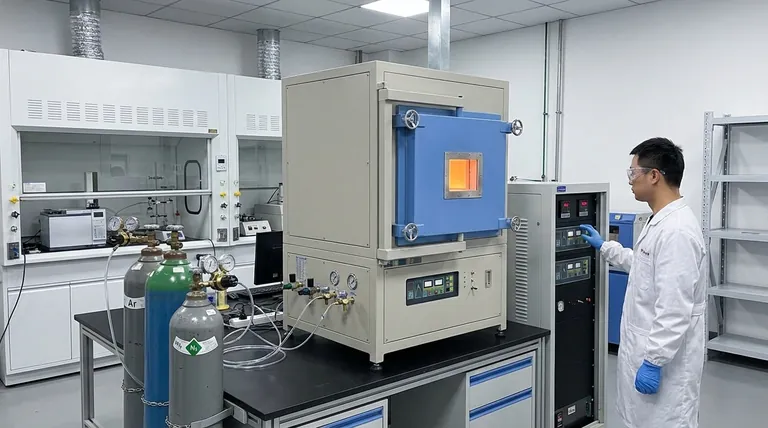
Vacuum or specific atmosphere control systems are strictly required to precisely regulate the pyrolysis environment during the synthesis of Iron (Fe), Cobalt (Co), and Nickel (Ni) single-atom catalysts. These systems utilize gases like argon, nitrogen, or ammonia to prevent the metal atoms from reacting with oxygen or migrating to form bulk nanoparticles at the elevated temperatures necessary for synthesis.
Core Takeaway: Atmosphere control is the critical mechanism that stops highly reactive metal atoms from clumping together or oxidizing, ensuring they remain isolated and anchored as high-performance single-atom catalysts.
The Physical Protection of Metal Atoms
Preventing Oxidation
Fe, Co, and Ni are highly reactive transition metals. At the high temperatures required for pyrolysis, these metals will instantly react with any available oxygen to form metal oxides. Atmosphere control systems eliminate oxygen from the chamber to preserve the metallic nature or specific coordination of the atoms.
Inhibiting Unwanted Reactions
Beyond oxidation, uncontrolled environments can lead to unpredictable chemical side reactions. By using vacuum or inert gas flows, you inhibit these undesirable reactions that compromise the purity of the catalyst. This precise regulation ensures that the thermal energy is used solely for the intended synthesis pathways.
Stabilization Through Surface Chemistry
Controlling Atomic Migration
Heat provides metal atoms with kinetic energy, causing them to move across the support surface. Without intervention, these atoms naturally migrate and aggregate into larger clusters or nanoparticles to lower their surface energy. Controlled atmospheres are essential to interrupt this migration and "freeze" the atoms in a dispersed state.
The Role of Nitrogen Doping
A specific reducing atmosphere, such as ammonia, plays a dual role by facilitating nitrogen doping. Nitrogen atoms introduced into the carbon support act as "anchors" for the metal atoms. This creates stable coordination sites that physically trap the Fe, Co, or Ni atoms, preventing them from moving.
Enhancing Coordination Stability
The stability of a single-atom catalyst depends on how well the metal atom is bonded to its support. The nitrogen-doped sites created under these controlled atmospheres provide the strongest thermodynamic stability for single atoms. This ensures the catalyst remains durable and active even during harsh operating conditions.
Understanding the Trade-offs
The Risk of Aggregation
The most significant risk in these systems is the formation of nanoparticles. If the atmosphere control fails or the gas composition is incorrect, the "anchoring" effect is lost. The metal atoms will immediately aggregate, converting the high-efficiency single-atom catalyst into a standard, lower-performance bulk material.
Complexity of Reducing Atmospheres
While ammonia promotes beneficial nitrogen doping, it is chemically aggressive. Using a reducing atmosphere requires precise calibration to ensure it modifies the support without destroying the underlying structure. It is a balancing act between creating anchoring sites and maintaining the integrity of the carbon matrix.
Making the Right Choice for Your Goal
- If your primary focus is preventing oxidation: Prioritize inert gas systems (Argon or Nitrogen) to create a strictly non-reactive barrier against oxygen.
- If your primary focus is maximizing stability and dispersion: Utilize a reducing atmosphere (Ammonia) to induce nitrogen doping and create robust anchoring sites for the metal atoms.
Control the atmosphere to control the atom.
Summary Table:
| System Type | Primary Function | Synthesis Benefit |
|---|---|---|
| Inert (Argon/N2) | Eliminates Oxygen | Prevents metal oxidation and side reactions |
| Reducing (Ammonia) | Nitrogen Doping | Creates M-N-C anchoring sites to stabilize atoms |
| Vacuum System | Pressure Control | Manages vapor deposition and impurity removal |
| Thermal Control | High-Temp Pyrolysis | Drives the formation of the carbon-support matrix |
Unlock Atomic-Level Control with KINTEK
Precision in single-atom catalyst synthesis demands absolute control over your thermal environment. KINTEK provides high-performance Muffle, Tube, and Vacuum furnace systems specifically designed for the rigorous demands of Fe, Co, and Ni catalyst production.
Backed by expert R&D and world-class manufacturing, our customizable systems allow you to seamlessly switch between inert and reducing atmospheres (like Ammonia) to ensure perfect nitrogen doping and prevent nanoparticle aggregation.
Ready to elevate your lab's research capabilities? Contact us today to find your custom heating solution and experience the KINTEK advantage in material science.
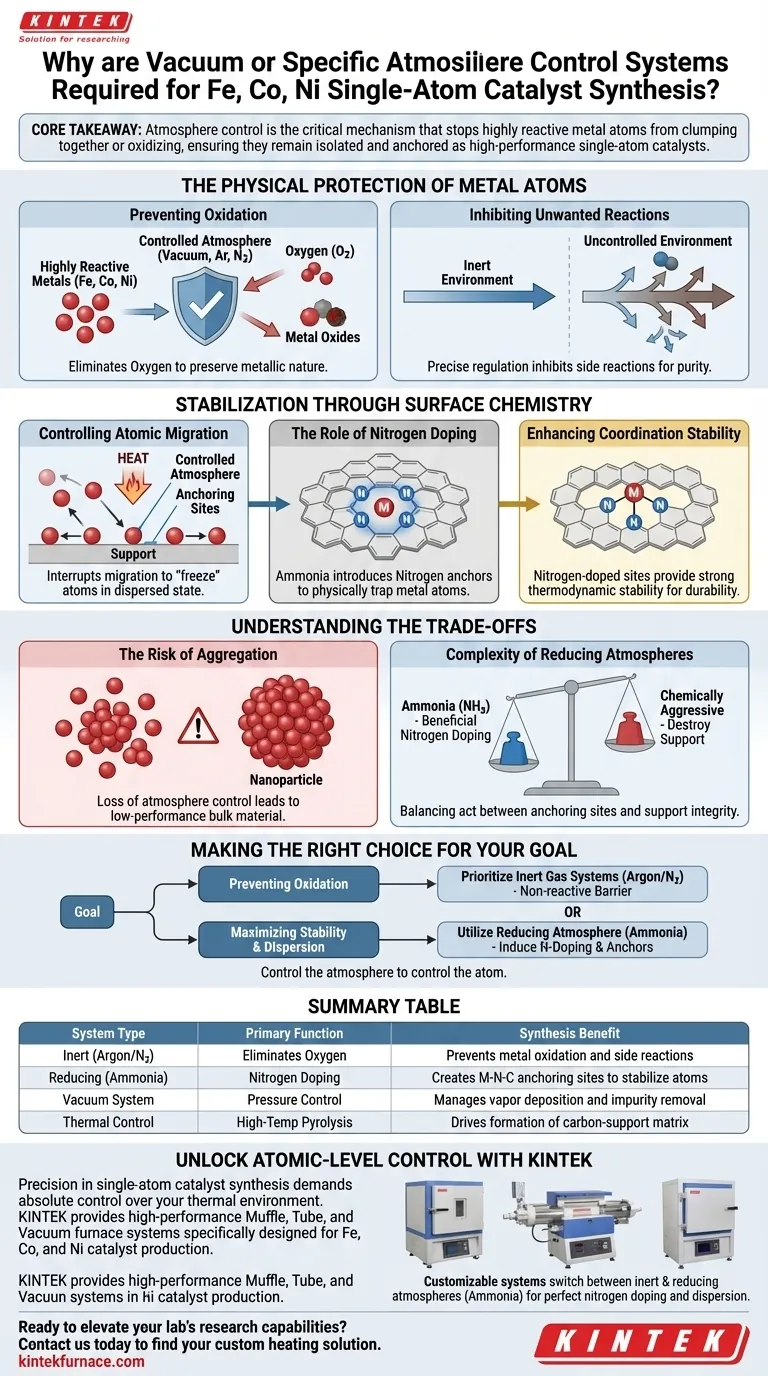
Visual Guide
References
- Yuquan Yang, Jinlong Zheng. Preparation of Fe, Co, Ni-based single atom catalysts and the progress of their application in electrocatalysis. DOI: 10.20517/microstructures.2024.65
This article is also based on technical information from Kintek Furnace Knowledge Base .
Related Products
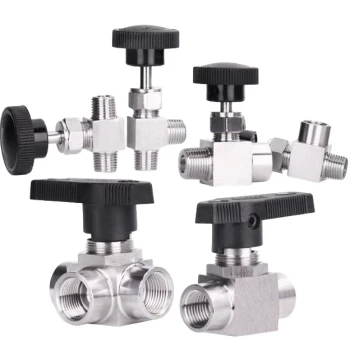
- 304 316 Stainless Steel High Vacuum Ball Stop Valve for Vacuum Systems
- Mesh Belt Controlled Atmosphere Furnace Inert Nitrogen Atmosphere Furnace
- 1200℃ Controlled Inert Nitrogen Atmosphere Furnace
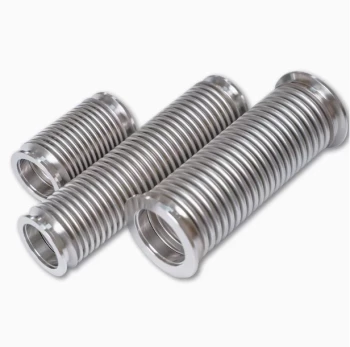
- High Performance Vacuum Bellows for Efficient Connection and Stable Vacuum in Systems
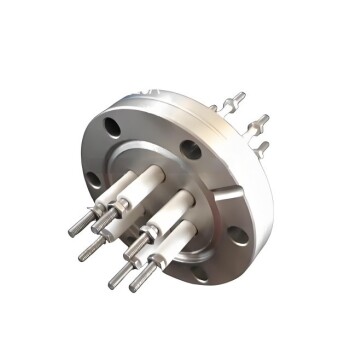
- CF KF Flange Vacuum Electrode Feedthrough Lead Sealing Assembly for Vacuum Systems
People Also Ask
- What role do vacuum-sealed high-purity silica ampoules play in phase equilibrium experiments? Enhance Sample Integrity
- What is the function of quartz vacuum encapsulation in RhSeCl CVT? Mastering Pure Crystal Growth
- What role does a closed pressure vessel play during the carbonation of gamma-C2S? Unlock Rapid Mineralization
- What type of pump is used in water circulating vacuum pumps and how is it installed? Discover Robust Fluid-Based Vacuum Solutions
- What is the specific function of the water circulation cooler in zirconium sponge processing? Key for Purity & Safety