Vacuum filtration devices and specific cellulose filter papers are essential for optimizing the recovery of hydrothermal synthesis products. They leverage pressure differentials to drastically accelerate solid-liquid separation while utilizing specific pore sizes (typically 15–19 µm) to effectively capture fine hydrochar particles and isolate solid catalyst supports.
By combining rapid pressure-driven separation with precise particle interception, this method ensures high product purity and significantly lowers solvent consumption during the washing phase.
Accelerating the Separation Process
Utilizing Pressure Differentials
Vacuum filtration devices rely on creating a pressure differential across the filter medium. This mechanical force is significantly more effective than gravity alone.
It accelerates the movement of the liquid phase through the filter. This speed is critical for processing the reaction liquid efficiently after synthesis.
Optimizing Solid-Liquid Separation
The primary goal of this stage is the efficient extraction of solid catalyst supports.
Rapid separation prevents the re-absorption of impurities. It ensures the solid product is isolated quickly from the reaction mixture.
The Role of Cellulose Filter Papers
Precision in Particle Retention
The choice of filter paper is not arbitrary; it requires specific cellulose papers with pore sizes between 15–19 µm.
This specific range is calibrated to the size of the particulate matter produced during synthesis. It effectively intercepts fine hydrochar particles that would pass through coarser media.
Ensuring Product Recovery
Using the correct pore size ensures that the desired solid product remains on the filter.
If the pores are too large, valuable hydrochar or catalyst supports are lost in the filtrate. This step is the primary safeguard for yield and recovery.
Efficiency Beyond Separation
Enhancing Product Purity
By effectively intercepting fine particles, the filtration process ensures a higher baseline of product purity.
Separating the solids cleanly removes the bulk of the reaction liquid and suspended contaminants. This leaves a cleaner "cake" of solid material.
Reducing Solvent Consumption
A more efficient initial separation has a compounding benefit for downstream processing.
Because the solids are separated more thoroughly, less solvent is required in the subsequent washing stages. This reduces both chemical costs and waste generation.
Operational Considerations and Trade-offs
The Importance of Pore Size Specifications
Success in this process is strictly tied to the 15–19 µm pore size specification.
Using a filter with larger pores will result in poor particle interception and product loss. Conversely, using a significantly smaller pore size could lead to clogging and slow filtration times, negating the benefits of the vacuum system.
Balancing Speed and Retention
The system represents a balance between the force of the vacuum and the resistance of the paper.
Applying too much pressure to an incorrect filter type can rupture the paper or force soft particles through the mesh. The specific cellulose papers are selected to withstand this process while maintaining retention integrity.
Making the Right Choice for Your Goal
To maximize the efficiency of your hydrothermal synthesis recovery, align your equipment choices with your specific objectives:
- If your primary focus is Product Purity: strictly utilize cellulose filter papers with the 15–19 µm pore size to ensure complete interception of fine hydrochar particles.
- If your primary focus is Process Efficiency: prioritize high-quality vacuum filtration setups to accelerate separation and directly reduce the volume of solvent needed for washing.
Correctly pairing vacuum pressure with the specified filtration media is the single most effective way to ensure a pure product and a cost-effective process.
Summary Table:
| Component | Key Specification | Primary Function in Recovery |
|---|---|---|
| Vacuum Device | Pressure Differential | Accelerates solid-liquid separation beyond gravity |
| Filter Paper | Cellulose (15–19 µm) | Intercepts fine hydrochar and catalyst supports |
| Pore Precision | 15–19 µm Range | Prevents product loss while avoiding media clogging |
| Washing Stage | Reduced Volume | Minimizes solvent consumption due to cleaner initial separation |
Maximize Your Lab’s Synthesis Yield with KINTEK
Precise filtration is just one step in the hydrothermal process. At KINTEK, we understand that high-quality outcomes start with superior equipment. Backed by expert R&D and world-class manufacturing, we provide a comprehensive range of Muffle, Tube, Rotary, Vacuum, and CVD systems, along with other laboratory high-temperature furnaces—all fully customizable to meet your unique research requirements.
Whether you are scaling up hydrochar production or developing advanced catalyst supports, our systems offer the thermal precision and reliability your lab deserves. Contact KINTEK today to discuss your project needs and find the perfect furnace solution.
References
- Kapil Khandelwal, Ajay K. Dalai. Catalytic Supercritical Water Gasification of Canola Straw with Promoted and Supported Nickel-Based Catalysts. DOI: 10.3390/molecules29040911
This article is also based on technical information from Kintek Furnace Knowledge Base .
Related Products
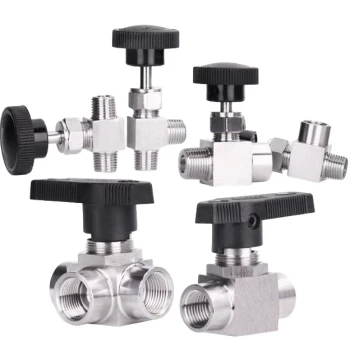
- 304 316 Stainless Steel High Vacuum Ball Stop Valve for Vacuum Systems
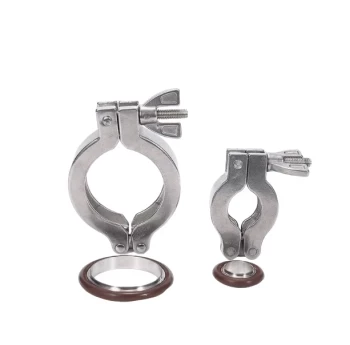
- Stainless Steel Quick Release Vacuum Chain Three Section Clamp
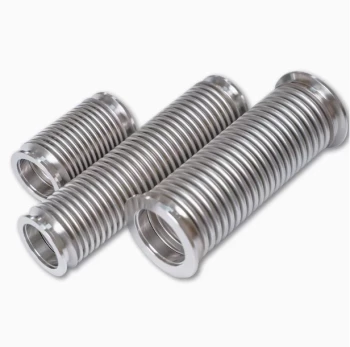
- High Performance Vacuum Bellows for Efficient Connection and Stable Vacuum in Systems
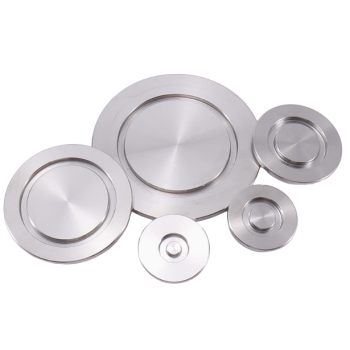
- Stainless Steel KF ISO Vacuum Flange Blind Plate for High Vacuum Systems
- Ultra Vacuum Electrode Feedthrough Connector Flange Power Lead for High Precision Applications
People Also Ask
- What role do vacuum-sealed high-purity silica ampoules play in phase equilibrium experiments? Enhance Sample Integrity
- What is the function of quartz vacuum encapsulation in RhSeCl CVT? Mastering Pure Crystal Growth
- What role does a closed pressure vessel play during the carbonation of gamma-C2S? Unlock Rapid Mineralization
- What type of pump is used in water circulating vacuum pumps and how is it installed? Discover Robust Fluid-Based Vacuum Solutions
- What is the specific function of the water circulation cooler in zirconium sponge processing? Key for Purity & Safety