A mechanical vacuum pump system serves as the primary mechanism for lowering reaction pressure, specifically targeting levels around $10^{-2}$ mbar to drive the reduction of cerium dioxide. By actively evacuating the oxygen produced during the reaction, the system shifts chemical equilibrium, allowing the reduction process to occur more thoroughly and at significantly lower temperatures.
By maintaining a low-pressure environment, the vacuum system breaks standard equilibrium limitations and acts as a critical "booster," enabling pumping materials to remove residual oxygen with maximum efficiency.
Overcoming Thermodynamic Barriers
Breaking Equilibrium Limitations
The fundamental challenge in reducing cerium dioxide is the natural chemical equilibrium that resists the release of oxygen. As the reaction produces oxygen, the presence of that gas tends to halt further reduction.
The Role of Oxygen Evacuation
A mechanical vacuum pump, such as a rotary vane pump, physically removes this evolved oxygen from the chamber. By constantly extracting the gas, the system prevents the reaction from stalling, effectively forcing the chemical process forward.
Reaching Critical Pressure Levels
To achieve significant efficiency gains, the system must reduce the pressure to approximately $10^{-2}$ mbar. This specific low-pressure environment is essential for destabilizing the oxygen bonds within the cerium dioxide lattice.
Synergistic Effects with Pumping Materials
Acting as a System Booster
The mechanical pump does not work in isolation; it functions as a booster for perovskite pumping materials. While the mechanical pump handles the bulk pressure reduction, it creates the optimal conditions for the perovskite materials to function.
Removing Residual Oxygen
Once the mechanical pump establishes the low-pressure environment, it assists the perovskite materials in scavenging residual oxygen. This two-pronged approach ensures a much higher degree of reduction than either method could likely achieve alone.
Enabling Lower Temperature Operations
Because the vacuum system so effectively removes the opposing force of oxygen pressure, the energy required to drive the reaction decreases. This allows the reduction of cerium dioxide to proceed efficiently at lower temperatures, saving energy and preserving system integrity.
Operational Considerations
Dependency on Integrated Systems
It is important to recognize that the mechanical pump is described as part of a broader system involving vacuum pressure sensors and perovskite pumping materials.
Relying solely on a mechanical pump without the complementary pumping materials may not yield the "significant increase" in reduction degree mentioned. The high efficiency is a result of the mechanical pump acting as a facilitator for the chemical pumping agents.
Optimizing Your Reduction Process
If your primary focus is maximizing reduction degree:
- Ensure your mechanical pump is paired with high-performance perovskite pumping materials to target residual oxygen effectively.
If your primary focus is energy efficiency:
- Leverage the vacuum system to lower the operational temperature, as the reduced pressure compensates for the thermal energy usually required.
The mechanical vacuum pump is the foundational tool that transforms the reduction environment, making high-efficiency processing possible.
Summary Table:
| Feature | Role in Reduction Process | Impact on Efficiency |
|---|---|---|
| Pressure Target | Maintains levels around $10^{-2}$ mbar | Destabilizes oxygen bonds for easier release |
| Oxygen Removal | Actively evacuates evolved $O_2$ gas | Shifts equilibrium forward to prevent stalling |
| System Synergy | Acts as a booster for perovskite materials | Enables scavenging of residual oxygen molecules |
| Thermal Control | Lowers required reaction energy | Permits efficient reduction at lower temperatures |
Optimize Your Materials Processing with KINTEK
Maximize your reduction degree and operational efficiency with precision-engineered vacuum systems from KINTEK. As leaders in lab high-temperature technology, we provide high-performance Muffle, Tube, and Vacuum furnaces specifically designed to integrate with advanced mechanical pumping systems.
Whether you are reducing cerium dioxide or developing advanced perovskite materials, our expert R&D and manufacturing teams offer customizable solutions tailored to your unique research needs. Contact us today to discover how KINTEK’s high-temperature systems can transform your lab’s productivity.
References
- Mathias Pein, Christian Sattler. Thermochemical Oxygen Pumping with Perovskite Reticulated Porous Ceramics for Enhanced Reduction of Ceria in Thermochemical Fuel Production. DOI: 10.1002/aenm.202304454
This article is also based on technical information from Kintek Furnace Knowledge Base .
Related Products
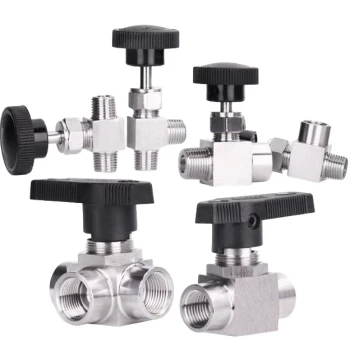
- 304 316 Stainless Steel High Vacuum Ball Stop Valve for Vacuum Systems
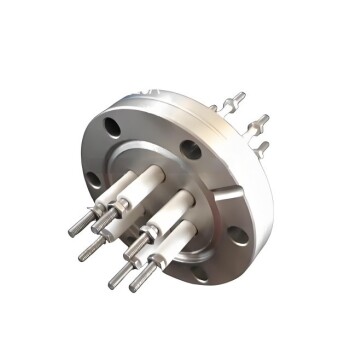
- CF KF Flange Vacuum Electrode Feedthrough Lead Sealing Assembly for Vacuum Systems
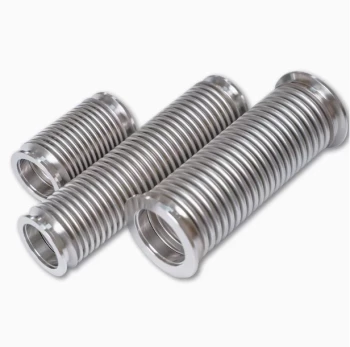
- High Performance Vacuum Bellows for Efficient Connection and Stable Vacuum in Systems
- Vacuum Hot Press Furnace Machine Heated Vacuum Press
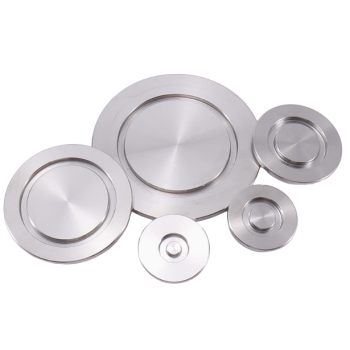
- Stainless Steel KF ISO Vacuum Flange Blind Plate for High Vacuum Systems
People Also Ask
- What role do vacuum-sealed high-purity silica ampoules play in phase equilibrium experiments? Enhance Sample Integrity
- What is the function of quartz vacuum encapsulation in RhSeCl CVT? Mastering Pure Crystal Growth
- What role does a closed pressure vessel play during the carbonation of gamma-C2S? Unlock Rapid Mineralization
- What type of pump is used in water circulating vacuum pumps and how is it installed? Discover Robust Fluid-Based Vacuum Solutions
- What is the specific function of the water circulation cooler in zirconium sponge processing? Key for Purity & Safety