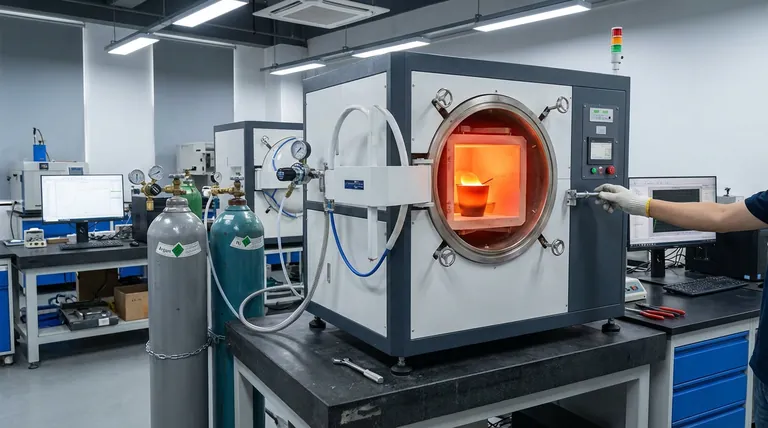
A stainless steel vacuum process chamber provides a controlled, ultra-clean experimental environment specifically engineered for high-temperature material research. This apparatus allows researchers to completely isolate their samples from the ambient atmosphere, enabling the precise manipulation of environmental conditions necessary for studying reactive materials.
The Core Insight High-temperature research on metallic melts is prone to data distortion caused by chemical reactions with air. The stainless steel vacuum chamber acts as a critical safeguard, ensuring data integrity by maintaining either a high vacuum or a pure inert gas atmosphere to prevent oxidation.
The Mechanics of Atmospheric Control
Achieving High Vacuum Levels
The primary function of this chamber is the creation of a high vacuum. By systematically evacuating impurity gases, the system strips away contaminants that would otherwise exist in a standard laboratory environment.
Introduction of Inert Gases
Beyond simple evacuation, the chamber supports the introduction of clean, inert gases such as argon. This capability allows researchers to replace a reactive atmosphere with a neutral one, stabilizing the experimental conditions without chemically altering the sample.
Safeguarding Material Integrity
Preventing Oxidation Reactions
When metallic materials are heated to extreme temperatures, they become highly susceptible to chemical changes. The ultra-clean environment prevents oxidation reactions, particularly in highly reactive metallic melts that would degrade instantly in the presence of oxygen.
Ensuring Data Accuracy
The validity of thermophysical property data relies entirely on the purity of the sample during measurement. By eliminating environmental variables and contamination, the chamber ensures the integrity and accuracy of the resulting scientific data.
Common Pitfalls in Environmental Control
The Risk of Residual Impurities
A common oversight in high-temperature research is underestimating the impact of trace gases. Even distinct microscopic levels of impurity gases can skew results, making the chamber's ability to reach high vacuum levels a non-negotiable requirement for precision.
Choosing the Wrong Atmosphere
Researchers must correctly choose between a vacuum and an inert gas environment. While a vacuum removes contaminants, specific experiments may require the pressure balance provided by argon to manage the behavior of the melt effectively.
Making the Right Choice for Your Research
To maximize the utility of a stainless steel vacuum process chamber, align the environmental setting with your specific material constraints:
- If your primary focus is eliminating all environmental contaminants: Prioritize the chamber's capability to evacuate impurity gases to reach high vacuum levels.
- If your primary focus is stabilizing reactive metallic melts: Utilize the system's ability to introduce clean inert gases like argon to prevent oxidation while maintaining pressure.
Reliable high-temperature research begins not with the sample, but with the uncompromising purity of the environment surrounding it.
Summary Table:
| Feature | Environmental Benefit | Research Impact |
|---|---|---|
| High Vacuum Capability | Evacuation of all impurity gases | Eliminates trace contaminants and prevents sample skewing |
| Inert Gas Integration | Controlled argon/nitrogen atmosphere | Stabilizes reactive metallic melts and manages pressure |
| Oxidation Prevention | Removal of oxygen and moisture | Protects integrity of samples at extreme temperatures |
| Material Construction | High-grade stainless steel | Ensures chamber durability and minimizes outgassing |
Elevate Your Material Research with KINTEK Precision
Don't let oxidation compromise your high-temperature data. KINTEK provides industry-leading vacuum process chambers and lab high-temp furnaces designed specifically for the rigorous demands of material science.
Backed by expert R&D and specialized manufacturing, our range includes Muffle, Tube, Rotary, Vacuum, and CVD systems, all of which are fully customizable to meet your unique experimental parameters. Partner with us to ensure an uncompromisingly pure environment for your next breakthrough.
Ready to optimize your lab's capabilities? Contact our engineering team today to discuss your custom solution.
References
- G. Lohöfer, Andreas Meyer. TEMPUS—A microgravity electromagnetic levitation facility for parabolic flights. DOI: 10.1063/5.0182719
This article is also based on technical information from Kintek Furnace Knowledge Base .
Related Products
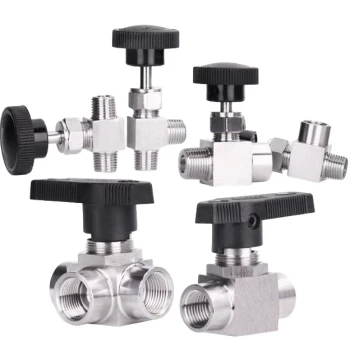
- 304 316 Stainless Steel High Vacuum Ball Stop Valve for Vacuum Systems
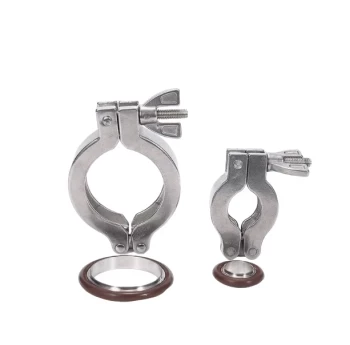
- Stainless Steel Quick Release Vacuum Chain Three Section Clamp
- Split Chamber CVD Tube Furnace with Vacuum Station CVD Machine
People Also Ask
- What role do vacuum-sealed high-purity silica ampoules play in phase equilibrium experiments? Enhance Sample Integrity
- What is the function of quartz vacuum encapsulation in RhSeCl CVT? Mastering Pure Crystal Growth
- What role does a closed pressure vessel play during the carbonation of gamma-C2S? Unlock Rapid Mineralization
- What type of pump is used in water circulating vacuum pumps and how is it installed? Discover Robust Fluid-Based Vacuum Solutions
- What is the specific function of the water circulation cooler in zirconium sponge processing? Key for Purity & Safety