
The two-step carbonization process is the definitive method for converting lignin into high-performance EN-LCNF (Edge-Nitrogen-rich Lignin-derived Carbon Nanofiber frameworks). This high-temperature technique decouples the production process into two distinct phases: first establishing a physical 3D architecture, and subsequently engineering the chemical composition to enhance electrochemical performance.
The core value of this process lies in its ability to separately optimize structure and chemistry. By using specific precursors in a sequence, it creates a porous 3D framework first, then locks in high concentrations of edge-nitrogen to maximize ion storage and diffusion.
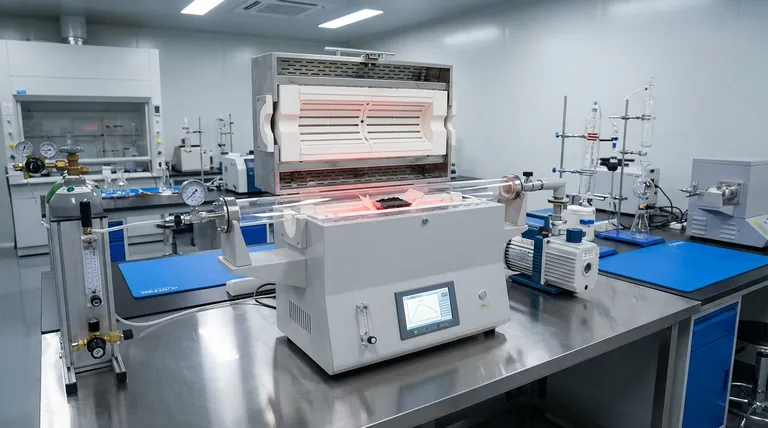
Step 1: Structural Transformation
The first phase of the high-temperature process is focused entirely on physical morphology. The goal here is to convert the dense lignin matrix into a usable, open structure.
The Role of Calcium Oxalate
During this stage, the furnace acts on calcium oxalate. This compound serves a dual purpose: it acts as a chemical exfoliant and a "hard template."
Creating the 3D Framework
As the calcium oxalate decomposes in the heat, it forces the lignin to expand and restructure.
This transforms the material into a three-dimensional nanosheet framework, providing the necessary surface area and porosity required for advanced applications.
Step 2: Chemical Modification (Nitrogen Doping)
Once the physical skeleton is established, the second furnace step addresses the chemical properties of the material. This stage is critical for introducing "active sites" that store energy.
Thermal Conversion of Melamine
This step introduces melamine into the high-temperature environment. The heat converts the melamine into graphitic carbon nitride (g-C3N4).
The Reaction with Calcium Oxide
The g-C3N4 does not just coat the material; it reacts chemically with calcium oxide present in the system.
This reaction is the driver for bonding nitrogen units directly to the carbon framework established in step one.
Forming sp3 Hybridized Bonds
The specific outcome of this reaction is the formation of sp3 hybridized C-N bonds.
This bonding structure is significant because it successfully introduces a high proportion of edge nitrogen, which is more chemically active than other forms of nitrogen doping.
Understanding the Trade-offs
While this two-step process yields superior materials, it introduces complexity that must be managed.
Interdependency of Steps
You cannot isolate these steps and expect the same result. The calcium oxide required for the reaction in Step 2 is a byproduct of the calcium oxalate decomposition in Step 1.
Specificity of Precursors
The process relies heavily on specific chemical interactions. Substituting the "hard template" (calcium oxalate) or the nitrogen source (melamine) would likely fail to produce the specific sp3 hybridized bonds required for high performance.
Making the Right Choice for Your Goal
To replicate the success of EN-LCNF production, you must view these two steps as parts of a unified system rather than separate options.
- If your primary focus is Structural Integrity: Prioritize the precise control of the calcium oxalate decomposition, as this dictates the quality of the 3D nanosheet framework.
- If your primary focus is Electrochemical Performance: Ensure the thermal conversion of melamine is sufficient to maximize edge-nitrogen content for better ion storage and diffusion kinetics.
Ultimately, the significance of this process is that it turns lignin from a simple biomass byproduct into a sophisticated, chemically tuned material capable of rapid energy storage.
Summary Table:
| Process Phase | Primary Agent | Key Transformation | Functional Benefit |
|---|---|---|---|
| Step 1: Structural | Calcium Oxalate | 3D Nanosheet Framework formation | Enhanced surface area & porosity |
| Step 2: Chemical | Melamine | Edge-Nitrogen Doping (sp3 C-N bonds) | Maximized ion storage & diffusion |
| Interaction | Calcium Oxide | Byproduct reaction with g-C3N4 | Creation of active chemical sites |
Elevate Your Advanced Material Research with KINTEK
Precise thermal control is the cornerstone of complex processes like two-step carbonization for EN-LCNF production. At KINTEK, we understand that every degree and every reaction phase matters for your electrochemical performance outcomes.
Backed by expert R&D and manufacturing, KINTEK offers Muffle, Tube, Rotary, Vacuum, and CVD systems, along with other specialized lab high-temperature furnaces. All our systems are fully customizable to meet the unique structural and chemical engineering needs of your materials research.
Ready to optimize your carbonization workflow?
Contact our specialists today to find the perfect high-temperature solution for your lab.
References
- Caiwei Wang, Zhili Li. Engineering of edge nitrogen dopant in carbon nanosheet framework for fast and stable potassium-ion storage. DOI: 10.1007/s44246-024-00101-8
This article is also based on technical information from Kintek Furnace Knowledge Base .
Related Products
- 1700℃ Controlled Inert Nitrogen Atmosphere Furnace
- 1400℃ High Temperature Laboratory Tube Furnace with Alumina Tube
- High Temperature Muffle Oven Furnace for Laboratory Debinding and Pre Sintering
- 1800℃ High Temperature Muffle Oven Furnace for Laboratory
- 1700℃ High Temperature Muffle Oven Furnace for Laboratory
People Also Ask
- Why is thorough binder burnout necessary before sintering advanced ceramics? Ensure Peak Density & Zero Defects
- How do controlled-atmosphere furnaces support polymer pyrolysis? Master SiC & Si3N4 Ceramic Conversion
- How does real-time dilatometric analysis in a controlled-atmosphere furnace optimize PZT ceramic sintering?
- How does oxygen partial pressure control affect ceramic sintering? Master Defect Chemistry
- Why is controlled-atmosphere heating required for functional ceramics and sensors? Master Defect Engineering



















