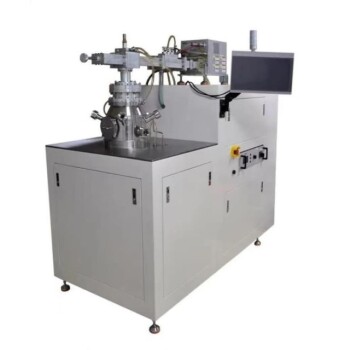
The quartz reactor acts as the central containment vessel for the vacuum distillation process, engineered to withstand extreme conditions while facilitating chemical separation. It provides a hermetically sealed environment that maintains the high vacuum necessary to significantly lower the boiling points of specific metals. This allows for the recovery of metals like zinc at temperatures up to 1200 K without the need for excessive thermal energy.
The reactor’s primary function is to manipulate thermodynamics: by creating a low-pressure environment, it reduces the thermal energy required to vaporize metals, enabling separation based purely on vapor pressure differences.

The Mechanics of Vacuum Distillation
Lowering the Boiling Point
The fundamental role of the quartz reactor is to decouple temperature from pressure. By sustaining a vacuum, the reactor creates an environment where the boiling point of target metals is drastically reduced.
This means metals that usually require immense heat to vaporize can be volatilized at much lower, more manageable temperatures.
Vapor Pressure Separation
Inside the reactor, the process relies on the specific physical properties of the metals being recovered. Different metals possess different vapor pressures at a given temperature.
The reactor allows operators to exploit these differences, efficiently separating volatile metals (like zinc) from less volatile impurities through selective volatilization.
Critical Material Properties of the Reactor
High-Temperature Endurance
The recovery process involves intense heat, often reaching up to 1200 K.
The quartz material is selected specifically for its ability to maintain structural integrity and chemical inertness at these elevated temperatures.
Airtight Integrity
For the vacuum distillation principle to work, the system must remain completely isolated from the outside atmosphere.
The quartz reactor offers superior airtightness, ensuring the low-pressure environment is never compromised during the volatilization phase.
Material Transparency
The primary reference notes that the reactor is highly transparent.
This physical property is beneficial for the operation, likely aiding in the transmission of thermal radiation or allowing for visual monitoring of the internal reaction status.
Understanding the Operational Limits
Thermal Thresholds
While robust, the quartz reactor has a definitive thermal ceiling.
It is rated for operations up to 1200 K; exceeding this limit can compromise the reactor's structural integrity or safety.
Vacuum Dependency
The efficiency of the reactor is entirely dependent on the quality of the vacuum seal.
If the airtight nature of the quartz is breached or the vacuum pressure rises, the boiling points of the metals will revert to normal levels, halting the recovery process.
Optimizing Metal Recovery Strategy
To ensure efficient metal recovery using a quartz reactor system, consider the following operational focuses:
- If your primary focus is Energy Efficiency: Prioritize maintaining the deepest possible vacuum to minimize the thermal energy required to volatilize the metal.
- If your primary focus is Component Longevity: Strictly monitor process temperatures to ensure they remain below the 1200 K threshold to prevent reactor degradation.
The quartz reactor serves as the critical interface between extreme heat and low pressure, making the efficient separation of metals physically possible.
Summary Table:
| Aspect | Description | Key Benefit |
|---|---|---|
| Primary Function | Central containment vessel; creates a hermetically sealed, high-vacuum environment. | Lowers metal boiling points for efficient separation. |
| Material Property | Quartz: High-temperature endurance (up to 1200 K), superior airtightness, material transparency. | Ensures structural integrity, maintains vacuum, allows monitoring. |
| Process Mechanism | Decouples temperature from pressure; exploits vapor pressure differences for selective volatilization. | Enables high-purity metal separation at lower temperatures. |
| Operational Limit | Thermal ceiling (1200 K); efficiency entirely dependent on the quality of the vacuum seal. | Critical for reactor longevity and process success. |
Ready to enhance your metal recovery or high-temperature processing capabilities? Backed by expert R&D and manufacturing, KINTEK offers Muffle, Tube, Rotary, Vacuum, CVD systems, and other lab high-temp furnaces, all customizable for unique needs. Discover how our specialized equipment can optimize your operations and achieve superior material separation. Contact KINTEK today for a tailored solution!
References
- Joongseok Kim, Kyung‐Woo Yi. Investigation of Low-Temperature Molten Oxide Electrolysis of a Mixture of Hematite and Zinc Oxide. DOI: 10.3390/ma18174116
This article is also based on technical information from Kintek Furnace Knowledge Base .
Related Products
- High Pressure Laboratory Vacuum Tube Furnace
- Laboratory Quartz Tube Furnace RTP Heating Tubular Furnace
- Vertical Laboratory Quartz Tube Furnace Tubular Furnace
- Multi Zone Laboratory Quartz Tube Furnace Tubular Furnace
- Custom Made Versatile CVD Tube Furnace Chemical Vapor Deposition CVD Equipment Machine
People Also Ask
- What role does a high vacuum tube furnace play in Co-Al sintering? Master High-Purity Porous Material Synthesis
- What are the different types of tube furnaces available? Find the Perfect Fit for Your Lab's Needs
- What is the role of a vacuum tube furnace during the final thermal treatment stage of Fe3O4@CSAC catalysts?
- What are the main advantages of vacuum tube furnaces in the market? Achieve Purity and Precision in Material Processing
- What conditions does a tube furnace provide for post-ion-implantation? Achieve Precise Microstructural Repair