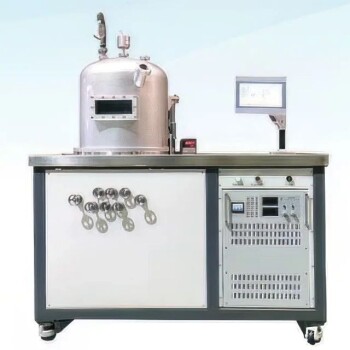
Applying Boron Nitride (BN) to graphite molds serves as a critical protective measure during the Vacuum Hot Pressing (VHP) of Mg3Sb2 powder. This coating functions primarily as a high-temperature lubricant and an isolation layer, preventing the powder from chemically reacting with or sticking to the graphite under intense heat and pressure.
Vacuum Hot Pressing exposes materials to conditions that naturally promote unwanted adhesion and chemical bonding. A Boron Nitride coating neutralizes this risk by acting as an inert interface, ensuring the final sintered body remains pure, intact, and easy to remove from the mold.
The Mechanics of Mold Protection
Creating a Diffusion Barrier
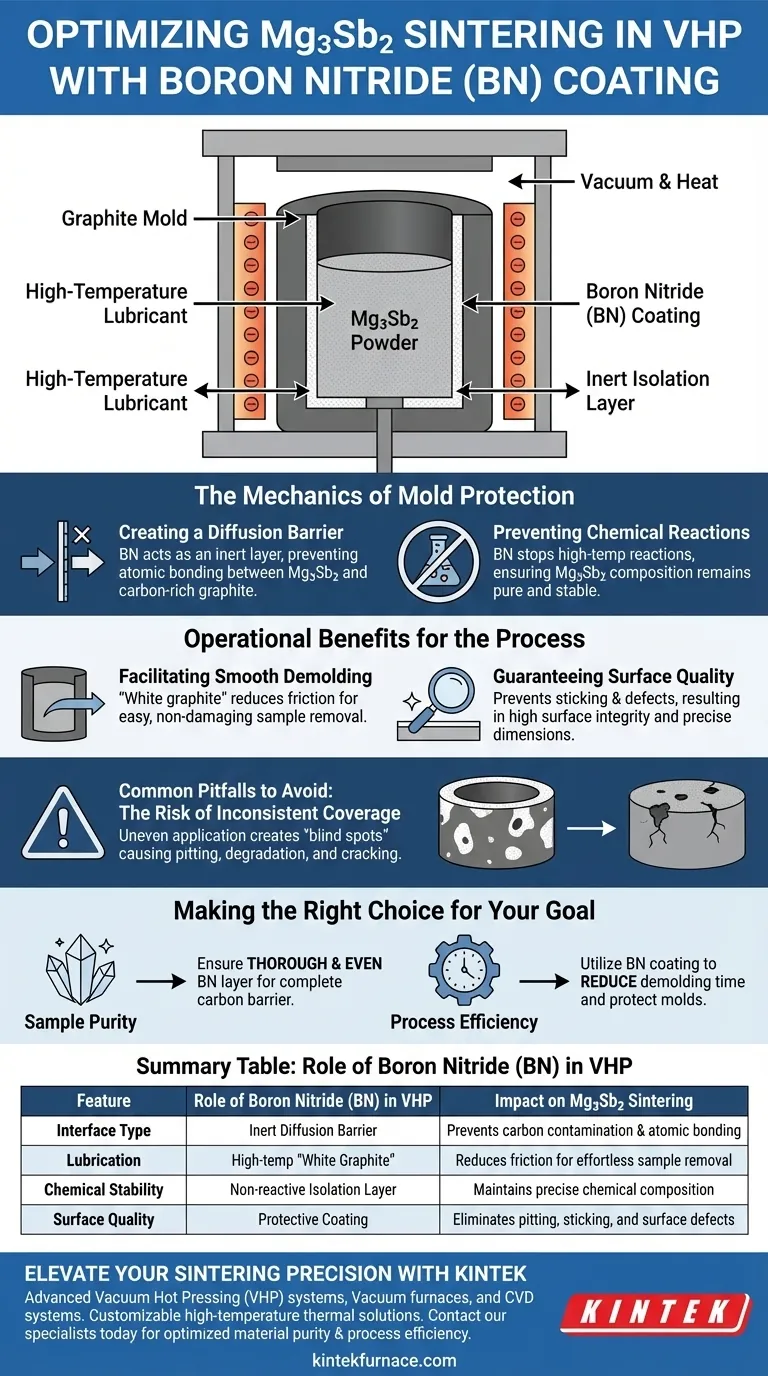
In the high-temperature environment of VHP, materials are prone to diffusion bonding. Boron Nitride acts as an inert isolation layer between the Mg3Sb2 powder and the carbon-rich graphite. This physical separation prevents the sample from bonding with the mold walls at the atomic level.
Preventing Chemical Reactions
Direct contact between the powder and the mold can lead to unwanted chemical changes. The BN coating stops these high-temperature reactions from occurring. This ensures the chemical composition of the Mg3Sb2 remains stable and uncontaminated by the graphite.
Operational Benefits for the Process
Facilitating Smooth Demolding
Boron Nitride is often referred to as "white graphite" due to its lubricious properties. It serves as a release agent that significantly reduces friction between the sintered body and the mold walls. This allows you to remove the sample easily without applying excessive force that could damage it.
Guaranteeing Surface Quality
Adhesion to the mold is the primary cause of surface defects in sintered samples. By preventing sticking and chemical interaction, the BN layer preserves the integrity of the sample's exterior. This results in a final product with high surface quality and precise dimensions.
Common Pitfalls to Avoid
The Risk of Inconsistent Coverage
While Boron Nitride is effective, it must be applied uniformly. Any gaps in the coating create "blind spots" where the Mg3Sb2 can still react with or adhere to the graphite. This leads to localized pitting, surface degradation, and potential cracking during the demolding process.
Making the Right Choice for Your Goal
To maximize the success of your Vacuum Hot Pressing process, consider your specific priorities:
- If your primary focus is Sample Purity: Ensure the BN layer is applied thoroughly and evenly to completely block carbon diffusion from the graphite mold.
- If your primary focus is Process Efficiency: Utilize the BN coating to reduce demolding time and protect the graphite mold for repeated use.
A properly coated mold is the single most effective way to ensure the structural and chemical integrity of your sintered Mg3Sb2.
Summary Table:
| Feature | Role of Boron Nitride (BN) in VHP | Impact on Mg3Sb2 Sintering |
|---|---|---|
| Interface Type | Inert Diffusion Barrier | Prevents carbon contamination and atomic bonding |
| Lubrication | High-temp "White Graphite" | Reduces friction for effortless sample removal |
| Chemical Stability | Non-reactive Isolation Layer | Maintains precise chemical composition of powder |
| Surface Quality | Protective Coating | Eliminates pitting, sticking, and surface defects |
Elevate Your Sintering Precision with KINTEK
Achieving high-quality sintered bodies like Mg3Sb2 requires both technical expertise and superior equipment. KINTEK provides advanced Vacuum Hot Pressing (VHP) systems, Vacuum furnaces, and CVD systems, all supported by our expert R&D and manufacturing teams. Whether you need standard lab equipment or a fully customizable high-temperature furnace tailored to your unique material needs, we are here to help.
Ready to optimize your material purity and process efficiency? Contact our specialists today to find the perfect thermal solution for your laboratory.
Visual Guide
Related Products
- Vacuum Hot Press Furnace Machine for Lamination and Heating
- Vacuum Hot Press Furnace Machine Heated Vacuum Press
- 600T Vacuum Induction Hot Press Vacuum Heat Treat and Sintering Furnace
- Vacuum Hot Press Furnace Machine Heated Vacuum Press Tube Furnace
- Molybdenum Vacuum Heat Treat Furnace
People Also Ask
- What are the primary components of a vacuum hot press furnace? Master the Core Systems for Precise Material Processing
- What safety features are incorporated in vacuum hot press furnaces? Ensure Operator and Equipment Protection
- What are the benefits of the vacuum environment system in a vacuum hot press furnace? Unlock High-Density Sintering
- What industries benefit from the use of vacuum hot press furnaces? Unlock High-Performance Materials for Your Industry
- What is a vacuum hot press furnace? Unlock Superior Material Performance