High-vacuum quartz tube sealing serves as the critical isolation barrier in the solid-phase synthesis of Mo2S3. Its primary function is to completely separate the Molybdenum and Sulfur powders from the external atmosphere by establishing a vacuum below 10⁻³ Pa, which prevents the oxidation of these active elements during long-duration heating at 1000 °C.
By eliminating oxygen and moisture from the reaction vessel, this technique guarantees that the chemical interaction is purely between the metal and sulfur, ensuring the final output is high-purity, black Mo2S3 powder rather than unwanted oxides.
The Necessity of Environmental Isolation
Eliminating Atmospheric Interference
The synthesis of Mo2S3 requires a pristine chemical environment. The quartz tube acts as a physical vessel, but the high vacuum (below 10⁻³ Pa) is the functional mechanism that removes air.
Without this evacuation, trapped oxygen or water vapor would react immediately with the raw materials once heated.
Withstanding Extreme Thermal Conditions
The process involves sustaining temperatures of 1000 °C for extended periods.
At these energy levels, materials are hyper-reactive. The sealed tube ensures that this thermal processing occurs in a static, controlled chemically inert zone, unaffected by the fluctuating environment outside the furnace.
Preserving Chemical Integrity
Preventing Elemental Oxidation
The most significant threat to Mo2S3 synthesis is oxidation. Molybdenum and sulfur are highly susceptible to reacting with oxygen at high temperatures.
High-vacuum sealing effectively blocks the formation of molybdenum oxides or sulfur oxides. This ensures the reaction follows the intended stoichiometry to form the sulfide phase.
Ensuring Product Purity
The ultimate goal of this isolation is the production of high-purity black Mo2S3 powder.
Any breach in the vacuum seal or insufficient evacuation would result in a contaminated sample, likely containing mixed phases or degraded materials rather than the pure target compound.
Understanding the Trade-offs and Risks
Managing Volatile Components
While the primary goal is preventing oxidation, sealing reactive powders also traps volatile elements.
In sulfide synthesis, sulfur has high vapor pressure. The sealed environment prevents the loss of active sulfur, which is critical for maintaining the correct atomic ratio (stoichiometry), but it also creates internal pressure that the tube must withstand.
Risk of Catastrophic Failure
Sealing materials in quartz tubes at high temperatures introduces physical risks.
If internal gases are not adequately removed (evacuation is insufficient) or if the reaction generates excessive pressure, the quartz tube can explode due to gas expansion. A proper high-vacuum seal mitigates this by removing the initial gas load, but the thermal expansion of the reagents themselves remains a factor to monitor.
Making the Right Choice for Your Synthesis
To ensure the successful growth of Mo2S3 crystals, you must prioritize the integrity of your vacuum seal above all other variables.
- If your primary focus is Phase Purity: Ensure your vacuum system achieves a baseline pressure below 10⁻³ Pa to completely effectively eliminate oxidation sources.
- If your primary focus is Stoichiometry Control: Verify the seal integrity to prevent the escape of volatile sulfur, ensuring the final crystal matches the initial 2:3 molar ratio.
The quality of your vacuum seal is the single most important determinant in transforming raw powders into pure Mo2S3.
Summary Table:
| Feature | Function in Mo2S3 Synthesis | Impact on Quality |
|---|---|---|
| Vacuum Level (<10⁻³ Pa) | Removes oxygen and moisture | Prevents unwanted oxide formation |
| Quartz Vessel | Isolates reactants from atmosphere | Ensures chemical integrity at 1000 °C |
| Sealed Environment | Traps volatile sulfur | Maintains precise 2:3 stoichiometry |
| Inert Atmosphere | Eliminates atmospheric interference | Produces high-purity black Mo2S3 powder |
Elevate Your Material Synthesis with KINTEK Precision
Achieving the perfect solid-phase synthesis for Mo2S3 requires more than just high temperatures—it demands a flawless, controlled environment. KINTEK provides the high-performance laboratory solutions you need to eliminate contamination and ensure phase purity.
Backed by expert R&D and world-class manufacturing, we offer a comprehensive range of Muffle, Tube, Rotary, Vacuum, and CVD systems. Whether you are working with sensitive sulfides or complex crystal growth, our lab high-temp furnaces are fully customizable to meet your unique research specifications.
Ready to optimize your synthesis results? Contact us today to find the perfect system for your lab!
References
- Unravelling the Electro‐Photocatalytic Water Splitting Capabilities of 2D‐Bifunctional Mo <sub>2</sub> S <sub>3</sub> ‐WS <sub>2</sub> Catalyst: Implications for Renewable Energy Platforms. DOI: 10.1002/smtd.202500476
This article is also based on technical information from Kintek Furnace Knowledge Base .
Related Products
- High Pressure Laboratory Vacuum Tube Furnace
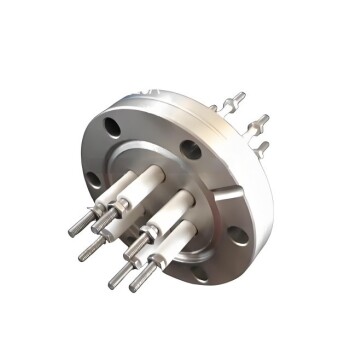
- Ultra-High Vacuum Flange Aviation Plug Glass Sintered Airtight Circular Connector for KF ISO CF
- CF KF Flange Vacuum Electrode Feedthrough Lead Sealing Assembly for Vacuum Systems
- Ultra Vacuum Electrode Feedthrough Connector Flange Power Lead for High Precision Applications
- Vacuum Sealed Continuous Working Rotary Tube Furnace Rotating Tube Furnace
People Also Ask
- What role does a high vacuum tube furnace play in Co-Al sintering? Master High-Purity Porous Material Synthesis
- What are the different types of tube furnaces available? Find the Perfect Fit for Your Lab's Needs
- What is the role of a vacuum tube furnace during the final thermal treatment stage of Fe3O4@CSAC catalysts?
- What are the main advantages of vacuum tube furnaces in the market? Achieve Purity and Precision in Material Processing
- What role does a laboratory tube furnace play in geological and mineralogical research? Unlock Earth's Secrets with Precision