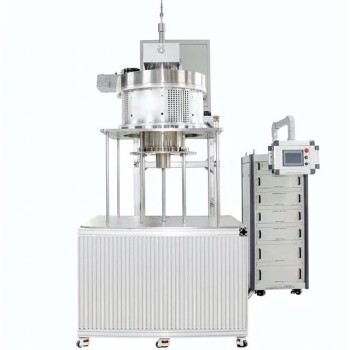
High-power microwave systems operate by inducing direct, volumetric heating within the material structure. By utilizing high-frequency electromagnetic fields, the system excites polar molecules inside the uranium tailings, causing high-speed movement and friction. This generates intense heat internally, distinct from the external layer-by-layer heating found in traditional methods.
The defining mechanism of this technology is the generation of intense thermal stress through rapid, internal heating. This stress physically fractures mineral barriers, creating micro-cracks that significantly enhance uranium accessibility during subsequent processing.
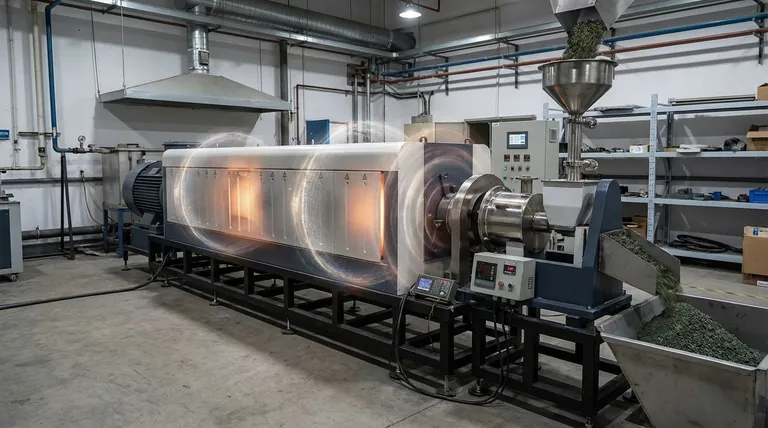
The Core Mechanism: Dielectric Heating
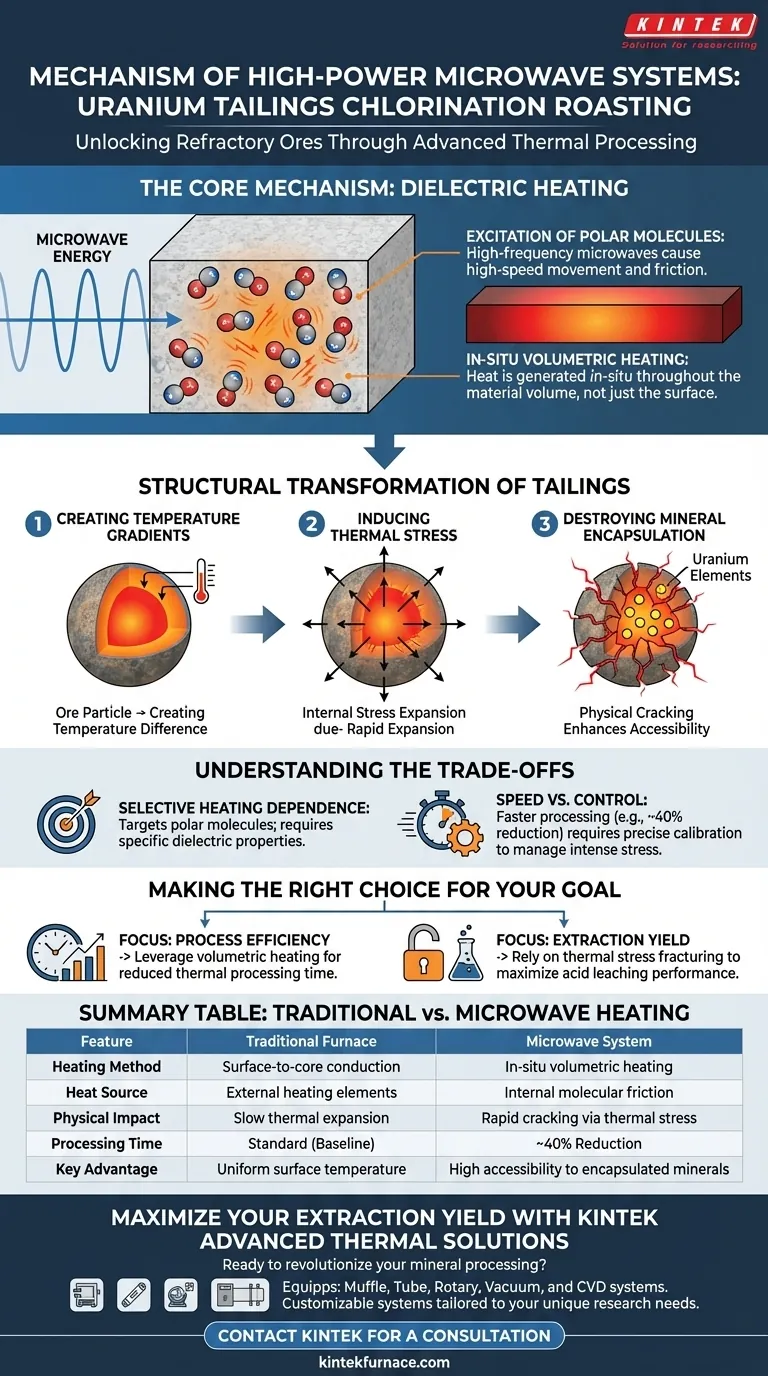
Excitation of Polar Molecules
The fundamental driver of this process is the interaction between the electromagnetic field and polar molecules within the uranium tailings.
When exposed to high-frequency microwaves, these molecules are forced into high-speed movement. The resulting friction between molecules converts electromagnetic energy directly into thermal energy.
In-Situ Volumetric Heating
Unlike traditional tube furnaces that rely on conduction to transfer heat from the surface to the center, microwave systems utilize volumetric heating.
This means the heat is generated in-situ (in place) throughout the volume of the material. Consequently, the internal temperature of the tailings often exceeds the surface temperature.
Structural Transformation of Tailings
Creating Temperature Gradients
The rapid, internal nature of microwave heating creates significant temperature gradients within the ore particles.
Because the heat is generated faster than it can be conducted away or equalized, distinct temperature differences develop between the inner core and the outer surface of the material.
Inducing Thermal Stress
These extreme temperature gradients lead to the development of thermal stress within the mineral structure.
As different parts of the material expand at different rates due to the heat, the internal pressure overcomes the tensile strength of the rock.
Destroying Mineral Encapsulation
The release of this thermal stress results in physical cracking of the uranium tailings.
This fracturing breaks down the physical mineral barriers (encapsulation structures) that typically trap uranium. These newly formed micro-cracks serve as pathways, exposing the uranium elements and making them accessible for subsequent acid leaching.
Understanding the Trade-offs
Selective Heating Dependence
Microwave heating is highly selective, targeting only microwave-absorbing phases and polar molecules.
While this ensures energy is directed where it is needed most, it requires the material to have specific dielectric properties. Non-polar materials may not heat as efficiently or uniformly without the presence of absorbing phases.
Speed vs. Control
The primary advantage over traditional methods is speed, reducing heating times significantly (e.g., from 20 minutes to 12 minutes).
However, this rapid rise in temperature requires precise control to manage the intense thermal stress. Without proper calibration, the aggressive cracking mechanism could potentially alter material properties beyond the intended scope.
Making the Right Choice for Your Goal
To effectively utilize high-power microwave systems in uranium roasting, consider your specific processing objectives:
- If your primary focus is process efficiency: Leverage the volumetric heating capability to reduce thermal processing time by approximately 40% compared to conventional conduction heating.
- If your primary focus is extraction yield: Rely on the thermal stress mechanism to physically fracture mineral encapsulation, creating porous pathways that maximize acid leaching performance.
Microwave roasting transforms the material physically to unlock it chemically, offering a distinct advantage in processing refractory uranium ores.
Summary Table:
| Feature | Traditional Furnace Heating | Microwave System Heating |
|---|---|---|
| Heating Method | Surface-to-core conduction | In-situ volumetric heating |
| Heat Source | External heating elements | Internal molecular friction |
| Physical Impact | Slow thermal expansion | Rapid cracking via thermal stress |
| Processing Time | Standard (Baseline) | ~40% Reduction |
| Key Advantage | Uniform surface temperature | High accessibility to encapsulated minerals |
Maximize Your Extraction Yield with KINTEK Advanced Thermal Solutions
Ready to revolutionize your mineral processing? KINTEK provides industry-leading high-temperature lab equipment, including Muffle, Tube, Rotary, Vacuum, and CVD systems, all precision-engineered to meet the rigorous demands of material science.
Whether you are processing refractory uranium ores or developing new material treatments, our expert R&D and manufacturing team can deliver customizable systems tailored to your unique research needs. Enhance your lab's efficiency and unlock superior extraction results today.
Contact KINTEK for a Consultation
Visual Guide
References
- Jinming Hu, Fangdong Zou. Low-Temperature Chlorination-Roasting–Acid-Leaching Uranium Process of Uranium Tailings: Comparison Between Microwave Roasting and Conventional Roasting. DOI: 10.3390/pr13010082
This article is also based on technical information from Kintek Furnace Knowledge Base .
Related Products
- MPCVD Machine System Reactor Bell-jar Resonator for Lab and Diamond Growth
- 915MHz MPCVD Diamond Machine Microwave Plasma Chemical Vapor Deposition System Reactor
People Also Ask
- What are the essential components of an MPCVD reactor system? Build a Pristine Environment for High-Purity Materials
- How does pressure affect the MPCVD growth process? Master Plasma Control for Superior Film Quality
- How do carbon-containing groups contribute to diamond growth in the MPCVD method? Unlock High-Quality Diamond Synthesis
- Why is temperature control important in the MPCVD growth process? Ensure High-Quality, Reliable Diamond Film Deposition
- What are the key components of an MPCVD system? Unlock High-Purity Crystal Growth