To successfully synthesize fine-dispersion SiC and Si₃N₄ ceramic powders at temperatures up to 1500 °C, the furnace must deliver three non-negotiable capabilities: precise multi-stage temperature control, a high-purity gas‑tight atmosphere, and exceptional thermal uniformity.
Whether you are driving the carbothermic reduction of silica or the direct nitridation of silicon, the furnace is not merely a heating device—it is the reactor that dictates phase purity, particle size, and surface chemistry. Even small deviations in oxygen partial pressure or temperature gradients can trap amorphous phases, promote unwanted oxidation, or coarsen the powder beyond its sub‑micron target.
Synthesizing SiC and Si₃N₄ powders at ≤1500 °C depends on a furnace that can precisely walk through sequential temperature stages under a continuously purged, controlled atmosphere (Ar or N₂) and maintain a vacuum‑tight seal. The deepest need is not just reaching 1500 °C, but preserving the delicate thermodynamic and kinetic conditions that convert precursor chemistry into the exact crystalline phase you require.
Understanding the Multi‑Stage Thermal Demands
The Phase‑Transformation Roadmap
The synthesis of both SiC and Si₃N₄ from precursor materials is not a single‑setpoint process. It unfolds in distinct thermal windows that the furnace must hit with accuracy.
- Removing surface oxides (≈800–1000 °C). Silicon‑based precursors naturally carry a friable oxide layer (Si–O bonds). The furnace must sustain this intermediate temperature long enough to strip those layers without initiating runaway grain growth.
- Crystallizing α‑SiC (above 1300 °C). Amorphous silicon carbide begins to order into crystalline α‑SiC only above 1300 °C. A furnace that cannot hold a stable plateau in this region will leave behind amorphous residue, compromising the powder’s sinterability.
- Driving nitridation reactions (1200–1400 °C). For Si₃N₄ via direct nitridation or carbothermic reduction, the reaction is thermally activated and typically requires 10–30 hours within this band. The furnace must deliver unwavering temperature uniformity over extended dwells to control the α/β phase ratio.
Why 1500 °C is the Benchmark
While some phase formation completes below 1500 °C, the ability to reach at least 1500 °C (1773 K) provides a critical safety margin.
It guarantees that any residual amorphous fraction can be crystallized, that diffusion kinetics are fast enough to achieve homogeneous composition, and that the furnace can handle future adjustments in precursor chemistry without hitting a thermal ceiling.
Atmosphere Control: The Silent Enabler
Gas Purity and Flow Regime
The furnace must circulate a high‑purity inert or reactive gas—argon for SiC or nitrogen for Si₃N₄—with laminar, metered flow.
Any back‑diffusion of oxygen or moisture during a run re‑oxidizes the powder surface, introducing an silica glass phase that degrades the final ceramic’s high‑temperature properties.
- Argon for SiC. A steady argon purge sweeps away CO and other volatile by‑products evolved during carbothermic reduction, preventing them from re‑depositing as contamination.
- Nitrogen for Si₃N₄. Flowing nitrogen not only supplies the reactant but also suppresses the thermal decomposition of freshly formed nitride at the highest temperature holds. Even a momentary drop in N₂ partial pressure can shift the equilibrium and reduce yield.
Gas‑Tight Sealing
The entire gas delivery system, from inlet to exhaust, must be vacuum‑tight.
A true seal enables pre‑evacuation and back‑fill cycles that purge the chamber down to single‑digit ppm O₂ levels. Without it, the furnace is merely a hot box with an uncontrolled leak, and the resulting powder will show inconsistent oxygen content from batch to batch.
Thermal Uniformity: Preventing Localized Failure
Multi‑Zone Heating and Insulation
In a tube or atmosphere furnace, temperature gradients along the heated length are the enemy.
If the hot zone varies by even 20 °C, the powder at the center may fully crystallize while the edges remain amorphous. The result is a bimodal phase distribution that can never be blended into a homogeneous product.
Modern furnaces address this with multiple independently controlled heating zones and high‑grade refractory insulation. The goal is a plateau where ΔT across the entire powder bed is under ±5 °C at 1500 °C.
Long‑Dwell Stability
Ceramic powder synthesis often demands dwell times of 10–30 hours.
The furnace’s PID control loop and thermocouple placement must be robust enough to hold temperature without oscillation. Cycling around the setpoint during a 20‑hour nitridation run subtly changes the α/β‑Si₃N₄ ratio, making it impossible to produce a consistent powder lot after lot.
The Critical Role of Heating Elements and Hot‑Zone Materials
Material Compatibility
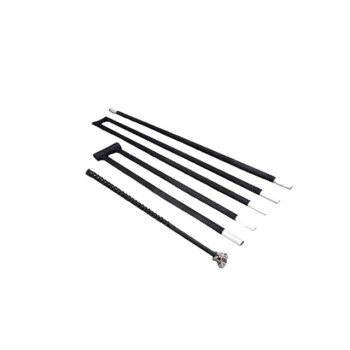
For synthesis up to 1500 °C, silicon carbide or molybdenum disilicide (MoSi₂) heating elements are excellent choices. They resist oxidation during the inevitable trace‑oxygen exposure and do not sputter metal vapors that could contaminate the powder.
- Graphite hot zones, often used for ultra‑high‑temperature sintering, can be overkill at 1500 °C and may introduce carbon transport issues if not meticulously maintained. However, for carbothermic reduction processes, a graphite‑lined tube can actually assist in gettering residual oxygen.
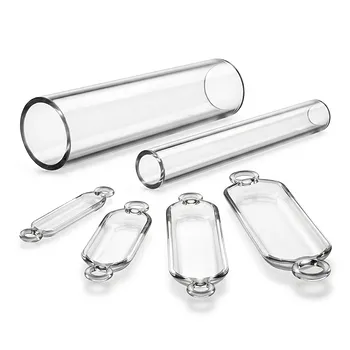
- Alumina process tubes and boats are standard. They provide chemical inertness against silicon‑based powders and are easily cleaned between runs.
Avoiding Cross‑Contamination
The furnace must be dedicated—or at least rigorously cleanable—when switching between SiC and Si₃N₄ precursor systems.
Cross‑contamination of even a few parts per million of silicon carbide nuclei in a nitride batch can seed unwanted crystalline phases that disrupt the final ceramic’s microstructure.
Understanding the Trade‑offs
Cost vs. Precision
A basic single‑zone tube furnace with a simple float‑type flowmeter can reach 1500 °C, but it will likely produce powders with broad particle size distributions and higher oxygen content.
A fully instrumented, multi‑zone atmosphere furnace with mass flow controllers and vacuum‑purge capability commands a much higher capital investment, yet it is the only path to sub‑micron, phase‑pure powders with reproducible lot‑to‑lot properties.
Maintenance Burden
Gas‑tight seals and high‑purity gas lines demand regular inspection.
Over time, seal materials fatigue and micro‑leaks develop. Furnaces running carbothermic reduction are particularly prone to carbon deposition that can short‑circuit insulation. The operational rigor required to maintain a research‑grade synthesis furnace should not be underestimated.
Throughput vs. Uniformity
Scaling to larger powder quantities often means increasing the tube diameter, which in turn makes thermal uniformity harder to achieve.
There is an inherent trade‑off: a larger hot zone may require slower ramp rates and extended soak times to ensure the entire powder charge sees the same thermal history, potentially limiting daily throughput.
Making the Right Choice for Your Synthesis Goal
After selecting a furnace platform, your operational focus must shift to aligning the run recipe with the specific ceramic phase you are targeting.
- If your primary focus is obtaining pure α‑SiC powder: Prioritize a furnace with rock‑solid temperature control above 1300 °C and a high‑purity argon supply. Verify that the system can remove CO without back‑streaming air.
- If your primary focus is controlling the α/β ratio in Si₃N₄: Select a furnace with precise N₂ partial pressure regulation and the ability to hold ±1 °C over multi‑hour dwells. The seal integrity is everything.
- If your primary focus is minimizing oxygen content across both ceramics: Insist on a furnace with vacuum‑purge cycle capability and a truly gas‑tight chamber, then validate with a dew‑point sensor on the exhaust line.
- If your primary focus is scaling up lab‑proven recipes: Test thermal uniformity maps extensively before committing to larger batches, and expect to extend process times to compensate for any gradient you cannot engineer away.
A synthesis furnace at this temperature range is less a commodity heater and more a precision reactor. When you treat it as such—managing atmosphere, gradients, and surface chemistry with the same care as the precursor powder itself—you unlock the reproducible, sub‑micron SiC and Si₃N₄ powders that advanced ceramics demand.
Summary Table:
| Critical Specification | Required Benchmark | Impact on Powder Synthesis |
|---|---|---|
| Temperature Capability | Up to 1500°C (1773 K) with multi-stage PID control | Guarantees complete crystallization (α-phase) and drives nitridation/reduction kinetics. |
| Atmosphere & Sealing | Vacuum-tight chamber, precise Ar/N₂ gas flow control | Prevents oxygen contamination, removes CO by-products, and maintains equilibrium. |
| Thermal Uniformity | Multi-zone heating, ΔT < ±5°C across the powder bed | Ensures uniform particle size and prevents bimodal phase distributions. |
| Hot-Zone Materials | MoSi₂ or SiC heating elements, alumina process tubes | Resists oxidation at high temperatures and prevents metallic cross-contamination. |
Elevate Your Advanced Ceramic Synthesis with KINTEK
Achieving phase-pure, sub-micron SiC and Si₃N₄ ceramic powders requires uncompromising thermal and atmospheric precision. At KINTEK, we specialize in high-performance laboratory heating equipment and consumables engineered for demanding material research. Our comprehensive range of tube, atmosphere, vacuum, muffle, and CVD furnaces delivers exact multi-zone temperature control and gas-tight reliability up to 1500°C and beyond—fully customizable to your specific precursor chemistries.
Ready to eliminate phase gradients and optimize your synthesis yield?
Contact KINTEK today to consult with our high-temperature furnace experts!
Related Products
- Silicon Carbide SiC Thermal Heating Elements for Electric Furnace
- Dental Porcelain Zirconia Sintering Ceramic Vacuum Press Furnace
- Chairside Dental Porcelain Zirconia Sintering Furnace with Transformer for Ceramic Restorations
- Spark Plasma Sintering SPS Furnace
- Vacuum Dental Porcelain Sintering Furnace for Dental Laboratories
People Also Ask
- How do the different types of silicon carbide heating elements compare in terms of applications? Find the Best Fit for Your High-Temp Needs
- What are the temperature capabilities and mounting options for silicon carbide heating elements? Unlock High-Temp Flexibility and Durability
- How do silicon carbide heating elements enhance the heat treatment of alloys? Achieve Superior Temperature Control
- What is the recommended surface load for silicon carbide heating elements at different furnace temperatures? Maximize Lifespan & Performance
- What are the advantages of using silicon carbide heating elements in industrial furnaces? Boost Efficiency and Durability