
The two primary types of rotary kilns are classified based on how heat is applied to the material being processed. These two methods are known as direct-fired and indirect-fired. In a direct-fired kiln, the heat source is inside the processing chamber, allowing combustion gases to come into direct contact with the material. Conversely, an indirect-fired kiln heats the material from outside the chamber, keeping it isolated from the flame and its byproducts.
The choice between a direct-fired and an indirect-fired kiln is not about which is "better" overall; it is a critical engineering decision based entirely on whether the material being processed can tolerate direct contact with combustion gases.
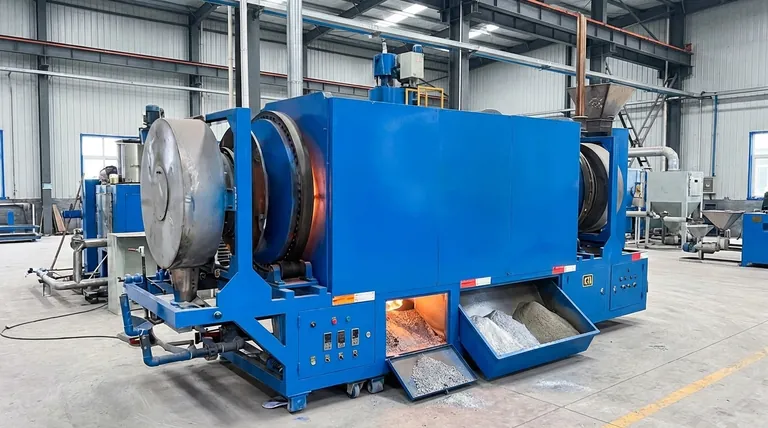
The Direct-Fired Kiln: Maximum Heat Transfer
Direct-fired kilns are the most common design, valued for their high thermal efficiency and ability to process large volumes of material.
How It Works
In a direct-fired system, a burner injects a flame directly into the rotating drum. The hot combustion gases, or flue gas, flow through the kiln chamber, transferring heat to the material through direct contact as it tumbles.
Key Characteristics
The defining feature is the direct interaction between the material and the flue gas. This allows for very efficient heat transfer. The design is generally simpler and more cost-effective for large-scale operations.
Common Applications
This method is ideal for robust materials that are not negatively affected by combustion byproducts. Common uses include the production of cement, lime, and the calcination of ores and minerals.
The Indirect-Fired Kiln: Controlled Processing
Indirect-fired kilns, sometimes called calciners, are used when product purity and a controlled processing environment are the top priorities.
How It Works
In this design, the rotating tube is enclosed within a larger, stationary furnace or is heated by an external jacket. The heat source is applied to the outside of the kiln shell, and that heat is transferred through the shell wall to the material inside.
Key Characteristics
The material never comes into contact with the flame or flue gas. This critical separation allows for processing in a highly controlled or inert atmosphere, such as one filled with nitrogen or argon.
Common Applications
Indirect heating is essential for processing sensitive materials where contamination must be avoided. This includes specialty chemicals, certain food-grade products, and materials that would react undesirably with combustion gases.
Understanding the Trade-offs
Choosing a heating method involves balancing efficiency, product integrity, and operational complexity. Each approach comes with distinct advantages and disadvantages.
Direct Kilns: Efficiency vs. Purity
The primary benefit of direct firing is its high thermal efficiency, which translates to lower fuel costs. The trade-off is the risk of product contamination or unwanted side reactions caused by the chemical composition of the flue gas.
Indirect Kilns: Purity vs. Complexity
The main advantage of indirect firing is absolute product purity and precise atmosphere control. The trade-off is often lower thermal efficiency, higher equipment costs, and greater mechanical stress on the kiln shell due to external heating.
A Note on Fuel Sources
Both direct and indirect kilns can be powered by various heat sources. This can include gas burners using natural gas or LPG, liquid fuel burners using oil, or electric heaters. The defining factor is not the fuel itself, but where the heat it generates is applied relative to the material.
Making the Right Choice for Your Process
Your decision should be guided by the specific requirements of your material and the desired outcome of the thermal process.
- If your primary focus is high-volume processing of robust materials (like cement or aggregates): A direct-fired kiln offers the most cost-effective and thermally efficient solution.
- If your primary focus is product purity or processing in a controlled atmosphere (like specialty chemicals): An indirect-fired kiln is the necessary choice to prevent contamination and manage the processing environment.
Ultimately, selecting the correct kiln design hinges on a clear understanding of your material's chemical and physical properties.
Summary Table:
| Feature | Direct-Fired Kiln | Indirect-Fired Kiln |
|---|---|---|
| Heating Method | Heat source inside chamber; material contacts combustion gases. | Heat applied externally; material isolated from flame/gases. |
| Primary Advantage | High thermal efficiency, cost-effective for large volumes. | Superior product purity, precise atmosphere control. |
| Ideal For | Cement, lime, calcination of ores and minerals. | Specialty chemicals, food-grade products, sensitive materials. |
| Key Consideration | Risk of contamination from flue gas. | Lower thermal efficiency, higher equipment cost. |
Need a Rotary Kiln for Your Specific Application?
Choosing between a direct-fired and indirect-fired kiln is a critical decision that impacts your product quality, efficiency, and operational costs. KINTEK is here to help you make the right choice.
Backed by expert R&D and manufacturing, KINTEK offers a full range of high-temperature processing solutions, including Muffle, Tube, Rotary, Vacuum, and CVD systems. Our rotary kilns are fully customizable to meet your unique material and process requirements, whether you need the robust efficiency of a direct-fired system or the controlled purity of an indirect-fired calciner.
Let our experts guide you to the optimal solution. Contact us today to discuss your project!
Visual Guide

Related Products
- Electric Rotary Kiln Continuous Working Small Rotary Furnace Kiln for Pyrolysis Plant Heating
- Electric Rotary Kiln Small Rotary Furnace for Activated Carbon Regeneration
- Electric Rotary Kiln Pyrolysis Furnace Plant Machine Small Rotary Kiln Calciner
- Electric Rotary Kiln Small Rotary Furnace Biomass Pyrolysis Plant Rotating Furnace
- Vacuum Sealed Continuous Working Rotary Tube Furnace Rotating Tube Furnace
People Also Ask
- What are the advantages of electric rotary kilns compared to fuel-fired ones? Boost Precision and Efficiency in Your Process
- What materials can be processed in an electric rotary kiln? Versatile Solutions for Advanced Materials
- What advantages do electric rotary kilns offer over fuel-based kilns? Boost Efficiency and Purity in Your Process
- What are the primary applications of electric rotary kilns? Precision Thermal Processing for High-Value Materials
- In what ways are electric rotary kilns more environmentally friendly? Achieve Zero On-Site Emissions









