The answer lies in molybdenum’s unique physical properties as a refractory metal. When inserted into a Ti/Al/Mo/Au contact stack, a Mo barrier layer dramatically improves both structural integrity and thermal stability during high-temperature furnace annealing. It blocks gold diffusion, suppresses lateral metal creep, and maintains an exceptionally smooth surface—even after processing at 850°C.
While a standard titanium barrier fails to contain the molten aluminum and gold interdiffusion, molybdenum’s near-zero solubility for gold and its high thermal stability preserve the precise, sharp-edged contact geometry needed for sub‑micron devices. The net result is a contact that remains electrically reliable and morphologically intact, both during fabrication and in subsequent high‑temperature operation.
The Diffusion Barrier Superiority
How Mo Blocks Gold from Penetrating the Contact
Gold and aluminum are highly mobile at the 850°C temperatures typical of ohmic contact annealing. Molybdenum stops this movement because gold is virtually insoluble in Mo—only about 1% solubility at 850°C. This means the Mo layer acts as an almost perfect physical blockade.
Proving the Barrier Performance
Empirical measurements show that after high‑temperature processing, a Mo barrier retains up to 90% of the original gold concentration on surface hillocks. Without such a barrier, gold can diffuse deep into the contact and degrade both the semiconductor interface and the electrical properties. The surface gold remains where it belongs: as a low‑resistance, oxidation‑resistant capping layer.
Controlling Morphology at High Temperatures
Suppressing Edge Creeping for Sub‑Micron Features
Aluminum melts at 660°C, well below the 850°C anneal. In a Ti‑barrier stack, molten Al can flow laterally, creating edge creeping of up to 500 nm. Molybdenum dramatically reduces this effect to just 100–210 nm. That preservation of edge acuity is non‑negotiable when your device dimensions are measured in hundreds of nanometers.
Achieving a Smoother Surface After Annealing
Surface roughness is a direct indicator of morphological stability. Contacts with a Mo barrier achieve an RMS roughness as low as 28 nm after an 850°C furnace cycle. A smoother surface translates to more uniform current injection and lower risk of field‑induced failure in the final device.
Thermal Stability in Operation
Air‑Stable Performance Up to 450°C
Once formed, Mo‑barrier contacts do not just survive the fabrication furnace; they also exhibit outstanding operational stability. They can operate continuously in air at temperatures up to 450°C without significant degradation. This opens the door to high‑temperature electronics applications where standard contacts would quickly fail.
The Critical Role of the Furnace Environment
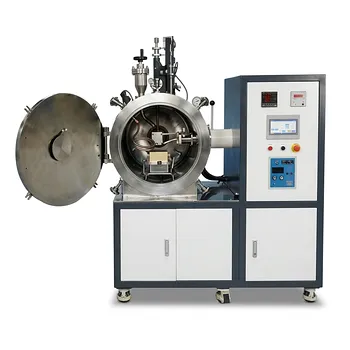
The barrier layer’s own formation must occur in a controlled atmosphere. High‑temperature laboratory furnaces with precise temperature uniformity and a vacuum or inert gas environment ensure that the Mo layer itself is not oxidized before it can do its job. The stable sintering kinetics provided by such furnaces are as important as the material choice itself.
Understanding the Trade‑offs
The Oxidation Sensitivity of Molybdenum
For all its advantages, molybdenum does have one well‑known vulnerability: it oxidizes rapidly at high temperatures in the presence of oxygen. This is why the entire annealing process must take place in a vacuum atmosphere or a protective gas environment. An air furnace would destroy the Mo barrier before it ever becomes functional.
Not a Universal Drop‑In Solution
The Ti/Al/Mo/Au stack is optimized for specific contact resistivities and metallization requirements. Mo’s effectiveness depends on layer thickness, deposition quality, and the thermal budget of subsequent processing steps. Deviating from proven recipes can undermine barrier integrity or introduce excessive stress.
Making the Right Choice for Your Contact Process
The decision to use a molybdenum barrier depends on which performance aspect matters most to your device. Here is how to align the technology with your goals:
- If your primary focus is preserving sub‑micron edge definition: Let Mo’s edge creeping suppression guide you. Replacing a Ti barrier with Mo will reduce lateral flow by a factor of 2–5 and keep your critical dimensions intact.
- If your primary focus is maximum thermal resilience during operation: Choose Mo for its proven air‑stable operation up to 450°C, and pair it with a controlled‑atmosphere anneal to form it correctly.
- If your primary focus is preventing gold diffusion into the active region: Rely on Mo’s extremely low gold solubility to retain nearly all the surface gold after the thermal cycle, preserving both contact resistance and surface chemistry.
A properly executed Ti/Al/Mo/Au stack with a molybdenum barrier turns what is normally a destructive high‑temperature step into a controlled, precise engineering process—giving you contacts that are as sharp and stable tomorrow as they were when first deposited.
Summary Table:
| Performance Metric | Standard Titanium (Ti) Barrier | Molybdenum (Mo) Barrier Layer |
|---|---|---|
| Gold (Au) Diffusion Suppression | Fails; high interdiffusion at 850°C | High barrier performance (<1% Au solubility, 90% Au retained on surface) |
| Lateral Edge Creeping | Up to 500 nm lateral metal flow | Reduced to 100–210 nm (preserves sub-micron features) |
| Surface Roughness (RMS) | High, irregular morphology | Smooth surface (~28 nm RMS post-anneal) |
| Max Operational Temp (Air) | Degrades rapidly at high temps | Stable up to 450°C |
| Required Furnace Atmosphere | Inert / Standard | Controlled Atmosphere or Vacuum (prevents Mo oxidation) |
Maximize Precision in Your Semiconductor Metallization Processes
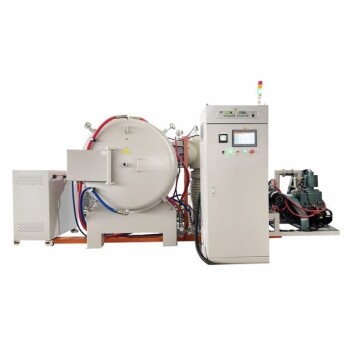
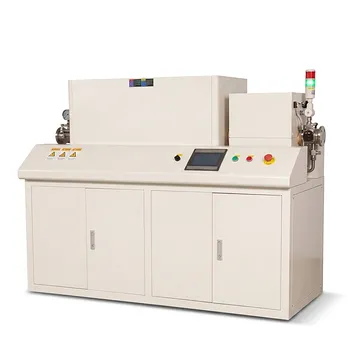
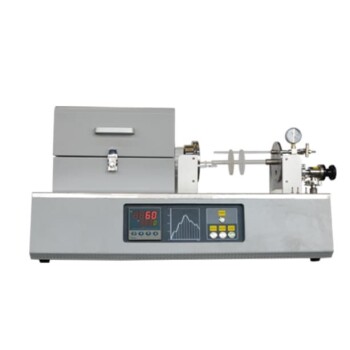
Achieving flawless Mo-barrier contact annealing requires precise thermal control and strictly controlled atmospheric environments to prevent material oxidation. KINTEK specializes in advanced laboratory equipment, offering a comprehensive range of high-temperature furnaces—including high-vacuum furnaces, atmosphere-controlled tube furnaces, CVD systems, and muffle furnaces—all fully customizable to meet your unique semiconductor research and fabrication needs.
Ensure optimal thermal stability and sub-micron edge definition for your contacts with KINTEK's industry-leading furnace solutions. Contact KINTEK Today to Speak with Our Thermal Processing Experts
Related Products
- Molybdenum Vacuum Heat Treat Furnace
- Vacuum Heat Treat Sintering Furnace Molybdenum Wire Vacuum Sintering Furnace
- 1400℃ High Temperature Laboratory Tube Furnace with Alumina Tube
- 1700℃ High Temperature Laboratory Tube Furnace with Alumina Tube
- High Temperature Muffle Oven Furnace for Laboratory Debinding and Pre Sintering
People Also Ask
- How does vacuum heat treating work in terms of temperature and time control? Master Precise Material Transformations
- What is the primary application of vacuum heat treating furnaces in aerospace? Enhance Component Performance with Precision
- Why are vacuum heat treating furnaces essential for aerospace? Ensure Superior Material Integrity for High-Stakes Applications
- What is the process of vacuum heat treating? Achieve Superior Metallurgical Properties
- How does a vacuum heat treating furnace improve the condition of metal alloys? Achieve Superior Metal Performance