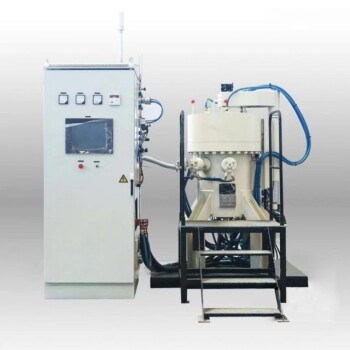
Achieving fine-grained, homogeneous microstructures with superior properties is one of the strongest arguments for adopting single-step powder sintering and forming in field-assisted high-temperature furnaces. By simultaneously applying rapid heating, pressure, and often an electromagnetic field directly to a powder compact, these systems eliminate the separate, prolonged high-temperature deformation step required in conventional two-stage processing. The result is a dramatically shortened thermal cycle that prevents excessive grain growth and delivers a part with a refined grain size, often in the nanoscale or low-micron range, directly from loose powder.
The central benefit of single-step, field-assisted powder forming is microstructural preservation through thermal austerity. When you combine densification and net-shape forming into one rapid cycle, you slash the total time the material spends at elevated temperatures. This locks in a fine-grained, high-performance microstructure that would be nearly impossible to sustain through a traditional sinter-then-hot-form route.
How Field-Assisted Single-Step Sintering Preserves Fine-Grained Microstructures
The grain structure inside a ceramic, metal, or composite part dictates its mechanical strength, toughness, and even functional properties like ionic conductivity. The enemy of a fine grain structure is prolonged heat exposure.
Cutting Dwell Time Prevents Runaway Grain Growth
In a conventional process, you first sinter a powder compact at high temperature to achieve density, then cool it, remount it, and reheat it for a hot-forming operation. Each of these steps adds hours of dwell time.
Grain boundaries migrate and grains coarsen exponentially with time at temperature. By merging sintering and forming into one 30-minute cycle, a field-assisted furnace drastically reduces the integral of time and temperature that drives grain growth. The primary reference highlights this explicitly for (\mathrm{Al_2O_3\text{--}ZrO_2\text{--}MgAl_2O_4}) composites: the shortened exposure directly yields a finer final grain size and consequently better mechanical performance.
Rapid Heating Minimizes Low-Temperature Coarsening Windows
Even the ramp-up phase can coarsen grains if it passes slowly through intermediate temperature zones. Field-assisted systems—including induction, spark plasma, and microwave sintering—achieve heating rates of hundreds of degrees per minute.
This means the compact spends mere seconds in temperature regimes where surface diffusion can trigger grain coalescence before densification locks the structure. The resulting part emerges with a grain size that closely mirrors the starting powder.
Pressure-Assisted Densification at Lower Temperatures
Applying uniaxial pressure simultaneous with electric-field heating drives densification at temperatures 100–300°C below what a pressureless sinter would require. Lower processing temperature is a direct lever to suppress grain growth, as grain boundary mobility is temperature-dependent. The part reaches full density while the kinetics of coarsening remain sluggish.
Enhancing Chemical Homogeneity and Phase Purity
Microstructural benefits aren’t only about grain size. Phase distribution, stoichiometry, and impurity levels define functional properties in advanced composites and reactively synthesized materials.
Electric-Field-Driven Interdiffusion Yields Homogeneous Compositions
When powders are thoroughly mixed, the electric current passing through the compact enhances grain-boundary diffusion across dissimilar species. The supplementary references note that field-assisted reactive sintering can condense multi-day conventional processes into 10–15 minutes while achieving complete chemical reactions and full densification.
This rapid interdiffusion suppresses the formation of intermediate phases that would normally result from sluggish, diffusion-limited solid-state reactions. The outcome is a homogeneous microstructure free of compositional gradients.
Tight Stoichiometric Control Without Sintering Additives
Conventional reactive sintering often relies on chemical additives to promote densification, which can leave residual glassy phases at grain boundaries and alter stoichiometry. Field-assisted systems can achieve the same or better densification without additives. As the supplementary references show, this environment can double ionic conductivity in functional ceramics because the grain boundaries are clean and the bulk chemistry remains exactly as designed.
In Situ Atmosphere Management Maintains Chemical Purity
Integrating dynamic vacuum and controlled atmospheres into the single-step process removes volatile by-products as they form and prevents oxidation of sensitive metals or intermetallics. The result is a chemically pristine microstructure, free of oxide inclusions or trapped gases that would otherwise nucleate porosity or weak spots.
Understanding the Trade-offs
No processing technique is without limitations. While the structural and microstructural benefits are compelling, several practical constraints demand attention.
Homogeneous Powder Mixing Is Non-Negotiable
If the starting powders are not intimately mixed, the electric current can cause preferential neck formation within single-component clusters. This blocks interdiffusion channels between different species and can paradoxically slow the overall reaction, leaving an inhomogeneous and poorly bonded final microstructure. Thorough mechanical blending must precede compaction.
Component Geometry and Scalability
Field-assisted processes often operate on small, high-value components. Uniform pressure and current distribution become challenging in large or highly asymmetric shapes, potentially leading to density gradients or warping. For industrial-scale parts, the trade-off between microstructural perfection and throughput must be carefully evaluated.
Material System Compatibility
Not every powder compact is suitable for direct electric-field heating. Electrically insulative ceramics may require conductive tooling (graphite dies) that introduces carbon contamination risks. Similarly, materials prone to thermal shock can experience cracking under extreme heating rates. The process window must be validated for each specific chemistry.
Die Wear and Contamination
Because forming and densification occur inside the same die, die life and material interactions become critical at elevated temperatures and pressures. Graphite tooling can react with certain powders, introducing trace impurities that compromise grain boundary purity.
Making the Right Choice for Your Goal
The decision to adopt single-step field-assisted powder forming should align with what matters most for your application.
- If your primary focus is maximizing mechanical strength and wear resistance: Leverage the fine-grained, fully dense microstructure by targeting the shortest possible thermal cycle. This directly suppresses grain growth and retains the high hardness and fracture toughness inherent to nano- and ultrafine-grained materials.
- If your primary focus is functional performance (ionic conductivity, magnetic properties): Use the atmosphere-controlled reactive sintering capability to achieve exact stoichiometry and clean grain boundaries. The rapid, additive-free process will deliver the homogeneous microstructure that functional property gains depend on.
- If your primary focus is processing efficiency and net-shape capability: Exploit the elimination of separate cold pressing, binder burnout, and hot forming steps. A single 30-minute cycle can replace an entire day of conventional furnace work, with the added bonus of a superior microstructure.
By aligning your material system with the unique thermal and electric-field conditions that field-assisted systems offer, you can unlock a class of fine-grained, chemically pristine microstructures that traditional multi-step thermomechanical routes simply cannot replicate.
Summary Table:
| Aspect / Feature | Field-Assisted Single-Step Sintering | Conventional Two-Stage Processing |
|---|---|---|
| Grain Size & Growth | Refined (nano to low-micron); suppresses coarsening via thermal austerity | Coarsened grain structure due to extended dwell times |
| Heating Rate & Ramp | Ultra-rapid (hundreds of °C/min); skips surface-diffusion windows | Slow thermal ramps; prolongs low-temp coarsening |
| Densification Temp | Lowered by 100–300°C using simultaneous pressure and field | Requires significantly higher temperatures to achieve full density |
| Chemical Homogeneity | Enhanced grain-boundary interdiffusion; additive-free phase purity | Diffusion-limited; often requires sintering aids that leave residual phases |
| Process Cycle Time | Rapid (~30 minutes total cycle time) | Lengthy (hours to days across separate sinter and hot-form steps) |
Maximize Material Performance with KINTEK High-Temperature Systems
Ready to achieve ultra-fine grain structures, superior mechanical strength, and pristine chemical homogeneity in your advanced ceramics and composites? KINTEK specializes in premium laboratory equipment and high-temperature furnace solutions—offering a comprehensive range of customizable furnaces including muffle, tube, rotary, vacuum, atmosphere, CVD, dental, and induction melting systems.
Whether you require rapid thermal cycling, precise atmosphere control, or tailored heating configurations for complex material research, KINTEK provides the reliability and precision your applications demand.
Contact KINTEK today to consult with our experts and discover the ideal high-temperature furnace for your facility!
Related Products
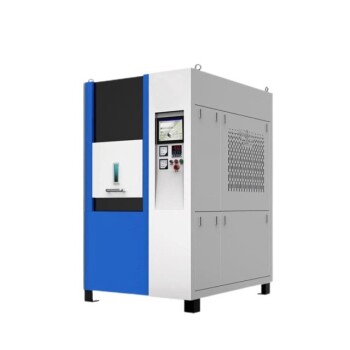
- Spark Plasma Sintering SPS Furnace
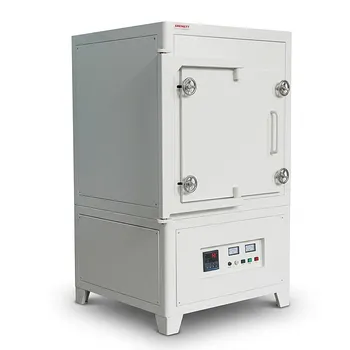
- 1700℃ High Temperature Muffle Oven Furnace for Laboratory
- 1800℃ High Temperature Muffle Oven Furnace for Laboratory
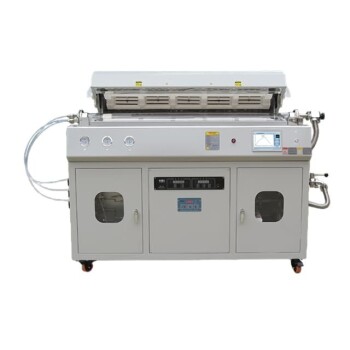
- 1400℃ High Temperature Laboratory Tube Furnace with Alumina Tube
- High Temperature Muffle Oven Furnace for Laboratory Debinding and Pre Sintering
People Also Ask
- Why is it necessary to maintain a high vacuum environment during the SPS of SiC? Key to High-Density Ceramics
- How does the heating mechanism of Spark Plasma Sintering (SPS) function? Enhance TiC/SiC Composite Fabrication
- What are the technical advantages of using an SPS sintering furnace? Elevate Al2O3-TiC Material Performance
- What are the advantages of Spark Plasma Sintering (SPS)? Achieve Superior Microstructures
- What are the steps in the discharge plasma sintering process? Master Fast, High-Density Material Consolidation