SPS replaces the slow, radiation-based heating of a standard lab furnace with a pulsed electrical current passed directly through the powder and die. This internal Joule heating, combined with uniaxial pressure, achieves heating rates exceeding 600°C/min, full densification in minutes rather than hours, and a radical suppression of grain growth. The result is a dense, fine-grained microstructure that is exceptionally difficult—and often impossible—to replicate with conventional furnace processes.
Spark Plasma Sintering (SPS) is not simply a faster furnace; it is a fundamentally different consolidation mechanism. By directly dissipating electrical energy within the compact and generating micro-discharges between particles, SPS accelerates densification kinetics while cutting thermal exposure by orders of magnitude. This simultaneously delivers near-theoretical density and preserves the nanostructure, a direct benefit that standard high-temperature furnace heating cannot match.
How SPS Operationally Outperforms a Standard Lab Furnace
Direct Internal Heating Instead of External Radiation
A conventional high-temperature laboratory furnace relies on resistive heating elements radiating heat into a chamber. The sample heats slowly from the outside in. SPS flips this model by passing a low-voltage, high-amperage pulsed DC current directly through the graphite die and, if the sample is conductive, through the powder itself.
This creates Joule heating at every point of electrical resistance. The result is an extremely uniform and rapid temperature rise—often over 600°C per minute—that standard furnaces simply cannot approach.
Intense Uniaxial Pressure Applied Simultaneously
During sintering, SPS applies uniaxial pressures typically in the range of 30 to 50 MPa. Standard lab furnaces are usually pressureless or use a separate hot-pressing mechanism. The simultaneous application of pressure and heat in SPS collapses porosity far more effectively at a given temperature.
This mechanical driving force further accelerates densification and allows the process to complete at temperatures hundreds of degrees lower than those required in a standard furnace.
Sintering Cycles Shortened from Hours to Minutes
Standard furnace cycles involve slow heating, dwell times lasting an hour or more, and gradual cooling. SPS compresses the entire consolidation cycle into just a few minutes of holding time.
Because the energy is delivered precisely and rapidly, the material spends drastically less time at high temperature. This extreme reduction in thermal exposure is the core operational advantage that drives all microstructural benefits.
Surface Activation and Cleaning During Processing
In a standard furnace, oxide layers on powder particles often persist and act as diffusion barriers. SPS generates electrical micro-discharges in the voids between particles. These discharges vaporize surface oxides and contaminants, creating clean, highly active particle surfaces.
This surface activation promotes rapid atomic diffusion and neck formation without requiring chemical sintering aids, a critical difference from conventional pressureless or hot-pressing furnace techniques.
Microstructural Advantages: The Direct Link to Performance
Grain Growth Suppression Is the Hallmark Benefit
The primary microstructural advantage of SPS is its ability to produce a dense body with a grain size almost identical to the starting powder. In a standard high-temperature furnace, the long holding times required for full densification inevitably cause significant grain coarsening.
With SPS, the rapid heating rate brings the powder to the sintering temperature so quickly that diffusion-mediated grain growth has little time to occur. Densification outruns coarsening, yielding a fine-grained or even nanostructured final microstructure that standard processes obliterate.
Lower Effective Sintering Temperatures Preserve Metastable Phases
Because SPS adds electrical and mechanical driving forces, full density can be achieved at temperatures often 100–200°C lower than those needed in a standard furnace. This is vital for materials that undergo undesirable phase transformations or grain-boundary degradation at higher temperatures.
For example, temperature-sensitive amorphous alloys or ceramics can be consolidated without devitrification. Advanced alloy systems can be sintered below their critical solvus temperatures, retaining strengthening phases that would coarsen or dissolve in a standard furnace cycle.
Elimination of Microstructural Artifacts from Prolonged Heating
Standard furnace processes often require the addition of sintering aids or extensive binder systems to achieve density. These additives later appear as residual phases or grain-boundary phases that degrade properties. SPS typically requires no sintering aids and eliminates the entire binder burn-out step.
The resulting microstructure is cleaner, with fewer secondary phases at grain boundaries. This directly translates to superior mechanical properties, higher ionic conductivity in electrolytes, and more reliable performance in demanding applications.
Understanding the Trade-offs in Spark Plasma Sintering
Geometric Limitations and Thermal Monitoring Constraints
SPS is inherently a die-based process. Samples are restricted to simple geometric profiles, typically discs or cylinders. Intricate shapes common in standard furnace sintering are not producible without extensive post-machining.
Additionally, temperature measurement often relies on a pyrometer focused on the graphite die wall. This can introduce a temperature offset relative to the true sample core, requiring careful calibration that is not a concern in standard furnace muffles with embedded thermocouples.
Potential for Contamination and Temperature Gradients
The graphite tooling (die and punches) can introduce carbon contamination on the sample surface, especially under very high temperatures and pressures. Standard alumina crucibles in a furnace avoid this entirely.
Rapid, non-equilibrium heating can also create small, transient temperature gradients within the compact, particularly for non-conductive materials. This requires process optimization, whereas a standard furnace guarantees a nearly isothermal soak once equilibrium is reached.
Throughput and Industrial Scalability
While SPS excels at producing high-quality small samples rapidly, the batch processing capability is limited compared to large-chamber laboratory furnaces. The one-sample-per-run nature and the cost of graphite consumables make it a specialized tool for research and high-value, low-volume production rather than a direct throughput replacement.
Making the Right Choice for Your Goal
The decision between SPS and a standard high-temperature furnace hinges on your priority—microstructural control or shape complexity and scalability.
- If your primary focus is preserving a nanostructure or a metastable phase: SPS is the clear winner. Its rapid, low-temperature densification mechanism is purpose-built to suppress grain growth and avoid phase degradation that standard furnaces cannot prevent.
- If your primary focus is achieving the highest possible density without sintering aids: SPS offers an unmatched combination of pressure, surface activation, and rapid kinetics that easily reaches near-theoretical density in systems where furnace sintering requires additives and prolonged cycles.
- If your primary focus is fabricating complex, net-shape components: A standard furnace process, possibly combined with post-sinter machining or hot isostatic pressing, remains more practical. SPS is fundamentally constrained to simple die geometries.
- If your primary focus is on scalable, multi-sample production: Standard laboratory furnaces allow dozens of samples to be processed simultaneously. SPS is a single-sample R&D precision tool that excels when unique microstructures justify its trade-offs.
Ultimately, Spark Plasma Sintering is not a universal replacement for the laboratory furnace but a powerful complement that unlocks microstructures no standard furnace can achieve. Use it when the quality of the resulting nanostructure or phase purity is the most critical parameter of your project.
Summary Table:
| Feature / Characteristic | Spark Plasma Sintering (SPS) | Standard High-Temp Furnace |
|---|---|---|
| Heating Mechanism | Direct internal Joule heating (pulsed DC) | External radiant heating |
| Heating Rate | Extremely rapid (>600°C/min) | Slow to moderate (5–20°C/min) |
| Sintering Time | Minutes | Hours |
| Pressure Applied | Uniaxial pressure (30–50+ MPa) | Typically pressureless |
| Microstructure | Suppresses grain growth; retains nanostructures | Significant grain growth/coarsening |
| Sintering Aids | Usually unnecessary | Often required |
| Shape Complexity | Limited to simple die geometries (discs/cylinders) | Supports complex, net-shape parts |
| Throughput | Single-sample R&D precision focus | Multi-sample / batch processing |
Unlock Precision Thermal Processing with KINTEK
Whether your research demands the rapid consolidation of Spark Plasma Sintering (SPS) or the versatile, high-volume capabilities of conventional high-temperature furnaces, KINTEK delivers the ultimate heat-treatment solutions.
We specialize in high-performance laboratory equipment, offering a comprehensive lineup of fully customizable muffle, tube, vacuum, atmosphere, CVD, and induction melting furnaces. Our expert team works closely with researchers and industry leaders to deliver tailored systems that match your exact material synthesis requirements.
Ready to achieve superior density, preserve critical microstructures, and elevate your lab's performance? Contact KINTEK today for a customized quote!
Related Products
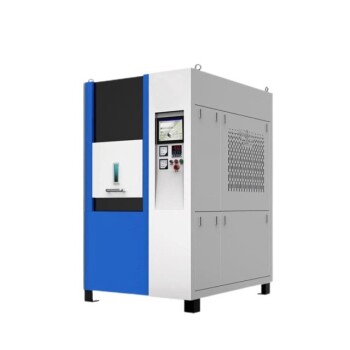
- Spark Plasma Sintering SPS Furnace
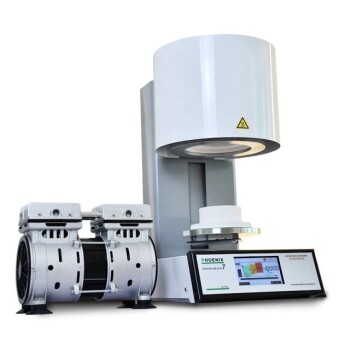
- Vacuum Heat Treat Sintering Furnace with Pressure for Vacuum Sintering
- 9MPa Air Pressure Vacuum Heat Treat and Sintering Furnace
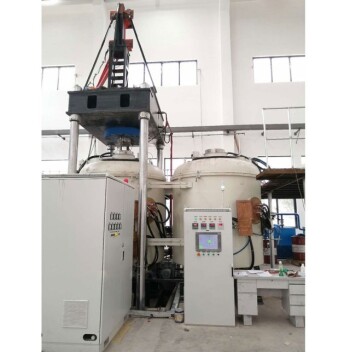
- 600T Vacuum Induction Hot Press Vacuum Heat Treat and Sintering Furnace
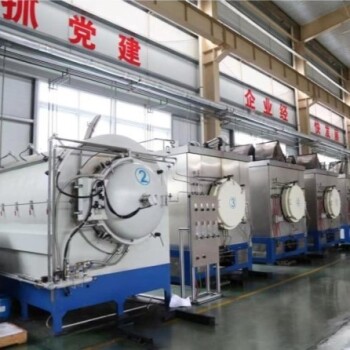
- Vacuum Heat Treat Sintering Furnace Molybdenum Wire Vacuum Sintering Furnace
People Also Ask
- How does the heating mechanism of Spark Plasma Sintering (SPS) function? Enhance TiC/SiC Composite Fabrication
- Why is it necessary to maintain a high vacuum environment during the SPS of SiC? Key to High-Density Ceramics
- What are the technical advantages of using an SPS sintering furnace? Elevate Al2O3-TiC Material Performance
- What are the steps in the discharge plasma sintering process? Master Fast, High-Density Material Consolidation
- What are the advantages of spark plasma sintering (SPS) over traditional forging? Precision Microstructural Control