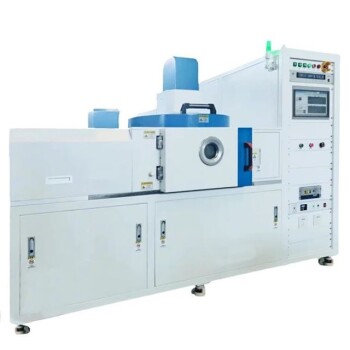
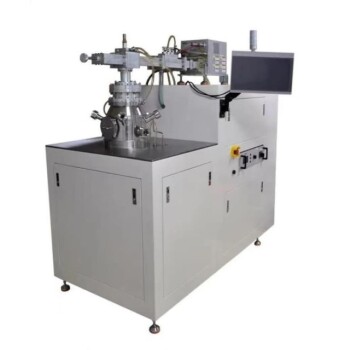
The primary functions of the vacuum pump system and inert gases are twofold: creating a controlled, low-oxygen environment and providing the physical force necessary to pulverize molten metal. The vacuum pump initially evacuates the chamber, allowing nitrogen to replace the air, thereby preventing oxidation during the high-temperature atomization process.
Core Takeaway The success of centrifugal atomization relies on eliminating oxygen to preserve the metallurgical quality of reactive alloys. The vacuum system removes the threat of oxidation, while the nitrogen gas serves strictly as a protective shield and the dynamic medium that breaks molten liquid into fine powder.
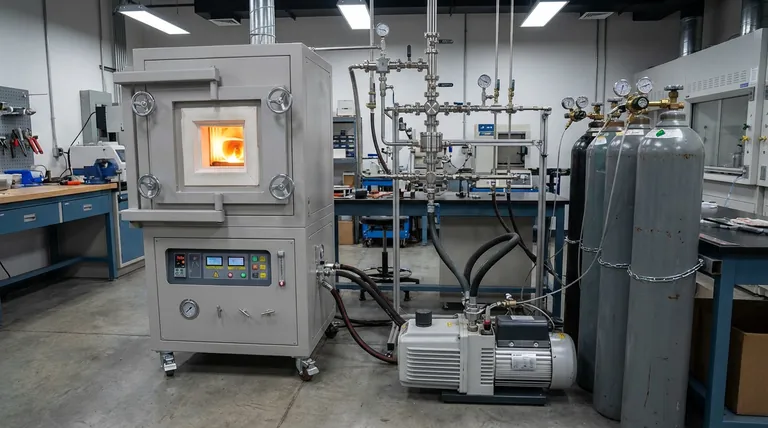
Establishing a Controlled Atmosphere
The Role of the Vacuum Pump
The first critical step in the process is evacuation. Before any heating or melting occurs, the vacuum pump removes the ambient air from the atomization chamber.
This ensures that the baseline environment is void of potential contaminants.
Nitrogen Backfilling
Once the chamber is evacuated, high-purity nitrogen is introduced to fill the void.
This works in conjunction with the vacuum system to establish an atmosphere with an extremely low oxygen content, specifically targeting levels below 500 ppm.
The Mechanics of Atomization
Nitrogen as an Aerodynamic Medium
Nitrogen serves a dual purpose; it is not merely a passive filler gas. It acts as the atomizing medium during the experiment.
The gas provides the necessary aerodynamic environment and force required to facilitate droplet breakage, turning the molten stream into fine particles.
Preventing High-Temperature Oxidation
For materials with high oxidative activity, such as aluminum alloys, protection is paramount.
Using industrial-grade nitrogen prevents the powder from reacting with oxygen while it is in a superheated state. This preservation is essential for ensuring the final metallurgical quality of the powder.
Critical Considerations and Constraints
The Oxygen Threshold
The system is effective only if the 500 ppm oxygen threshold is rigorously maintained.
If the vacuum pump fails to evacuate the chamber sufficiently before the nitrogen fill, the residual oxygen will compromise the powder's integrity.
Material Specificity
This setup is specifically engineered for metals prone to rapid oxidation.
While the vacuum and nitrogen setup protects reactive alloys like aluminum, understanding the specific chemical reactivity of your source material is essential to determine if this level of atmospheric control is strictly necessary or if it can be adjusted.
Ensuring Process Integrity
How to Apply This to Your Project
- If your primary focus is Powder Purity: Ensure your vacuum system and nitrogen fill can consistently maintain an oxygen content below 500 ppm to prevent surface oxidation.
- If your primary focus is Particle Size Distribution: Focus on the aerodynamic properties of the nitrogen flow, as it serves as the primary medium for droplet breakage.
By strictly controlling the atmosphere, you transform a chaotic chemical reaction into a precise manufacturing process.
Summary Table:
| Component | Primary Function | Impact on Process |
|---|---|---|
| Vacuum Pump | Evacuation of ambient air | Eliminates baseline oxygen & contaminants |
| Inert Gas (Nitrogen) | Atmospheric backfilling | Maintains oxygen levels < 500 ppm |
| Aerodynamic Force | Medium for droplet breakage | Determines particle size & powder distribution |
| Protective Shield | Oxidation prevention | Preserves metallurgical quality of reactive alloys |
Elevate Your Powder Metallurgy with KINTEK Precision
Maintaining a pristine, low-oxygen environment is critical for the success of your centrifugal atomization experiments. Backed by expert R&D and world-class manufacturing, KINTEK offers a comprehensive range of Muffle, Tube, Rotary, Vacuum, and CVD systems, along with specialized high-temperature lab furnaces—all fully customizable to meet your unique atmospheric control needs.
Whether you are processing reactive aluminum alloys or developing new high-purity materials, our engineering team is ready to provide the high-performance vacuum and thermal solutions you require. Ensure process integrity today—Contact KINTEK for a custom solution.
References
- Yingjie Liu, Shaoming Zhang. Numerical Simulation of Liquid Film Characteristics during Atomization of Aluminum Alloy Powder. DOI: 10.3390/app14020721
This article is also based on technical information from Kintek Furnace Knowledge Base .
Related Products
- Custom Made Versatile CVD Tube Furnace Chemical Vapor Deposition CVD Equipment Machine
- RF PECVD System Radio Frequency Plasma Enhanced Chemical Vapor Deposition
- MPCVD Machine System Reactor Bell-jar Resonator for Lab and Diamond Growth
- Cylindrical Resonator MPCVD Machine System for Lab Diamond Growth
- 915MHz MPCVD Diamond Machine Microwave Plasma Chemical Vapor Deposition System Reactor
People Also Ask
- What is a CVD tube furnace and what is its primary function? Discover Precision Thin-Film Deposition
- Why are CVD tube furnace sintering systems indispensable for 2D material research and production? Unlock Atomic-Scale Precision
- How does CVD tube furnace sintering enhance graphene growth? Achieve Superior Crystallinity and High Electron Mobility
- Which industries and research fields benefit from CVD tube furnace sintering systems for 2D materials? Unlock Next-Gen Tech Innovations
- What are the practical applications of gate media prepared by CVD tube furnaces? Unlock Advanced Electronics and More