Vacuum filtration equipment serves as the critical assembly mechanism for converting liquid suspensions into solid, high-performance composite films. It specifically addresses the challenges of slow fabrication speeds and inconsistent material distribution by using reduced pressure to rapidly and uniformly deposit silica nanowire suspensions containing perovskite nanocrystals onto a substrate.
The core advantage of this process is its ability to simultaneously accelerate solvent extraction and force the densification of nanomaterials. This transforms a loose suspension into a tightly packed, cohesive film with the specific hydrophobic properties required for effective dehydration applications.
Solving Fabrication Inefficiencies
Accelerating Deposition Speed
The construction of CsPbBr3@CA-SiO2 films faces the challenge of time-consuming assembly. Vacuum filtration is utilized to rapidly deposit the suspension, significantly shortening the processing time compared to passive evaporation methods.
Ensuring Macroscopic Uniformity
Achieving a consistent film thickness across a substrate is difficult with standard casting techniques. This equipment promotes a uniform deposition of the silica nanowires and perovskite crystals, preventing the formation of uneven patches or gradients in the final film.
Optimizing Microstructural Integrity
Removing Excess Solvent
The presence of residual solvent can weaken a film's structure or alter its chemical properties. The reduced-pressure environment effectively strips away excess solvent immediately upon deposition, stabilizing the composite structure.
Promoting Tight Material Packing
To function effectively, the nanomaterials must not sit loosely on the substrate. The filtration process applies mechanical force via pressure differentials to ensure the tight packing of the nanomaterials, resulting in a robust macroscopic film.
Understanding the Trade-offs
Process Parameter Sensitivity
While vacuum filtration improves packing, the rate of filtration is critical. The "rapid" nature of the process must be balanced to ensure the tight packing does not become so aggressive that it damages the delicate nanowire structure.
Substrate Dependence
The success of this method relies heavily on the filter paper used as the substrate. Because the process deposits materials onto filter paper, the final film's texture and adhesion are inherently dictated by the interface between the nanomaterials and the filter medium.
Making the Right Choice for Your Goal
To maximize the effectiveness of the vacuum filtration process for CsPbBr3@CA-SiO2 films, align your parameters with your desired outcome:
- If your primary focus is Structural Stability: Prioritize the "tight packing" capability of the vacuum system to create a dense, cohesive film that resists physical degradation.
- If your primary focus is Functional Performance: rely on the equipment's ability to ensure uniform deposition, which is directly responsible for the film's "excellent hydrophobicity and dehydration performance."
By controlling the filtration rate, you convert a simple suspension into a highly engineered, hydrophobic composite interface.
Summary Table:
| Challenge Category | Specific Process Issue | Vacuum Filtration Solution |
|---|---|---|
| Fabrication Speed | Slow passive evaporation | Rapid deposition via pressure differential |
| Structural Quality | Inconsistent material distribution | Forced macroscopic uniformity and tight packing |
| Stability | Residual solvent interference | Accelerated solvent extraction and removal |
| Performance | Loose material adhesion | High-density assembly for improved hydrophobicity |
Elevate Your Material Fabrication with KINTEK Precision
Struggling with inconsistent film thickness or slow deposition rates? KINTEK provides the advanced lab solutions you need to overcome complex material science challenges. Backed by expert R&D and manufacturing, KINTEK offers high-performance laboratory equipment including vacuum systems and customizable high-temperature furnaces designed for precision and durability.
Whether you are constructing specialized composite films like CsPbBr3@CA-SiO2 or developing next-generation nanomaterials, our technical experts are ready to help you optimize your process parameters.
Ready to achieve superior uniformity and structural integrity? Contact us today to find your custom solution!
References
- Qingfeng Li, Zhenling Wang. Improving the stability of perovskite nanocrystals <i>via</i> SiO<sub>2</sub> coating and their applications. DOI: 10.1039/d3ra07231b
This article is also based on technical information from Kintek Furnace Knowledge Base .
Related Products
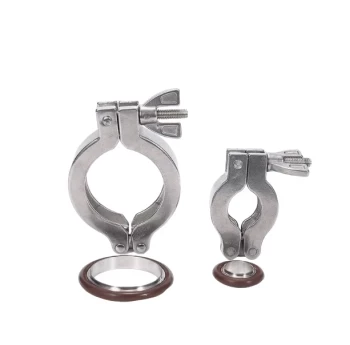
- Stainless Steel Quick Release Vacuum Chain Three Section Clamp
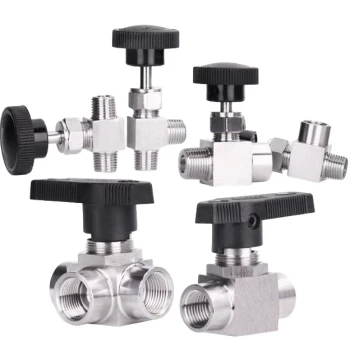
- 304 316 Stainless Steel High Vacuum Ball Stop Valve for Vacuum Systems
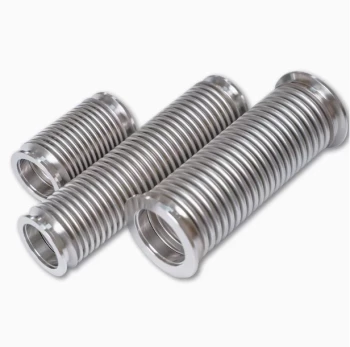
- High Performance Vacuum Bellows for Efficient Connection and Stable Vacuum in Systems
- Vacuum Induction Melting Furnace
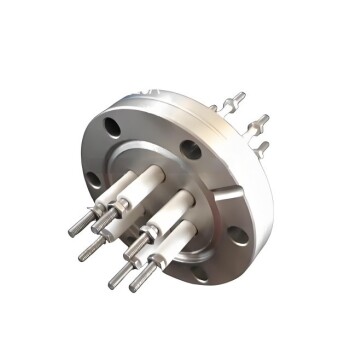
- CF KF Flange Vacuum Electrode Feedthrough Lead Sealing Assembly for Vacuum Systems
People Also Ask
- What is the function of quartz vacuum encapsulation in RhSeCl CVT? Mastering Pure Crystal Growth
- What type of pump is used in water circulating vacuum pumps and how is it installed? Discover Robust Fluid-Based Vacuum Solutions
- What role do vacuum-sealed high-purity silica ampoules play in phase equilibrium experiments? Enhance Sample Integrity
- What is the operating principle of a vacuum freeze-dryer in the fabrication of carbon aerogels? Master Sublimation
- What role does a vacuum atmosphere play in Sn-Ag-Co TLP soldering? Optimize Bond Purity and Joint Strength