
The key components of a condensation system in a vacuum distillation furnace primarily include the condensation surface, a circulating water cooling system, and often, multi-stage condensation zones. These elements work in concert to efficiently capture and separate metal vapors.
The effectiveness of a vacuum distillation condensation system hinges on precise temperature control across dedicated surfaces. This ensures optimal separation of metal vapors based on their distinct condensation points, allowing for both efficient collection and control over the condensed product's physical form.
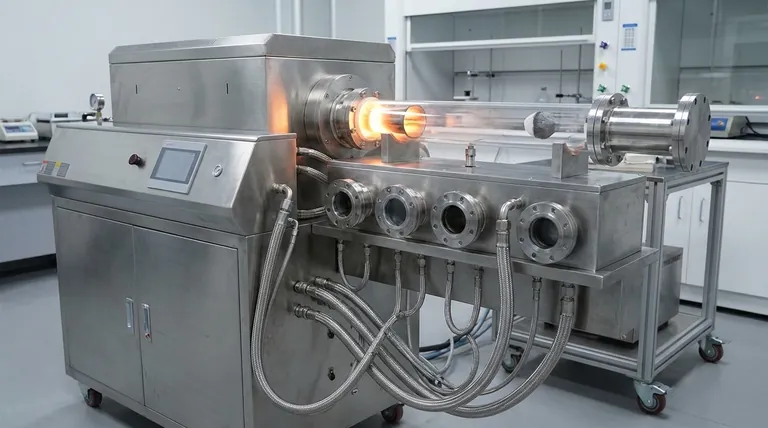
The Role of Condensation in Vacuum Distillation
Primary Function: Vapor Solidification
In a vacuum distillation furnace, the primary goal of the condensation system is to transform metal vapors back into a solid or liquid state. This process is critical for collecting the purified metal and separating it from impurities.
Key Components for Effective Separation
The Condensation Surface
This is the physical interface where the metal vapor makes contact and solidifies. It commonly takes the form of a lid or a dedicated plate. The design and material of this surface are crucial for efficient heat transfer and collection.
Circulating Water Cooling System
An essential part of the condensation process, this system provides precise temperature control for the condensation surface. Water circulates through channels to remove heat from the condensing metal. The exact temperature influences the efficiency of separation and the final physical form of the condensed metal.
Multi-Stage Condensation Zones
Advanced systems often incorporate multiple condensation zones, each designed to operate at a specific temperature. This creates a temperature gradient across the system. Different metals and impurities, having varying vapor pressures, will condense selectively in different zones, enhancing separation purity.
Understanding the Trade-offs
Temperature Control vs. Condensate Form
The chosen condensation temperature directly impacts the physical form of the collected metal. A specific temperature might yield a dense layer, while another might result in a powdered product. Balancing separation efficiency with desired product morphology is a key consideration.
Single vs. Multi-Stage Complexity
While multi-stage systems offer superior separation and purity by leveraging temperature gradients, they introduce greater complexity in design and operation. Single-stage systems are simpler but may offer less refined separation. The choice depends on the required purity and process constraints.
Optimizing Your Condensation System
If your primary focus is high purity separation of multiple components: Implement a multi-stage condensation system with carefully calibrated temperature zones. If your primary focus is maximizing collection efficiency of a single metal: Optimize the circulating water cooling system for a single, precise temperature on the condensation surface. If your primary focus is controlling the physical form (e.g., powder vs. dense layer): Experiment with fine adjustments to the condensation surface temperature, as this directly influences the morphology.
Effective metal vapor separation in vacuum distillation relies on a thoughtfully designed and precisely controlled condensation system.
Summary Table:
| Component | Primary Function | Key Benefit |
|---|---|---|
| Condensation Surface | Interface for vapor solidification | Efficient heat transfer and collection |
| Circulating Water Cooling System | Precise temperature control | Optimizes separation and product form |
| Multi-Stage Condensation Zones | Selective condensation by temperature gradient | Enhances purity and separation of metals |
Optimize your metal vapor separation with KINTEK's advanced high-temperature furnace solutions. Leveraging exceptional R&D and in-house manufacturing, we provide diverse laboratories with condensation systems tailored for precise temperature control and efficient separation. Our product line, including Muffle, Tube, Rotary Furnaces, Vacuum & Atmosphere Furnaces, and CVD/PECVD Systems, is complemented by strong deep customization capabilities to meet your unique experimental requirements. Contact us today to discuss how we can enhance your vacuum distillation process!
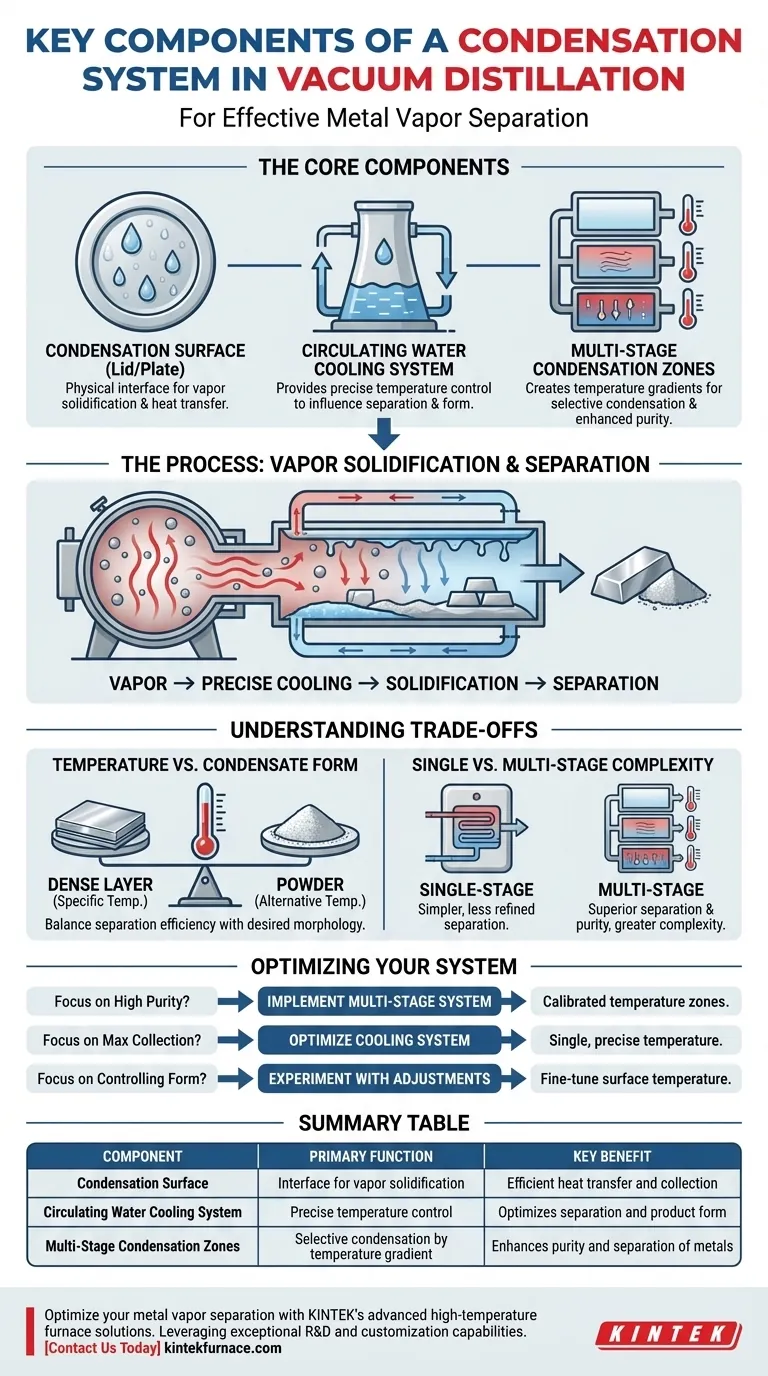
Visual Guide
Related Products
- Vacuum Heat Treat Sintering Furnace Molybdenum Wire Vacuum Sintering Furnace
- Vacuum Heat Treat Sintering Furnace with Pressure for Vacuum Sintering
- Small Vacuum Heat Treat and Tungsten Wire Sintering Furnace
- 9MPa Air Pressure Vacuum Heat Treat and Sintering Furnace
- 2200 ℃ Tungsten Vacuum Heat Treat and Sintering Furnace
People Also Ask
- What are the main structural components of a vacuum sintering furnace? Unlock Precision in High-Temperature Processing
- What are the key components of a vacuum sintering furnace? Essential Parts for Precision Material Processing
- What is the purpose of setting a mid-temperature dwell stage? Eliminate Defects in Vacuum Sintering
- How does vacuum sintering improve dimensional tolerances? Achieve Uniform Shrinkage and Precision
- How does vacuum sintering contribute to cost reduction in material processing? Lower Expenses with Superior Parts



















