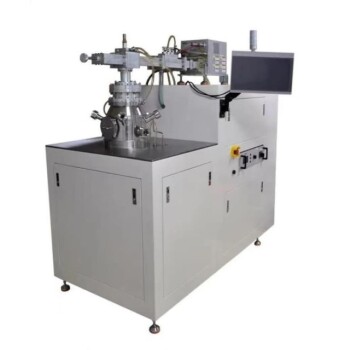
The batch reactor is a closed-system vessel used to pyrolyze plastic waste through discrete, sequential cycles of loading, heating, and unloading. It offers a versatile environment where raw materials undergo complete thermal conversion before the reactor is cooled and emptied. This configuration is particularly suited for small-scale operations and research where precise control over reaction duration is required.
A batch reactor serves as a flexible, entry-level technology for plastic pyrolysis, excelling in research and small-volume processing. Its strength lies in its ability to handle diverse waste types through long residence times, though it lacks the efficiency of continuous industrial systems.
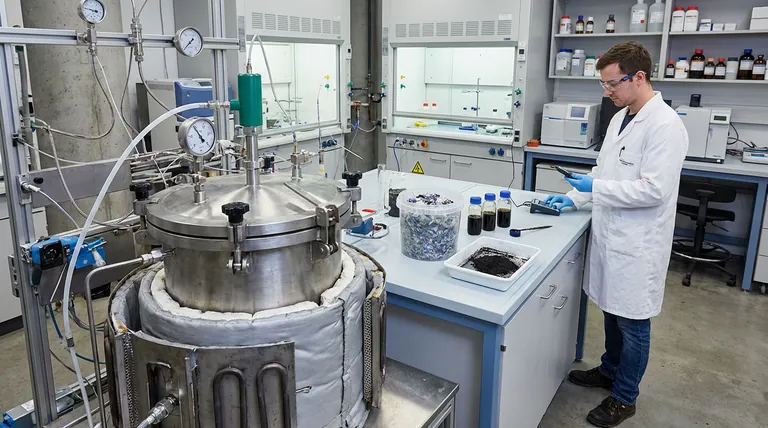
Fundamental Design and Operational Flow
The Closed Vessel System
In a batch reactor, the plastic waste is loaded into a sealed chamber before the heating process begins. The entire chemical transformation—from solid plastic to vapor and eventually to char—occurs within this single, contained environment.
Sequential Processing Cycles
Operations are defined by distinct phases: charging (loading), heating, reacting, cooling, and discharging. This "start-and-stop" nature allows operators to ensure that a specific quantity of waste is fully processed before the next cycle begins.
Mechanical Simplicity
Compared to continuous systems, batch reactors have fewer moving parts and do not require complex, airtight feeding mechanisms. This simplicity reduces the initial capital investment and makes the technology more accessible for smaller facilities.
Versatility in Feedstock Management
Handling Homogeneous and Mixed Polymers
The batch reactor is highly adaptable to different types of polymer waste. Because the process is not dependent on a constant flow rate, it can accommodate various plastic shapes and densities that might clog a continuous feeder.
Managing Extended Residence Times
Certain high-density plastics or complex polymers require more time to break down chemically. The batch setup allows for long residence times, ensuring that materials are exposed to heat for as long as necessary to achieve the desired conversion.
Precision in Waste Study
Because each batch is isolated, it is easier to track the exact yield of oil, gas, and solid residue from a specific sample. This makes the batch reactor an essential tool for studying the conversion rates of specific waste streams.
Understanding the Trade-offs
Reduced Throughput and Efficiency
The primary limitation of a batch reactor is its inability to process waste at high volumes. The time required to cool the vessel and remove the char between cycles creates significant downtime, limiting the total daily output.
High Energy and Labor Requirements
Reheating the entire reactor vessel for every new batch consumes more energy than a continuous system that remains at a steady temperature. Additionally, the manual nature of loading and unloading often results in higher labor costs per ton of plastic processed.
Thermal Stress on Equipment
Repeatedly heating and cooling the reactor vessel can lead to faster material fatigue and wear. This thermal cycling requires robust construction and regular maintenance to ensure the long-term integrity of the vessel.
How to Apply This to Your Project
When choosing a reactor type for plastic pyrolysis, your decision should align with your volume requirements and the consistency of your feedstock.
- If your primary focus is research and development: Use a batch reactor to accurately measure conversion rates and test the chemical behavior of various plastic blends in a controlled environment.
- If your primary focus is small-scale waste management: The batch reactor is ideal for processing limited, localized waste streams where simplicity and low initial cost are more important than high-speed throughput.
- If your primary focus is industrial-scale production: Consider moving toward continuous reactors to avoid the downtime and energy losses associated with cooling and reheating between batches.
Selecting a batch reactor provides the flexibility and control needed to master the complexities of plastic-to-fuel conversion on a manageable scale.
Summary Table:
| Feature | Batch Reactor Characteristic | Impact on Pyrolysis |
|---|---|---|
| Operational Flow | Sequential (Load, Heat, Cool, Unload) | Full control over discrete processing cycles |
| System Design | Sealed, Closed Vessel | Simplifies construction and maintains pressure |
| Feedstock Flexibility | High (Handles mixed/clog-prone polymers) | Ideal for diverse or unknown plastic blends |
| Residence Time | Adjustable and Long | Ensures complete conversion of complex materials |
| Efficiency | Lower (Due to cooling/reheating downtime) | Best suited for R&D or small-scale facilities |
Optimize Your Pyrolysis Research with KINTEK
Transitioning from lab-scale testing to efficient plastic waste conversion requires equipment that balances precision with durability. Backed by expert R&D and manufacturing, KINTEK offers a comprehensive range of high-performance Muffle, Tube, Rotary, and Vacuum systems, as well as other lab high-temperature furnaces—all fully customizable to meet your unique pyrolysis needs. Whether you are studying polymer yields or managing specialized waste streams, our technical team is ready to help you select the ideal reactor configuration.
Ready to scale your project with precision-engineered solutions? Contact us today to speak with a specialist!
References
- Ana B. Cuevas, M.P. Dorado. An Overview of Pyrolysis as Waste Treatment to Produce Eco-Energy. DOI: 10.3390/en17122852
This article is also based on technical information from Kintek Furnace Knowledge Base .
Related Products
- Custom Made Versatile CVD Tube Furnace Chemical Vapor Deposition CVD Equipment Machine
- MPCVD Machine System Reactor Bell-jar Resonator for Lab and Diamond Growth
- Laboratory Quartz Tube Furnace RTP Heating Tubular Furnace
- Electric Rotary Kiln Small Rotary Furnace Biomass Pyrolysis Plant Rotating Furnace
- 915MHz MPCVD Diamond Machine Microwave Plasma Chemical Vapor Deposition System Reactor
People Also Ask
- What is a CVD tube furnace and what is its primary function? Discover Precision Thin-Film Deposition
- Why are CVD tube furnace sintering systems indispensable for 2D material research and production? Unlock Atomic-Scale Precision
- Which industries and research fields benefit from CVD tube furnace sintering systems for 2D materials? Unlock Next-Gen Tech Innovations
- How does CVD tube furnace sintering enhance graphene growth? Achieve Superior Crystallinity and High Electron Mobility
- What improvements can be made to the bonding force of gate dielectric films using a CVD tube furnace? Enhance Adhesion for Reliable Devices