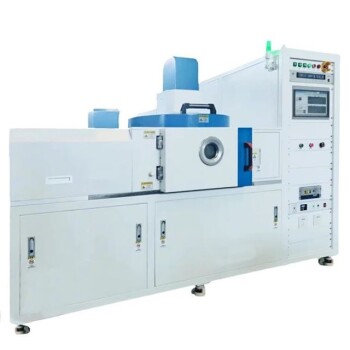
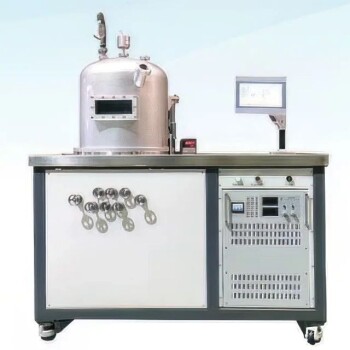
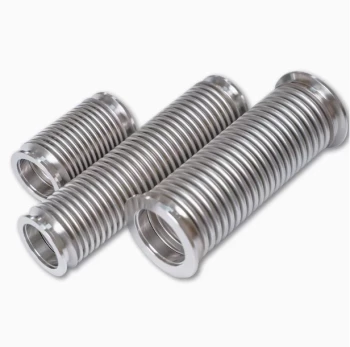
Chemical Vapor Deposition (CVD) systems offer unparalleled precision in the creation of thin films and porous materials by leveraging chemical reactions at the atomic level. By strictly regulating precursor gas flow, reaction pressure, and substrate temperature, these systems facilitate the uniform growth of high-density materials even on complex, irregular geometries where physical methods often struggle.
The Core Insight CVD is distinctively powerful because it is a non-line-of-sight process. Unlike physical deposition methods that require a direct path to the substrate, CVD utilizes gas-phase reactions to coat complex 3D structures, internal cavities, and porous materials with exceptional conformity and density.
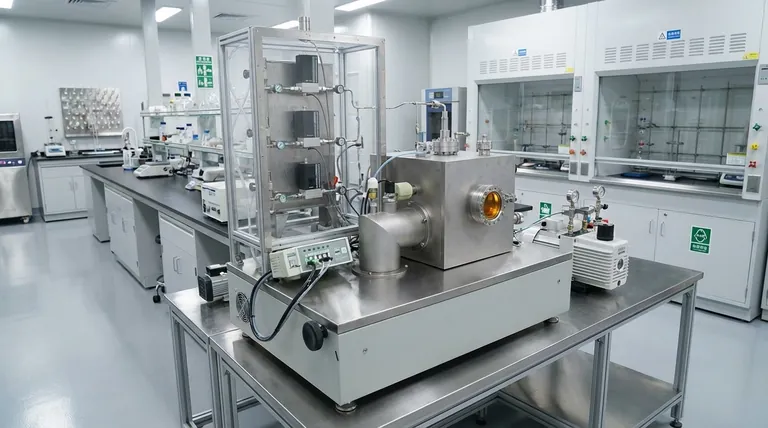
Superior Control and Film Quality
Atomic-Level Precision
CVD systems allow you to manipulate the deposition process at the atomic and molecular scales. By fine-tuning the inputs—specifically gas flow rates, chamber pressure, and temperature—you can dictate the exact composition and structure of the growing film.
High Density and Purity
The chemical nature of the process results in films that are exceptionally dense and pure, often exceeding 99.995% purity. This molecular-level nucleation minimizes voids and defects, producing films that are structurally superior to those created by Physical Vapor Deposition (PVD).
Tunable Material Properties
Operators can engineer specific properties directly into the material during the growth phase. Whether you require extreme hardness (such as Diamond-like Carbon), specific optical behaviors, or high thermal resistance, CVD offers the variables necessary to customize the coating’s performance.
Geometry and Versatility
Exceptional Step Coverage
One of the primary advantages of CVD is its "step coverage"—the ability to coat uneven surfaces uniformly. Because the reactants are gases, they can flow around obstacles and penetrate deep into trenches or porous structures, ensuring a uniform coat on complex shapes.
Non-Line-of-Sight Deposition
CVD does not require the substrate to be directly in front of a source material. This capability allows for the effective coating of internal surfaces, tube interiors, and intricate mechanical parts that would remain uncoated in directional processes.
Broad Material Compatibility
The versatility of CVD systems extends to the materials they can synthesize. They are capable of depositing a vast array of substances, including metals, ceramics, alloys, and polymers, onto diverse substrate materials like glass, metal, and semiconductors.
Scalability and Efficiency
Transition to Mass Production
CVD is not limited to small-scale laboratory research; it is highly scalable for industrial batch production. The process supports fast deposition speeds and can coat large areas simultaneously, making it cost-effective for high-volume manufacturing.
Economical Operation
While the equipment is sophisticated, the process can offer significant cost savings over time due to high throughput and efficient material usage. Additionally, many CVD systems are effectively self-cleaning regarding the chamber environment, reducing downtime between runs.
Understanding the Trade-offs
Chemical Handling Requirements
Unlike physical processes that use solid targets, CVD relies on precursor gases that can be hazardous, corrosive, or flammable. This requires robust safety protocols and sophisticated exhaust management systems to handle chemical byproducts safely.
Thermal Constraints
While some CVD variants operate at lower temperatures, many standard processes require significant heat to initiate the chemical reaction. This can limit the types of substrates you can use, specifically preventing the coating of materials that degrade at high temperatures.
Making the Right Choice for Your Goal
To determine if a CVD system is the right investment for your project, consider your specific end-goals:
- If your primary focus is Complex Geometry: Choose CVD for its ability to provide uniform, conformal coatings on irregular shapes, internal surfaces, and porous structures.
- If your primary focus is Material Quality: Rely on CVD to produce high-purity, dense films with customized mechanical or electrical properties that require atomic-level control.
- If your primary focus is Scalability: Implement CVD for its ability to maintain consistent quality while transitioning from research samples to large-scale batch production.
CVD remains the definitive choice when surface complexity and material integrity are paramount to your application's success.
Summary Table:
| Feature | CVD Advantage | Key Benefit |
|---|---|---|
| Conformity | Non-line-of-sight deposition | Uniform coating of 3D shapes and internal cavities |
| Material Quality | Atomic-level control | High-density films with >99.995% purity |
| Versatility | Broad material compatibility | Capable of depositing metals, ceramics, and polymers |
| Scalability | High throughput | Efficient transition from lab research to batch production |
| Customization | Tunable properties | Precision engineering of hardness, optical, and thermal traits |
Elevate Your Thin Film Production with KINTEK
Unlock the full potential of high-purity, conformal coatings with our industry-leading technology. Backed by expert R&D and manufacturing, KINTEK offers high-performance CVD systems, Muffle, Tube, Rotary, and Vacuum furnaces, all fully customizable to meet your unique material research and production needs.
Whether you are coating complex 3D geometries or developing advanced porous materials, our team is ready to provide the precision tools you require.
Ready to optimize your lab's performance? Contact our experts today to find your custom solution!
Visual Guide

References
- Dimple Dimple, Priyanka Verma. Visible‐NIR Light‐Driven Hydrogen Evolution from Ammonia Borane Using Defect‐Engineered Pd/WO<sub>3‐x</sub> Catalyst. DOI: 10.1002/cctc.202500795
This article is also based on technical information from Kintek Furnace Knowledge Base .
Related Products
- 915MHz MPCVD Diamond Machine Microwave Plasma Chemical Vapor Deposition System Reactor
- Custom Made Versatile CVD Tube Furnace Chemical Vapor Deposition CVD Equipment Machine
- RF PECVD System Radio Frequency Plasma Enhanced Chemical Vapor Deposition
- MPCVD Machine System Reactor Bell-jar Resonator for Lab and Diamond Growth
- HFCVD Machine System Equipment for Drawing Die Nano Diamond Coating
People Also Ask
- What is the MPCVD method and why is it considered effective for diamond deposition? Superior Purity & High Growth Rates
- What factors influence the quality of diamond deposition in the MPCVD method? Master the Critical Parameters for High-Quality Diamond Growth
- What are some key features and benefits of the microwave plasma chemical vapor deposition system? Achieve Unmatched Material Synthesis
- What is the purpose of a microwave plasma chemical vapor deposition system? Grow High-Purity Diamonds and Advanced Materials
- What is the basic principle of operation for the microwave plasma chemical vapor deposition system? Unlock High-Purity Material Growth