At its core, Microwave Plasma-Assisted Chemical Vapor Deposition (MPCVD) is a highly controlled manufacturing process that allows for the growth of exceptionally pure, low-stress carbon films with precisely tailored properties. By using microwave energy to create a stable plasma, MPCVD enables the atomic-level construction of materials like diamond, making it indispensable for advanced industrial and electronic applications where material perfection is non-negotiable.
The fundamental advantage of MPCVD is not just its ability to create carbon films, but its capacity for atomic-level control. This precision allows engineers to move beyond commodity materials and design films with specific, high-performance characteristics for demanding environments.
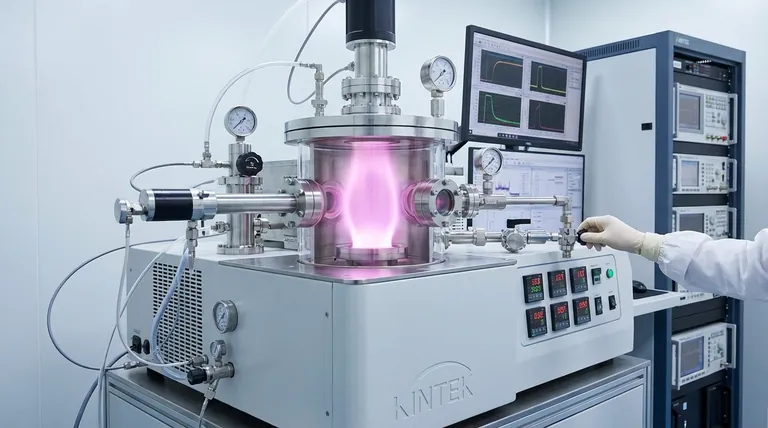
The Mechanism: How MPCVD Delivers Precision
The unique capabilities of MPCVD stem directly from its use of microwave energy to generate and sustain a chemical plasma. This approach provides a level of control that older deposition methods cannot match.
Creating a High-Density Plasma
MPCVD systems introduce precursor gases (like methane in a hydrogen carrier) into a vacuum chamber. Microwave energy is then focused into this chamber, ionizing the gas and creating a dense, stable plasma.
This plasma is a highly reactive soup of ions, electrons, and radicals. The high energy and stability of the microwave-generated plasma efficiently break down the precursor gases into their fundamental carbon-building blocks.
Enabling Low-Stress Growth
Unlike traditional thermal CVD, which relies on high heat alone, MPCVD's plasma allows for material deposition at significantly lower substrate temperatures.
This lower temperature minimizes thermal stress, preventing the film from cracking, delaminating, or warping. The result is a low-stress film that maintains its structural integrity and adheres strongly to the underlying substrate.
Translating Process to Performance: Key Film Properties
The controlled environment of MPCVD translates directly into superior material properties that unlock new technological possibilities.
Exceptional Purity and Hardness
The efficiency of the plasma chemistry ensures that unwanted contaminants and amorphous carbon phases are minimized. This results in high-purity films, particularly in the case of synthetic diamond, that exhibit exceptional hardness and wear resistance for industrial coatings.
Superior Thermal and Electronic Properties
For applications in advanced electronics, MPCVD is used to grow single-crystal diamond substrates. These materials possess outstanding properties that are critical for next-generation devices.
These properties include exceptional thermal conductivity for heat dissipation, a high breakdown field to handle high voltages, and superior carrier mobility for faster switching speeds. This enables high-frequency, high-power electronics with better performance and less energy loss.
Understanding the Trade-offs: Precision vs. Practicality
While MPCVD offers unparalleled quality, it is a specialized tool with specific trade-offs that are important to understand.
Higher Initial and Operational Costs
MPCVD systems are complex and require significant capital investment compared to simpler deposition technologies. The use of high-vacuum components, microwave generators, and precise gas control systems contributes to a higher cost of ownership.
Slower Deposition Rates
The very precision that makes MPCVD so valuable often necessitates slower growth rates. Achieving a highly ordered, crystalline structure like diamond is a meticulous process that cannot be rushed, making it less suitable for applications requiring high-volume, rapid coating.
Process Complexity
Operating an MPCVD system requires significant expertise. Dialing in the exact parameters—gas mixture, pressure, temperature, and microwave power—to achieve a specific film property is a complex task that demands a skilled operator.
Making the Right Choice for Your Application
Selecting MPCVD depends entirely on whether the performance benefits justify the investment.
- If your primary focus is next-generation electronics: MPCVD is the leading choice for creating high-power, high-frequency devices where thermal management and electronic performance are paramount.
- If your primary focus is extreme durability: For specialized tooling, medical implants, or aerospace components, the hardness and purity of MPCVD diamond films offer a significant performance advantage.
- If your primary focus is cost-effective, large-area coatings: Other methods like sputtering or thermal CVD may be more appropriate for applications where ultimate purity and crystalline perfection are not the driving requirements.
Ultimately, MPCVD empowers engineers to treat carbon films not as a simple coating, but as a designed material engineered for a specific purpose.
Summary Table:
| Aspect | MPCVD Advantage |
|---|---|
| Process Control | Atomic-level precision via microwave plasma |
| Film Quality | Exceptionally pure, low-stress films |
| Key Material | High-quality diamond and other carbon films |
| Ideal For | High-power electronics, extreme durability coatings |
Ready to engineer carbon films with atomic-level precision? KINTEK's advanced MPCVD solutions, backed by exceptional R&D and in-house manufacturing, provide the control and quality your demanding applications require. Whether you're developing next-generation electronics or need ultra-durable coatings, our expertise and deep customization capabilities are here to meet your unique experimental needs.
Contact our experts today to discuss how our MPCVD systems can accelerate your innovation.
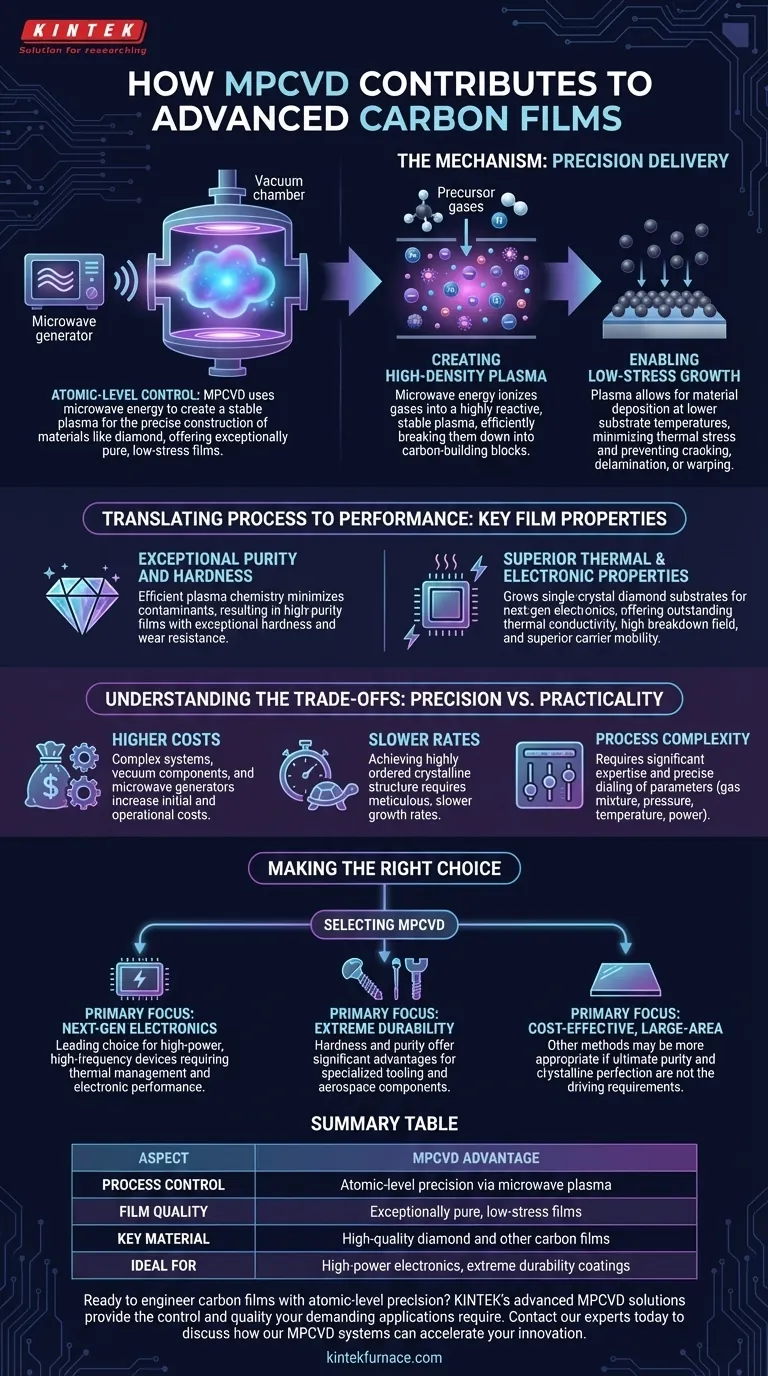
Visual Guide
Related Products
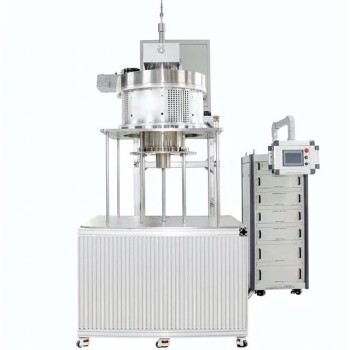
- 915MHz MPCVD Diamond Machine Microwave Plasma Chemical Vapor Deposition System Reactor
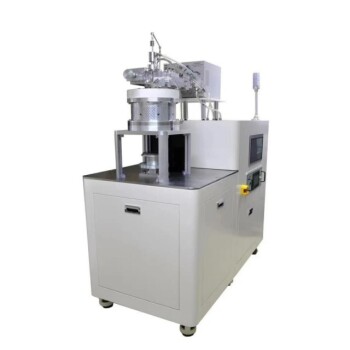
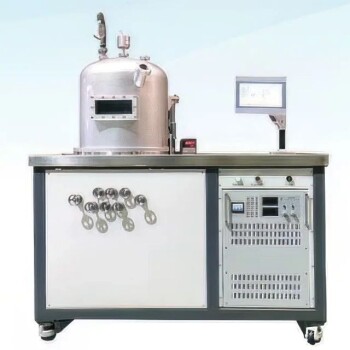
- MPCVD Machine System Reactor Bell-jar Resonator for Lab and Diamond Growth
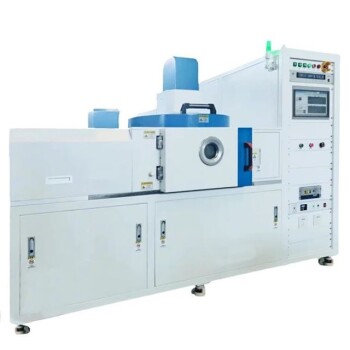
- Cylindrical Resonator MPCVD Machine System for Lab Diamond Growth
- Multi Heating Zones CVD Tube Furnace Machine for Chemical Vapor Deposition Equipment
- Inclined Rotary Plasma Enhanced Chemical Deposition PECVD Tube Furnace Machine
People Also Ask
- What is the MPCVD method and why is it considered effective for diamond deposition? Superior Purity & High Growth Rates
- What factors influence the quality of diamond deposition in the MPCVD method? Master the Critical Parameters for High-Quality Diamond Growth
- What are some key features and benefits of the microwave plasma chemical vapor deposition system? Achieve Unmatched Material Synthesis
- What is the purpose of a microwave plasma chemical vapor deposition system? Grow High-Purity Diamonds and Advanced Materials
- What is the basic principle of operation for the microwave plasma chemical vapor deposition system? Unlock High-Purity Material Growth