
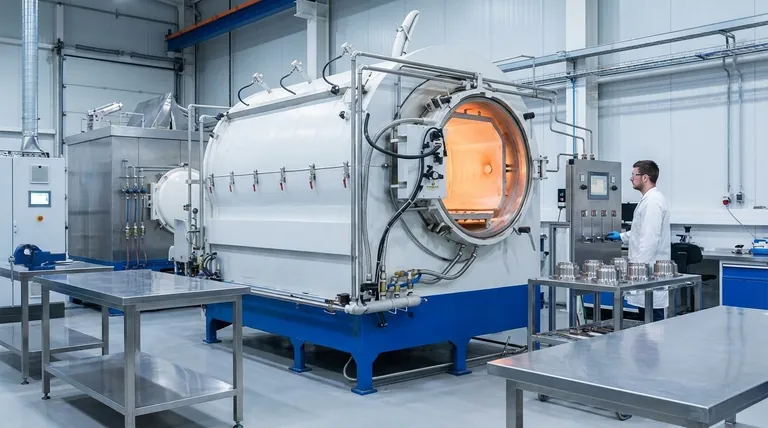
Using a vacuum brazing furnace for the aging treatment of 17-4PH stainless steel significantly enhances material performance by providing superior temperature uniformity and programmable cooling rates. This precise thermal environment allows for the controlled precipitation of nano-sized copper-rich phases within the critical 480-620 °C range, while simultaneously preventing surface oxidation.
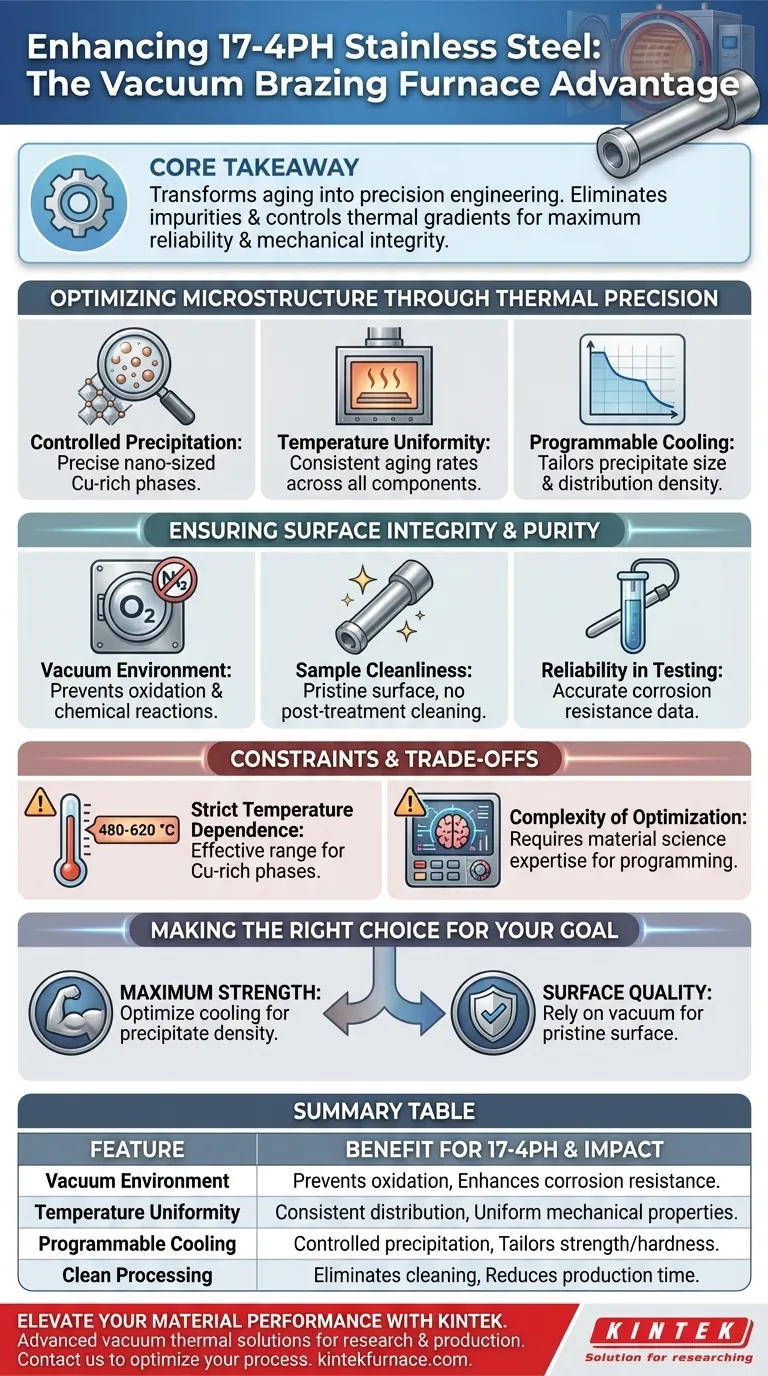
Core Takeaway The vacuum brazing furnace transforms the aging process from a simple heat cycle into a precision engineering step. By eliminating environmental impurities and strictly controlling thermal gradients, it tailors the size and distribution of strengthening precipitates to ensure maximum reliability and mechanical integrity.
Optimizing Microstructure Through Thermal Precision
Controlled Precipitation
The primary mechanical advantage of using a vacuum brazing furnace is the ability to dictate the microstructure of the steel. The furnace allows for the precise precipitation of nano-sized copper-rich (Cu-rich) phases.
Temperature Uniformity
Achieving the correct phase distribution requires exact temperatures. The vacuum furnace offers superior temperature uniformity compared to standard atmosphere furnaces, ensuring every part of the component ages at the exact same rate.
Programmable Cooling
The equipment features programmable cooling rates. This capability allows operators to tailor the cooling process to achieve specific size and distribution density requirements for the precipitates.
Ensuring Surface Integrity and Purity
Elimination of Environmental Impurities
The vacuum environment isolates the 17-4PH stainless steel from the outside atmosphere. This effectively prevents chemical reactions between the material and environmental contaminants during the heating cycle.
Sample Cleanliness
Because the process occurs in a vacuum, the treated samples remain exceptionally clean. This eliminates the need for post-treatment cleaning and ensures that the surface is pristine.
Reliability in Testing
The high degree of cleanliness directly impacts quality assurance. By preventing surface contamination, the furnace ensures the reliability of subsequent electrochemical testing results, providing accurate data on the material's corrosion resistance.
Understanding the Constraints and Trade-offs
Strict Temperature Dependence
While the furnace offers high precision, the effectiveness of the aging treatment is strictly bound to the 480-620 °C temperature range. Operating outside this window, even with high-end equipment, will fail to produce the desired Cu-rich phases.
Complexity of Optimization
The benefit of "tailored" distribution density implies that the process is not automatic. Utilizing programmable cooling rates requires a deep understanding of the material science involved to set the correct parameters for the specific mechanical properties desired.
Making the Right Choice for Your Goal
To maximize the benefits of a vacuum brazing furnace for 17-4PH, align your process settings with your specific engineering objectives:
- If your primary focus is Maximum Strength: Prioritize the programming of cooling rates to optimize the density and size of the nano-sized Cu-rich precipitates.
- If your primary focus is Surface Quality: Rely on the vacuum environment to prevent oxidation, ensuring the material is ready for electrochemical testing without aggressive cleaning.
By leveraging the precision of vacuum brazing technology, you convert the aging process from a routine step into a critical opportunity for material enhancement.
Summary Table:
| Feature | Benefit for 17-4PH Stainless Steel | Impact on Material Performance |
|---|---|---|
| Vacuum Environment | Prevents surface oxidation and contamination | Enhances corrosion resistance and testing reliability |
| Temperature Uniformity | Ensures consistent phase distribution | Guarantees uniform mechanical properties across parts |
| Programmable Cooling | Controlled precipitation of Cu-rich phases | Tailors strength, hardness, and ductility parameters |
| Clean Processing | Eliminates post-treatment cleaning steps | Reduces production time and maintains pristine surfaces |
Elevate Your Material Performance with KINTEK
Maximize the mechanical integrity of your 17-4PH stainless steel components with KINTEK’s advanced vacuum thermal solutions. Backed by expert R&D and world-class manufacturing, we provide high-precision Vacuum, CVD, and Muffle systems designed to meet the strictest aging and brazing specifications.
Whether you need customizable thermal gradients or specialized cooling rates, our lab high-temp furnaces are engineered for your unique research and production needs. Contact KINTEK today to optimize your aging treatment process.
Visual Guide
References
- Chengshuang Zhou, Lin Zhang. The Effect of Aging Treatment on the Corrosion Behavior of 17-4PH Stainless Steel. DOI: 10.3390/ma18081823
This article is also based on technical information from Kintek Furnace Knowledge Base .
Related Products
- Vacuum Heat Treat Sintering and Brazing Furnace
- Vacuum Hot Press Furnace Machine Heated Vacuum Press
- Vacuum Hot Press Furnace Machine Heated Vacuum Press Tube Furnace
- Vacuum Hot Press Furnace Machine for Lamination and Heating
- 600T Vacuum Induction Hot Press Vacuum Heat Treat and Sintering Furnace
People Also Ask
- What is one of the most important uses of vacuum heat treating furnaces in aerospace? Achieve Superior Strength in Aircraft Alloys
- How does vacuum heat treating affect the grain structure of metal alloys? Achieve Precise Microstructure Control
- What are the benefits of using vacuum heat treating furnaces for metal alloys? Achieve Superior Metal Properties and Performance
- What is the temperature of a vacuum furnace brazing? Optimize Your Joint Strength and Cleanliness
- What are the steps involved in a typical vacuum brazing treatment? Master the Process for Strong, Clean Joints



















