The Mass Flow Controller (MFC) serves as the primary regulator of gas composition during the synthesis of Tubular Carbon Nanofibers (TCNF). It precisely manages the instantaneous flow and volumetric ratio of Carbon Monoxide (CO), Hydrogen (H2), and Argon (Ar) as they enter the quartz reaction tube. This precise regulation is the fundamental "process guarantee" that determines whether the final product achieves the desired morphology.
Precise control over the gas ratio—specifically managing the reducing atmosphere and carbon supply rate—is the deciding factor that forces the Fe-Mn catalyst to grow thin-walled tubular structures rather than unwanted plate-like forms.

The Mechanics of Morphology Control
Regulating the Reducing Atmosphere
The synthesis of TCNF requires a strictly controlled chemical environment. The MFC ensures the correct concentration of reducing gases (H2) within the reaction chamber.
By stabilizing the atmosphere, the MFC creates the necessary conditions for the catalyst to remain active and selective.
Controlling Carbon Source Supply
The rate at which carbon is introduced to the catalyst is just as critical as the atmosphere. The MFC dictates the exact supply rate of the carbon source (CO).
This prevents the catalyst from being overwhelmed or starved, ensuring steady, uniform fiber growth.
Selective Growth and Catalyst Interaction
Promoting Thin-Walled Structures
The primary reference highlights that specific gas ratios, such as 1:4 v/v, are essential for successful synthesis.
The MFC maintains this exact ratio throughout the process. This stability drives the selective growth of high-quality, thin-walled tubular structures.
Preventing Plate-like Formations
Without the precision of an MFC, the reaction outcome becomes unpredictable.
If the gas ratio deviates, the Fe-Mn catalyst mechanism shifts. Instead of forming tubes, the carbon tends to precipitate into undesirable plate-like structures.
The MFC effectively suppresses this side reaction by locking in the optimal flow parameters.
Understanding the Trade-offs
Sensitivity to Ratio Fluctuation
The reliance on an MFC underscores the high sensitivity of the synthesis process.
Because the morphology is dictated by the gas ratio, even minor hardware calibration errors or fluctuations can ruin a batch. The process has very little tolerance for "drift" in flow rates.
Hardware Dependency
The quality of the TCNF is inextricably linked to the quality of the MFC.
You cannot compensate for a low-precision controller by adjusting other variables like temperature. If the MFC cannot hold the instantaneous flow steady, the catalyst selectivity is lost.
Making the Right Choice for Your Goal
To maximize the yield of specific TCNF morphologies, you must prioritize the programming of your flow controller.
- If your primary focus is TCNF Purity: Ensure your MFC is calibrated to maintain a strict 1:4 v/v ratio to suppress plate-like byproducts.
- If your primary focus is Catalyst Activity: Use the MFC to fine-tune the reducing atmosphere (H2 flow) to prevent catalyst oxidation or deactivation.
Mastering the input flow is the only way to master the output structure.
Summary Table:
| Parameter Controlled | Role in TCNF Synthesis | Impact on Morphology |
|---|---|---|
| H2 Concentration | Regulates reducing atmosphere | Maintains catalyst activity & selectivity |
| CO Flow Rate | Manages carbon source supply | Prevents catalyst overloading or starvation |
| Gas Ratio (v/v) | Stabilizes 1:4 (CO:H2) ratio | Promotes thin-walled tubes; prevents plate-like forms |
| Flow Stability | Eliminates ratio fluctuations | Ensures consistency and high product purity |
Elevate Your Nanomaterial Synthesis with KINTEK
Precise gas control is the difference between high-quality Tubular Carbon Nanofibers and failed batches. KINTEK provides the advanced hardware necessary to master your synthesis environment. Backed by expert R&D and manufacturing, we offer CVD systems, Tube furnaces, and customizable lab high-temp solutions integrated with high-precision flow control to meet your unique research needs.
Ready to achieve superior morphology control? Contact KINTEK today to discuss your custom furnace and flow requirements with our specialists.
Visual Guide

References
- Minki Sung, Seong‐Ho Yoon. Preparation Uniform Thin Tubular Carbon Nanofiber Using Novel Bimetallic Catalyst at Low Temperature and Its Structural Feature. DOI: 10.1021/acsomega.4c10295
This article is also based on technical information from Kintek Furnace Knowledge Base .
Related Products
- Multi Heating Zones CVD Tube Furnace Machine for Chemical Vapor Deposition Equipment
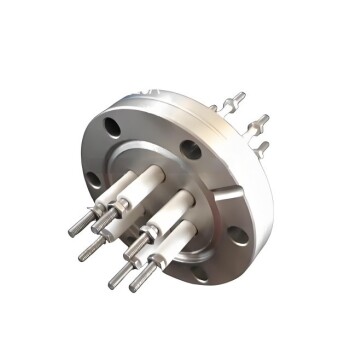
- CF KF Flange Vacuum Electrode Feedthrough Lead Sealing Assembly for Vacuum Systems
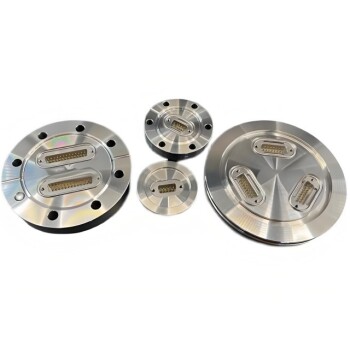
- Ultra-High Vacuum Flange Aviation Plug Glass Sintered Airtight Circular Connector for KF ISO CF
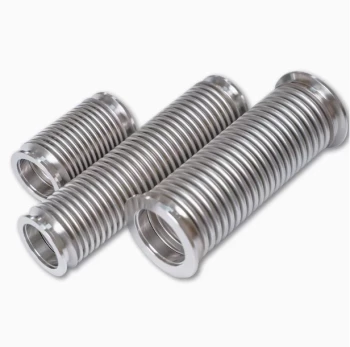
- High Performance Vacuum Bellows for Efficient Connection and Stable Vacuum in Systems
- Multi Zone Laboratory Quartz Tube Furnace Tubular Furnace
People Also Ask
- What is the function of a multi-zone tube furnace in CVD synthesis? Master 2D In2Se3 Nanosheet Precision
- What role do multi zone tube furnaces play in new energy research? Unlock Precise Thermal Control for Innovation
- What environmental protection applications utilize multi zone tube furnaces? Unlock Precision in Waste Treatment and Green Tech
- Why are multi zone tube furnaces particularly useful for nanomaterial research? Unlock Precise Thermal Control for Advanced Synthesis
- What temperature-related capabilities make multi zone tube furnaces valuable for research? Unlock Precision Thermal Control