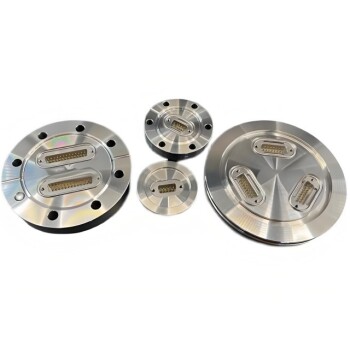
A laboratory vacuum system is the foundational tool for creating high-purity high-entropy alloys primarily by establishing a controlled negative pressure environment. By actively extracting air from the furnace chamber, the system physically removes gaseous inclusions from raw materials and prevents the chemical formation of oxidative inclusions. This creates a pristine melt pool, allowing researchers to isolate variables and precisely observe how specific additions, such as hafnium or molybdenum, influence material characteristics.
The central role of the vacuum system is to isolate the alloy from atmospheric contamination and crucible interaction. By removing oxygen and volatile solvents, researchers can ensure high density, prevent porosity, and guarantee that the final material properties are driven solely by the intended chemical composition.
Mechanisms of Purity and Control
Eliminating Gaseous Defects
The primary function of the vacuum system is air extraction. By creating negative pressure, the system pulls atmospheric gases out of the furnace chamber. This is critical for removing gaseous inclusions that are naturally trapped within the raw materials before melting begins.
Preventing Oxidation in the Melt Pool
Oxygen is the enemy of high-entropy alloys. Without a vacuum, the high temperatures required for melting would cause immediate oxidation of the metal. The vacuum environment prevents these oxidative inclusions from forming, ensuring the melt pool remains pure and chemically stable.
Facilitating Precise Inclusion Analysis
Purity enables observation. When the baseline interference from oxidation is removed, researchers can conduct precise experiments. For example, the effects of specific alloy additions—like hafnium or molybdenum—on non-metallic inclusions can be accurately characterized only when the background noise of atmospheric contamination is eliminated.
Impact on Powder Metallurgy and Sintering
Removal of Residual Solvents
Vacuum drying is essential for powder preparation. In processes involving powders, solvents like anhydrous ethanol are often used as process control agents. A vacuum drying oven, operating at approximately 80°C, effectively evaporates these residues without exposing the powder to oxygen.
Ensuring Final Sample Density
Solvent removal prevents structural failure. If solvents remain in the powder, they will evaporate violently during the high-heat sintering phase, creating pores. By removing these solvents beforehand in a vacuum, the system ensures the final alloy is dense and structurally integral.
Advanced Contamination Control
Preventing Crucible Contamination
Vacuum levitation eliminates contact impurities. In advanced setups like vacuum magnetic levitation induction melting, the vacuum works in tandem with electromagnetic forces. This suspends the molten metal, preventing it from touching the crucible walls and absorbing foreign materials, resulting in superior ingot quality.
Protection of Active Elements
Reactive elements require strict isolation. In a Vacuum Arc Furnace, the vacuum environment (often combined with inert gas) prevents active elements in the alloy from reacting with the atmosphere. This ensures that the complex chemical balance of the high-entropy alloy is maintained exactly as designed.
Understanding the Trade-offs
The Requirement for Absolute Seals
A vacuum system is only as effective as its containment. The reliance on negative pressure means that even microscopic leaks can reintroduce oxygen, compromising the entire batch. rigorous maintenance of seals and pumps is not optional; it is a critical process variable.
Processing Time vs. Purity
Achieving high purity requires patience. Processes like vacuum drying and thorough degassing extend the production timeline significantly compared to open-air methods. However, attempting to accelerate these steps invariably leads to trapped gases, porosity, or oxidation, rendering the alloy unsuitable for high-performance applications.
Making the Right Choice for Your Goal
To maximize the quality of your high-entropy alloys, align your vacuum usage with your specific processing stage:
- If your primary focus is analyzing specific chemical additions: Prioritize a furnace with high-efficiency air extraction to ensure the melt pool is free of oxidative background noise, allowing for clear observation of elements like hafnium.
- If your primary focus is powder metallurgy and sintering: Implement a vacuum drying step at moderate temperatures (approx. 80°C) to fully remove process control solvents and prevent porosity.
- If your primary focus is ultra-high purity without container contamination: Utilize vacuum magnetic levitation to suspend the melt, eliminating both atmospheric gases and physical impurities from the crucible.
By rigorously controlling the processing atmosphere, a vacuum system transforms a volatile mixture of elements into a precise, high-performance material.
Summary Table:
| Feature | Function in HEA Preparation | Impact on Quality |
|---|---|---|
| Negative Pressure | Active extraction of atmospheric gases | Prevents gaseous inclusions & porosity |
| Oxidation Control | Eliminates oxygen from the melt pool | Prevents chemical formation of inclusions |
| Vacuum Drying | Evaporates solvents at ~80°C | Ensures structural density during sintering |
| Levitation Melting | Suspends melt via electromagnetic force | Eliminates crucible contact contamination |
| Reactive Protection | Isolates active alloying elements | Maintains exact intended chemical balance |
Achieve Unmatched Material Purity with KINTEK
Precision in high-entropy alloy research demands a flawless processing environment. Backed by expert R&D and world-class manufacturing, KINTEK provides advanced Vacuum, CVD, Muffle, and Rotary systems designed to eliminate contamination and isolate critical variables in your experiments. Whether you are conducting vacuum levitation melting or precise powder sintering, our customizable high-temperature lab furnaces are engineered to meet your unique metallurgical needs.
Ready to elevate your material science? Contact our technical experts today to find the perfect vacuum solution for your lab.
References
- Yong Wang, Wangzhong Mu. Effect of hafnium and molybdenum addition on inclusion characteristics in Co-based dual-phase high-entropy alloys. DOI: 10.1007/s12613-024-2831-x
This article is also based on technical information from Kintek Furnace Knowledge Base .
Related Products
- Laboratory Vacuum Tilt Rotary Tube Furnace Rotating Tube Furnace
- Vacuum Dental Porcelain Sintering Furnace for Dental Laboratories
- Small Vacuum Heat Treat and Tungsten Wire Sintering Furnace
- Cylindrical Resonator MPCVD Machine System for Lab Diamond Growth
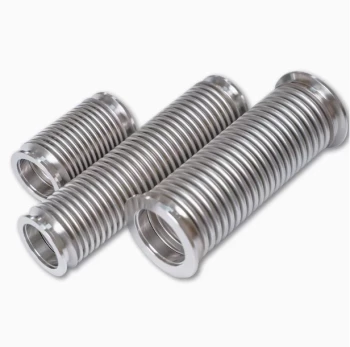
- High Performance Vacuum Bellows for Efficient Connection and Stable Vacuum in Systems
People Also Ask
- What are the key advantages of using a rotary tube furnace? Achieve Dynamic, Uniform Heating for Powders
- When are rotary tube furnaces not suitable for a process? Avoid Costly Mistakes in Thermal Processing
- What optional features enhance the processing capabilities of rotary tube furnaces? Boost Efficiency with Advanced Customizations
- What are the technical advantages of using a rotary tube furnace for hydrochar activation? Achieve Superior Porosity
- What other fields utilize rotary tube furnaces? Discover Versatile Heating Solutions for Multiple Industries