
A laboratory vacuum high-temperature furnace ensures rigorous experimental conditions by combining significant thermal headroom with a specialized atmosphere control system. It utilizes a vacuum phase followed by an ultra-high purity nitrogen purge to eliminate environmental contaminants, protecting the LiF-BeF2-LaF3 mixture from degradation.
Success in heating fluoride salt mixtures relies on preventing interaction with the atmosphere. This furnace system mitigates the risk of corrosive side reactions by effectively removing oxygen and moisture before the temperature rises.
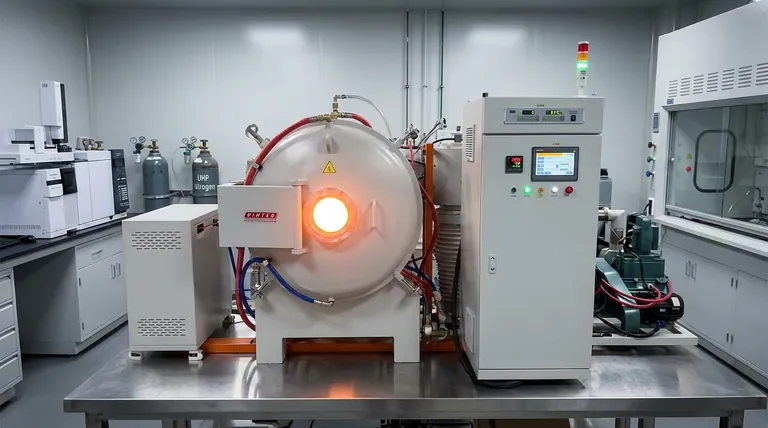
Thermal Capacity and Stability
Significant Heating Margin
The furnace is capable of reaching temperatures up to 1,873 K. This provides a substantial performance margin over the 1,073 K typically required for LiF-BeF2-LaF3 experiments.
Consistent Thermal Performance
Operating well below the furnace's maximum capacity allows for better temperature stability. It reduces stress on heating elements, ensuring consistent thermal conditions throughout the duration of the experiment.
Atmosphere Control and Purity
The Vacuum Stage
Before heating begins, the system employs a vacuum mechanism. This step physically evacuates the chamber, removing the bulk of air and ambient humidity that would otherwise react with the sample.
Ultra-High Purity Nitrogen Purging
Following the vacuum stage, the chamber is purged with ultra-high purity nitrogen. This process flushes out any remaining trace gases and establishes an inert positive pressure environment.
Preventing Corrosive Side Reactions
Molten fluoride salts are highly reactive to oxygen and moisture. By eliminating these elements, the furnace prevents the formation of corrosive byproducts that could damage the apparatus or invalidate experimental results.
Understanding the Trade-offs
Process Time and Complexity
Achieving such rigorous conditions requires patience. The cycle of drawing a vacuum and purging with nitrogen adds significant setup time compared to standard atmospheric furnaces.
Resource Dependencies
The system relies heavily on the availability of ultra-high purity consumables. Using standard industrial-grade nitrogen can reintroduce impurities, negating the benefits of the vacuum system.
Making the Right Choice for Your Experiment
To maximize the effectiveness of this furnace setup for your specific goals, consider the following:
- If your primary focus is Sample Purity: Prioritize the duration and thoroughness of the nitrogen purge cycle to ensure absolute minimal oxygen content.
- If your primary focus is Equipment Longevity: Utilize the high thermal margin by avoiding rapid temperature ramps, as the furnace is operating comfortably within its limits.
Reliable data in molten salt research depends entirely on the integrity of your atmospheric control.
Summary Table:
| Feature | Specification/Process | Benefit for LiF-BeF2-LaF3 |
|---|---|---|
| Max Temperature | Up to 1,873 K | Provides thermal headroom for stable 1,073 K runs |
| Initial Stage | Vacuum Evacuation | Removes oxygen and moisture to prevent corrosion |
| Inert Environment | UHP Nitrogen Purge | Flushes trace gases and creates a stable positive pressure |
| Sample Protection | Specialized Atmosphere | Prevents degradation and reactive side-products |
Elevate Your Research Precision with KINTEK
Reliable data in molten salt research depends on absolute atmospheric integrity. Backed by expert R&D and manufacturing, KINTEK offers high-performance Vacuum, Muffle, Tube, and Rotary systems designed to handle the most sensitive experimental conditions. Whether you are heating corrosive fluoride salts or developing advanced materials, our customizable laboratory high-temp furnaces provide the thermal margin and purity control you require.
Ready to optimize your thermal processes? Contact our specialists today to find the perfect furnace solution for your unique laboratory needs.
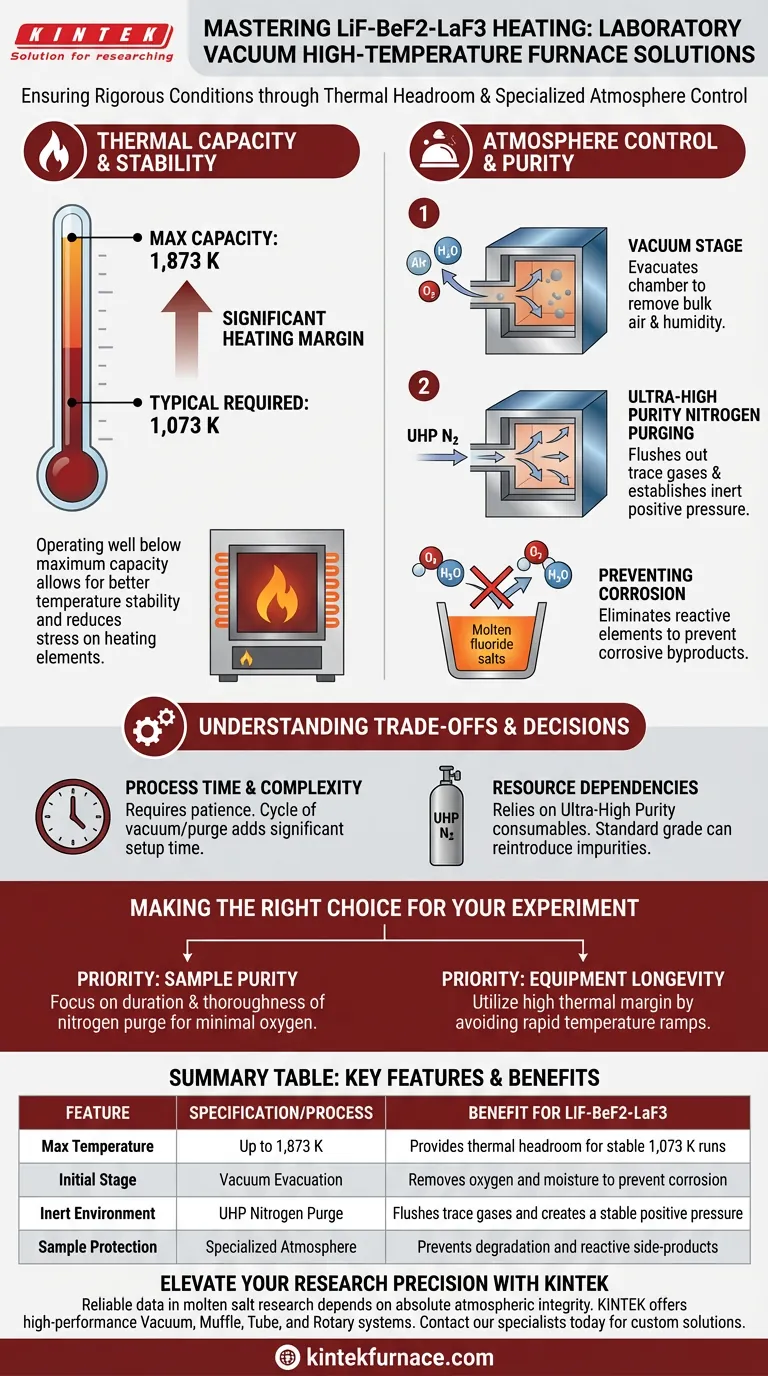
Visual Guide
References
- Jisue Moon, Theodore M. Besmann. Density Measurements of Molten LiF–BeF<sub>2</sub> and LiF–BeF<sub>2</sub>–LaF<sub>3</sub> Salt Mixtures by Neutron Radiography. DOI: 10.1021/acsomega.4c01446
This article is also based on technical information from Kintek Furnace Knowledge Base .
Related Products
- 2200 ℃ Tungsten Vacuum Heat Treat and Sintering Furnace
- 2200 ℃ Graphite Vacuum Heat Treat Furnace
- Molybdenum Vacuum Heat Treat Furnace
- Vacuum Heat Treat Sintering Furnace Molybdenum Wire Vacuum Sintering Furnace
- Vacuum Hot Press Furnace Machine Heated Vacuum Press Tube Furnace
People Also Ask
- How does a tungsten-heated vacuum sintering furnace prepare (TbxY1-x)2O3 ceramics? Achieve 99%+ Density & Purity
- How do compaction pressure and vacuum sintering optimize porous ceramics? Maximize Density & Toughness
- What wear-resistance enhancements are achieved by powder coating? The Role of Vacuum Sintering Furnaces
- What role does a high-temperature vacuum sintering furnace play in the densification of WC-10(Ni, Ni/Co) alloys?
- What core role does a high-temperature vacuum sintering furnace play in Sm:YAG ceramics? Mastering Optical Clarity



















