
Biomass gasification and pyrolysis furnaces extract hydrogen by subjecting organic solid waste to intense heat within a strictly oxygen-controlled environment. Instead of burning the material, this process triggers industrial-grade thermal cracking, decomposing complex organic matter into a hydrogen-rich mixture known as synthesis gas (syngas).
By maintaining a high-temperature, oxygen-deficient atmosphere, these systems prevent combustion and instead force thermochemical decomposition. This transforms solid organic waste into high-value hydrogen energy through the production of syngas.
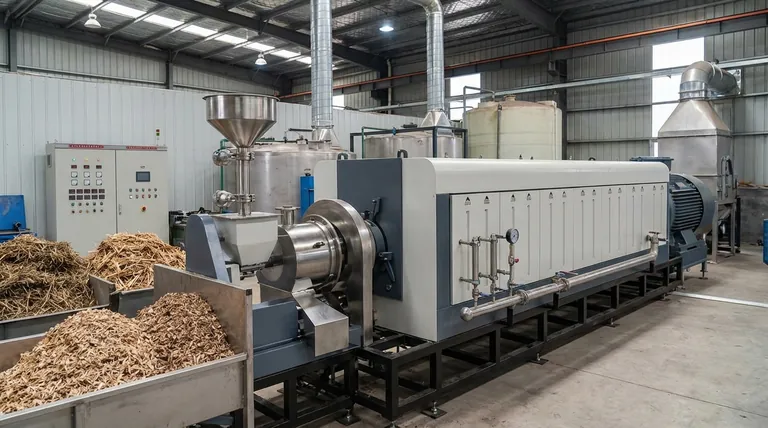
The Mechanics of Thermal Decomposition
To understand how hydrogen is extracted from solid waste, one must look at the specific environmental conditions created inside the furnace.
The Critical Role of Oxygen Deficiency
The defining characteristic of these furnaces is an oxygen-deficient environment.
Unlike incineration, which floods waste with oxygen to burn it, these systems restrict oxygen flow.
This prevents the organic material from combusting completely, forcing it to undergo chemical changes rather than simply burning into ash and smoke.
Driving Thermochemical Reactions
The process relies on controlled high temperatures to drive the system.
Heat acts as the energy source that destabilizes the chemical structure of the biomass.
This thermal energy forces the solid matter to break down at a molecular level.
Industrial-Grade Thermal Cracking
The combination of heat and low oxygen results in thermal cracking.
Complex organic molecules found in waste are "cracked" or broken apart into simpler molecules.
This decomposition releases volatile gases that were previously trapped within the solid structure.
From Solid Waste to Energy
Once the physical breakdown occurs, the focus shifts to the resulting chemical output.
Production of Synthesis Gas (Syngas)
The direct output of this decomposition is synthesis gas, commonly referred to as syngas.
Syngas is a fuel gas mixture that contains a high concentration of hydrogen.
It serves as the carrier medium, effectively transferring the energy potential of the solid waste into a gaseous state.
Enabling High-Value Conversion
The ultimate goal of this process is the creation of high-value hydrogen energy.
By extracting hydrogen via syngas, the system upgrades low-value organic waste into a versatile energy carrier.
This allows for the utilization of waste streams that would otherwise be discarded.
Understanding the Constraints
While this technology offers a pathway to renewable hydrogen, it is important to recognize the inherent operational requirements.
Precision Control is Mandatory
Success depends entirely on maintaining a strictly controlled environment.
Fluctuations in temperature or oxygen levels can disrupt the thermal cracking process or lead to unwanted combustion.
Complexity of Operation
These are industrial-grade processes, implying a level of complexity higher than standard waste disposal.
Operators must constantly balance thermal inputs against the volume of organic waste to ensure consistent syngas production.
Making the Right Choice for Your Goals
To determine if this technology aligns with your operational objectives, consider your primary outcome.
- If your primary focus is waste valorization: Look for systems that emphasize the efficiency of thermal cracking to maximize the reduction of solid waste volume.
- If your primary focus is energy production: Prioritize furnace designs that optimize the hydrogen content within the resulting syngas for higher energy yields.
Ultimately, these furnaces serve as a bridge, using heat and chemistry to transmute solid organic liabilities into valuable hydrogen assets.
Summary Table:
| Process Feature | Biomass Gasification & Pyrolysis |
|---|---|
| Primary Mechanism | Industrial-Grade Thermal Cracking |
| Atmosphere | Strictly Oxygen-Deficient (Prevents Combustion) |
| Input Material | Organic Solid Waste / Biomass |
| Key Output | Hydrogen-Rich Synthesis Gas (Syngas) |
| Energy Source | Controlled High-Temperature Thermal Energy |
| Environmental Impact | High-Value Waste Valorization |
Revolutionize Your Waste-to-Energy Process with KINTEK
Are you looking to optimize hydrogen extraction or streamline waste valorization? KINTEK provides the cutting-edge thermal technology required for precise thermochemical decomposition. Backed by expert R&D and world-class manufacturing, we offer a comprehensive range of Muffle, Tube, Rotary, Vacuum, and CVD systems, as well as specialized lab high-temp furnaces—all fully customizable to meet your unique industrial or research needs.
Partner with KINTEK to turn organic liabilities into valuable energy assets.
Contact Our Technical Experts Today
Visual Guide
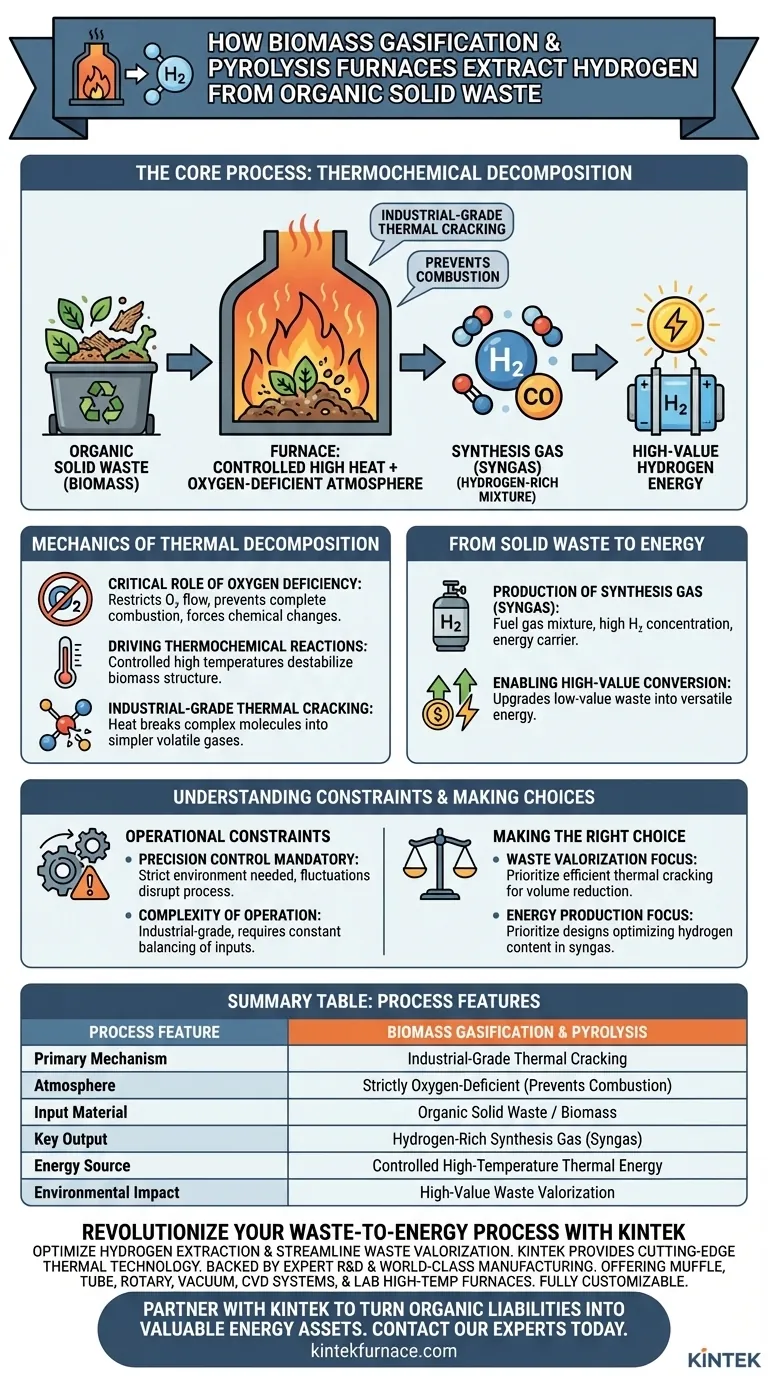
Related Products
- Electric Rotary Kiln Small Rotary Furnace Biomass Pyrolysis Plant Rotating Furnace
- Slide PECVD Tube Furnace with Liquid Gasifier PECVD Machine
- 1200℃ Controlled Inert Nitrogen Atmosphere Furnace
- Vacuum Heat Treat Sintering Furnace with Pressure for Vacuum Sintering
- Mesh Belt Controlled Atmosphere Furnace Inert Nitrogen Atmosphere Furnace
People Also Ask
- What are the key components of a rotary kiln electric furnace? Unlock Efficient Thermal Processing
- What are the main applications of a rotary kiln electric furnace? Achieve Uniform Heat Treatment for Powders
- What is the significance of the refractory lining in a rotary kiln electric furnace? Unlock Efficiency and Longevity
- What are the key components of a rotary kiln's construction? Discover the Essential Parts for Efficient Industrial Processing
- What role does the rotary kiln serve in coal-based DRI production? Unlock Cost-Effective Ironmaking Efficiency



















