The seemingly simple act of milling is, in reality, the foundational architect of your metal powder's high-temperature destiny. The kinetic energy you impart, the shear forces you generate, and the very atmosphere within the mill jar directly engineer the particle's size, shape, internal crystal structure, and chemical purity. These precisely tuned characteristics then govern the powder's flow, packing, reactivity, and densification behavior inside the high-temperature furnace, ultimately dictating the quality of your final sintered component.
The core challenge is not just making powder finer; it's about controlling the mechanical energy transfer to intentionally design a powder's "sintering personality." The choice of milling parameters and processing environment fundamentally determines the thermodynamic driving force, the kinetic pathway for atomic diffusion, and the chemical composition of your feedstock, which directly translates to the required furnace temperature, atmosphere, and the final material's microstructure and properties.
Engineering Particle Architecture: Size, Shape, and Surface
The mechanical forces of ball milling are your primary tools for sculpting the physical form of the powder particles. This geometry directly dictates how the powder behaves before and during the initial stages of furnace heating.
Tailoring Size and Morphology for Optimal Packing
Adjusting the milling speed, duration, and ball-to-powder ratio gives you precise control over the final particle size distribution and shape. These factors are critical because they govern powder flowability and packing density before you ever close the furnace door.
Spherical or near-spherical particles, often produced through controlled milling, pack more efficiently into a die. This not only improves handling but directly increases green strength, the ability of the unsintered compact to hold its shape, which is a prerequisite for uniform densification later on.
The Thermodynamic Power of Ultra-Fine Particles
Particle size is not just a physical dimension; it is a reservoir of excess surface energy. Finer powders, especially those milled to the nanoscale, possess a dramatically higher surface-area-to-volume ratio, creating a massive thermodynamic driving force for sintering.
This increased energy means the powder wants to consolidate. Nanoscale powders smaller than 0.1 µm exhibit an exceptionally strong driving force for neck growth compared to coarser particles. This allows high-temperature processing to achieve full densification at lower overall furnace temperatures or with significantly shorter hold times.
The Trade-off of High Surface Area
This high-energy state is a double-edged sword. Ultra-fine, high-surface-area powders are also highly sensitive to their environment. Their immense reactivity makes them exceptionally prone to oxidation and even pyrophoricity.
This sensitivity demands a vacuum or high-purity inert atmosphere furnace not just during sintering, but often during the milling process itself. Failing to manage this negates the benefits by locking surface oxides into the material, which act as barriers to diffusion and severely compromise mechanical properties.
Controlling Chemical Integrity and Reactivity
The mill is a chemical reactor. The mechanical energy doesn't just break things; it forges new structures and, if you’re not careful, introduces performance-crippling impurities.
Mechanically-Induced Phase Transformations
The milling intensity and surrounding atmosphere can induce profound changes within the crystal lattice. The intense, localized stress and heat can trigger solid-state reactions, phase shifts, or even complete amorphisation.
This pre-engineered, high-energy state fundamentally alters the material's thermal reactivity. A pre-amorphized or highly defective crystal structure provides more diffusion pathways, allowing for faster sintering kinetics and the potential to form unique final microstructures that are unattainable with pristine feedstock.
The Critical Threat of Milling Media Impurities
This is a common pitfall that directly links a poor milling choice to catastrophic furnace results. The wear of your grinding media is a direct source of chemical contamination.
Using low-purity alumina or porcelain balls introduces silica (SiO₂) into your metal powder. At elevated sintering temperatures, this silica contamination forms an undesirable silicate liquid phase at grain boundaries. This liquid phase catastrophically accelerates grain growth, inhibits microstructural control, and drastically weakens the final component's high-temperature mechanical properties. The solution is to use chemically inert, high-purity media.
Engineering Surface Properties for Function
The impact of milling on surface area extends beyond thermodynamic sintering drive. The increased surface area and active sites created by milling energy are crucial for functional materials, such as titanium-based catalysts or thermal spray coatings.
For a catalyst, this means enhanced performance. For a thermal spray coating, the higher surface energy of milled powder can improve melting characteristics in a high-temperature flame, leading to denser, more adherent coatings in corrosive, high-stress environments.
Unlocking the Sintering Kinetic Advantage
Your milling protocol injects stored mechanical energy into the powder, which directly translates into a lower thermal budget requirement for your furnace and a more controllable densification process.
Lowering the Thermal Barrier to Consolidation
Preliminary ball milling refines the initial crystallite size of the powder, which directly lowers the activation energy required for sintering. This is not a subtle effect.
For example, milling a TiC₀.₅N₀.₅ ceramic-metallic powder for just 10 hours can slash its onset sintering temperature from 1170 °C down to 820 °C. This means the refined powder can achieve near-full density (up to 99%) much faster, while the lower temperature prevents excessive grain growth, preserving nanoscale features and achieving extreme Vickers hardness.
Shifting the Kinetic Levers for Process Control
The milling duration doesn't just lower the temperature; it rewrites the kinetic rules. Extended milling increases the particle's specific surface area, which significantly raises the frequency factor (k₀) of the reaction.
However, this increased surface energy often comes with a higher measured thermal activation energy (Eₐ) for the overall sintering process. For instance, increasing milling time from 8 to 12 hours might shift the apparent Eₐ from ~71.7 kJ/mol to ~91.9 kJ/mol. Understanding this shift is crucial for a furnace engineer: it dictates that you must tailor your heating rates, peak dwell temperatures, and hold times to the specific kinetic landscape of your milled powder.
Understanding the Trade-offs in Furnace Processing
The choices you make in milling create a specific set of requirements and potential pitfalls for the subsequent high-temperature processing step.
Sensitivity to Furnace Atmosphere
The type of powder you create dictates the furnace atmosphere. Ultra-fine, high-surface-area powders are highly sensitive to oxidation, necessitating an investment in a high-quality vacuum or inert atmosphere furnace to consolidate them without forming performance-limiting oxides.
Coarser or less homogenous powders are more forgiving atmospherically but create their own trade-offs, requiring higher furnace temperatures, extended dwell times, or even applied mechanical pressure to overcome their lower driving force for densification.
Balancing Density and Microstructure
The ultimate quality of the sintered part is a balance. Even if your milling protocol was perfect, poor furnace practice can ruin it. Sintering at elevated temperatures promotes the essential atomic diffusion for neck formation and densification.
The pitfall is extending the hold time at peak temperature beyond an optimal threshold. This leads to grain coarsening, where larger grains consume smaller ones. The paradox is that while density might be rising, mechanical strength plummets. The goal of using a precisely controlled high-temperature furnace is to balance these competing processes to achieve maximum density while preserving a fine, uniform microstructure.
Making the Right Choice for Your Goal
Your milling and furnace protocols cannot be developed in isolation. They are two sequential stages of a single, integrated process designed to achieve a specific outcome.
- If your primary focus is maximizing density at a lower thermal budget: Aggressively mill your powder to a nanoscale crystallite size to maximize surface energy. This will allow you to sinter at a significantly lower furnace temperature, minimizing grain growth and energy costs.
- If your primary focus is absolute chemical purity and microstructural control: Prioritize the use of chemically inert, high-purity grinding media during milling. In the furnace, use an ultra-clean vacuum or inert gas atmosphere to prevent oxide formation and avoid the creation of deleterious grain-boundary phases.
- If your primary focus is high-throughput or functional surface performance: Tailor the milling duration to optimize the specific surface area and active sites. A coarser powder may sinter faster under the right kinetic conditions, while a finely milled catalyst powder will exhibit dramatically higher catalytic activity.
Mastery lies in seeing the mill and the furnace not as separate units, but as a single, integrated material design tool where you are trading mechanical energy for thermal energy, and kinetic control for microstructural perfection.
Summary Table:
| Milling Parameter / Factor | Powder Architectural Impact | High-Temperature Furnace Outcome |
|---|---|---|
| Speed, Duration & Ratio | Refines particle size to nanoscale; increases surface area & energy | Significantly lowers onset sintering temperature & thermal energy budget |
| Atmosphere Control | Prevents surface oxidation and maintains chemical reactivity | Avoids diffusion barriers; requires clean vacuum/inert gas furnace environment |
| Inert Grinding Media | Prevents silica ($SiO_2$) contamination and foreign impurities | Eliminates undesirable grain-boundary liquid phases; preserves mechanical strength |
| Mechanical Stress | Induces crystal defects, phase transformations, or amorphisation | Accelerates atomic diffusion kinetics for rapid, dense consolidation |
Maximize Your Material Density with Precision Thermal Processing
Transitioning engineered metal powders from the mill to the furnace requires uncompromised atmospheric purity and precise temperature control. KINTEK specializes in advanced laboratory equipment and consumables, delivering custom high-temperature furnaces—including vacuum, atmosphere, tube, muffle, rotary, CVD, and induction melting systems—tailored to meet the exact kinetic demands of your pre-treated feedstock.
Whether you are aiming to prevent surface oxidation on ultra-fine powders or reduce your sintering energy budget, KINTEK provides reliable, scalable thermal solutions engineered for your research and production goals.
Ready to elevate your high-temperature material synthesis? Contact KINTEK today to consult with our thermal processing experts!
Related Products
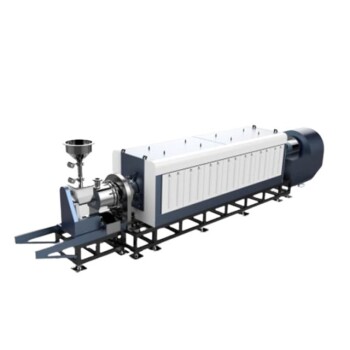
- Electric Rotary Kiln Continuous Working Small Rotary Furnace Kiln for Pyrolysis Plant Heating
- Electric Rotary Kiln Pyrolysis Furnace Plant Machine Small Rotary Kiln Calciner
- High Temperature Muffle Oven Furnace for Laboratory Debinding and Pre Sintering
- Electric Rotary Kiln Small Rotary Furnace Biomass Pyrolysis Plant Rotating Furnace
- Vacuum Sealed Continuous Working Rotary Tube Furnace Rotating Tube Furnace
People Also Ask
- What are the advantages of electric rotary kilns compared to fuel-fired ones? Boost Precision and Efficiency in Your Process
- What materials can be processed in an electric rotary kiln? Versatile Solutions for Advanced Materials
- What advantages do electric rotary kilns offer over fuel-based kilns? Boost Efficiency and Purity in Your Process
- What are the primary applications of electric rotary kilns? Precision Thermal Processing for High-Value Materials
- In what ways are electric rotary kilns more environmentally friendly? Achieve Zero On-Site Emissions